


Paws, claws and whiskers: celebrating space animals who made a giant leap for their kind
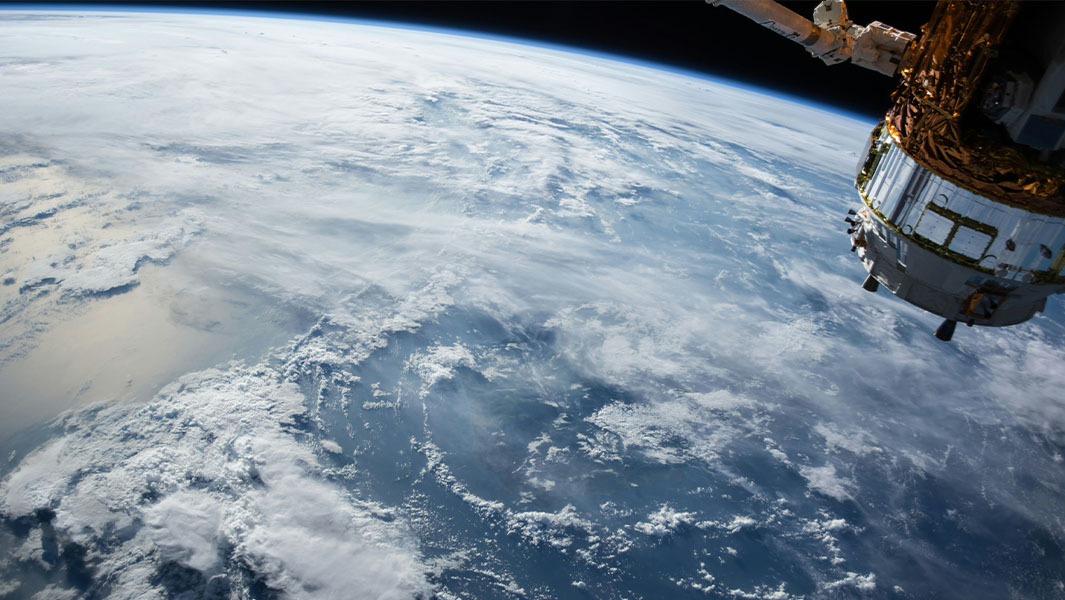
There is a huge galaxy out there of possibilities, and an astronomical number of Guinness World Records titles that are ready to be launched into the atmosphere. Over the years, many individuals have defied the odds (and gravity) to become record holders and achieve something out of this world. But what about our furry friends who channeled their inner a-paw-lo 11 and travelled to space before we did?
In the history of space exploration, there are many firsts that humans have encountered, for example the first sculpture on the moonor the first telephone call from the ocean floor to space. But today we will be taking you on a journey to explore some amazing tails from the stratosphere, so put your seatbelts on, and prepare for takeoff!
To begin our journey through time, we meet the primate who became the first monkey in space. His name was Albert II, and for this rhesus monkey, his blast off date came on 14 June 1949.
@technality On June 14th, 1949, the male rhesus macaque monkey known as Albert II was strapped into U.S. V-2 sounding rocket and blast to an altitude of 83 miles, or 134 kilometers, above the Earth. He became the first primate and first mammal ever to go into space. Unfortunately for Albert II, his return ticket did not go as planned. A parachute failed during re-entry and the original mammal pioneer of space exploration died on impact. In the last half of the 20th century, humans continued to send all manner of animals into space in the name of science. And there’s no getting around the terrible sacrifices they made along the way. We have all of them to thank for the knowledge we have today about the final frontier. #space #tech #science ♬ original sound - Technality
It was all aboard the V-2 rocket for monkey-kind to start the mission, and Albert reached an altitude of 83 miles (134 km). He was a part of the “Albert” Program, which began in New Mexico (USA), where monkeys were blasted into space as preparation before humans made the journey.
Sadly, Albert II didn’t make the round trip alive, as during the descent, the parachute attached to the capsule had a malfunction. However, during the flight, his biomedical information was collected and transmitted, which gives us the information to continue to celebrate his journey today.
75 years ago #OTD the first primate (which also was the first mammal) was launched into #space when the male rhesus macaque monkey Albert II rose on a #V2 rocket from Holloman Air Force Base in New Mexico to an altitude of 134 km - dead on impact: links in https://t.co/duEBxBXn2Z pic.twitter.com/yxjb1uS1au
— Daniel Fischer @cosmos4u@scicomm.xyz (@cosmos4u) June 13, 2024
Now, let us travel in time to 22 July 1951, which marks the day that the first dogs in space em-barked on their own trip into the atmosphere. The Soviet Academy of Sciences took two female stray dogs into their care for research purposes during the early 1950s. Dezik and Tsygan were placed into a pressurized cabin that sat on the top of an R-1V rocket, and then it was time for blast off.
Climbing to an altitude of roughly 110 km (68.3 mi), the two canines felt four minutes of weightlessness in space before being brought to Earth by their parachute, and after this trip the dogs returned completely unharmed.
In July 1951, Dezik and Tsygan were the first dogs to make a sub-orbital flight (altitude of 101 km/62 miles) and land safely.#space pic.twitter.com/flNNrjtuQA
— Russia Makes Nothing (@RussiaMakes) July 24, 2017
It was during Dezik’s second space flight that she lost her life when her parachute did not deploy. After the death of Dezik, her space partner Tsygan lived for the rest of her life as a family pet after being adopted by a physicist. She also gave birth to two litters of puppies.
Whilst we’re talking about man’s best friend, it’s important to mention Laika, the first dog to orbit Earth. On 3 November 1957, she boarded the Sputnik 2 but only survived for a couple of hours into the flight. This amazing space dog has been fondly remembered around the world and was also the first animal to orbit Earth.
I hope Laika never died and that she spins around us still
— random Eurovision lyrics bot (@esclyricbot) December 5, 2025
Remember the saying, ‘monkey see, monkey do’? Well, on 28 May 1959, another two monkeys did exactly that!
Breaking a Guinness World Records title and putting their stamp on history were Miss Able and Miss Baker, a rhesus and a tiny squirrel monkey. The two primates were the first monkeys to survive a space flight, and they travelled to space in the capsule inside the nose cone compartment of a Jupiter AM-18 rocket. While experiencing weightlessness for nine minutes, they also travelled at 10,000 mph (16,000 km/h), which is pretty fast for a couple of little monkeys, right?
The flight also reached an altitude of 359 miles (579 km), and both monkeys boarded the flight with special technology that allowed scientists to monitor their pulse, temperature, heartbeat, and body reactions for the duration of their journey.
Read about more record-breaking trips to space in our Science and Technology section.
Although they survived the trip initially, some days went by after the landing, and Miss Able had passed away in the process of removing a monitoring electrode that had been infected. However, Miss Baker lived for another 25 years.
Let’s turn to appreciate the efforts of Marfusha, a grey rabbit who went hopping into the record books and into space. The first rabbit in space made her out-of-this-world trip on 2 July 1959 on board an R2-A rocket.
She was not alone in her trip; she was accompanied by other animals who went up in the sky, and Marfusha survived the whole mission and lived in good health!
On this day in 1959, Marfusha became the first rabbit in space, sent on a Soviet mission with two dogs, Otvazhnaya and Snezhinka. Although all three returned from the suborbital flight safely, it’s important to remember that they never volunteered for this terrifying venture. pic.twitter.com/nqOmnBuJ1I
— Mark Hawthorne Ⓥ (@markhawthorne) July 2, 2025
The penultimate stop our space journey is a rat - not one that you’ll find raking through the bins, but one striving for space exploration.
On 19 August 1960, two lab rats named No.12 and No.18 were launched into space on a V-2 spacecraft as part of the Korabl-Sputnik 2 mission. The first rats in space were launched and returned to Earth in good health, almost a whole 24 hours later.
The purpose of this journey was to research the possibilities of how space travel could affect health, and researchers also wanted to rehearse their forms of life support and re-entry systems that were set to be used during the very first manned spaceflight.
Last but not least there was Félicette, the Parisian stray who was known as “Astro-cat” after she made an incredible suborbital trip on 18 October 1953.
Her journey was organized by the staff members and researchers at Cerma - Centre d’Enseignement et de Recherches de Médecine Aéronautique. The French company decided that they wanted to send cats into space for research purposes, rather than the usual choice of dogs, rats or other creatures sent up so far.
All of the cats in the care of Cerma were named by number to stop the staff from becoming too attached to the animals, so Félicette was originally named C341.
After the cat was launched into space, she spent around five minutes before her parachute was deployed, and she experienced 9.5 g-force, which is almost double the amount of g-force that the Apollo astronauts felt on their maiden voyage to space.
Félicette survived the whole mission impressively, but after two months back on land, she was euthanized by scientists to investigate the ways that the space journey affected her body. It is unfortunate that no useful information was actually discovered, but her name has gone down in history as the first cat in space.
It is important to give these animals a round of a-paws for their amazing efforts in space exploration, and they truly have shown that they paved the way for our human astronauts to see space for themselves.
Header image: A view of the Earth from space by NASA on Unsplash