


Angry customer demands refund: the odd story of the first customer complaint
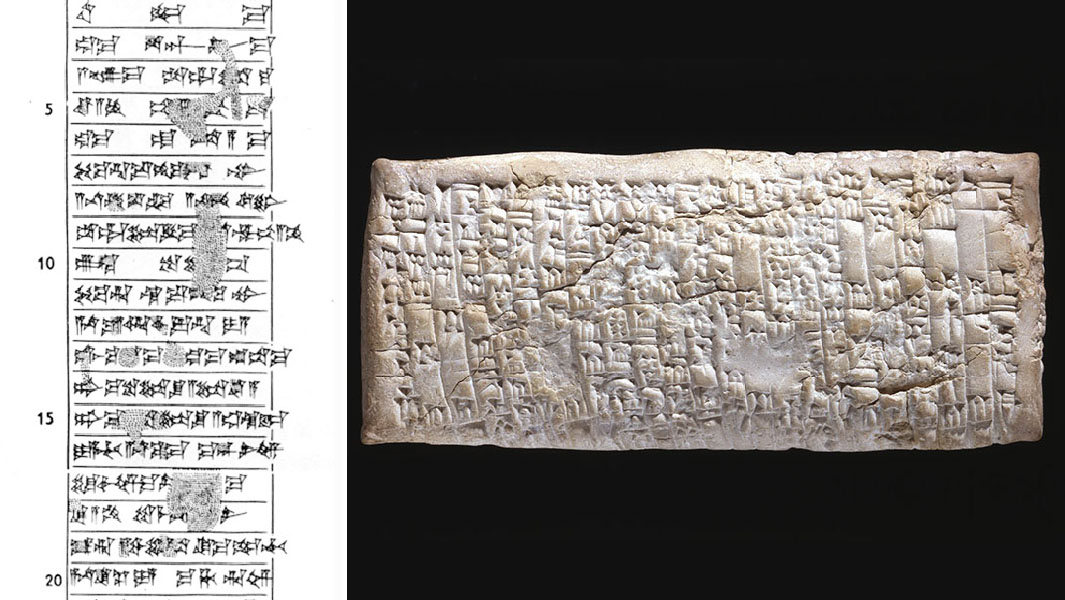
Around 3,767 years ago, a man named Nanni was not impressed with his purchase.
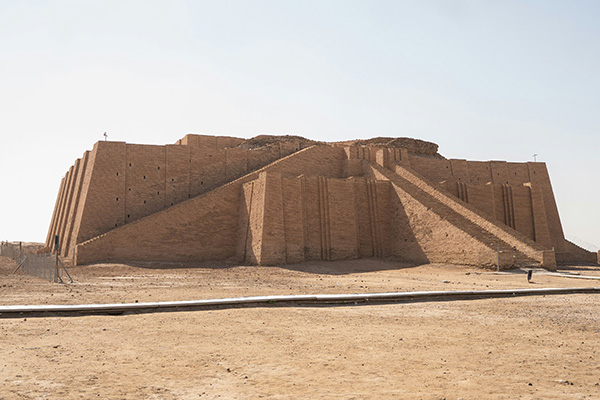
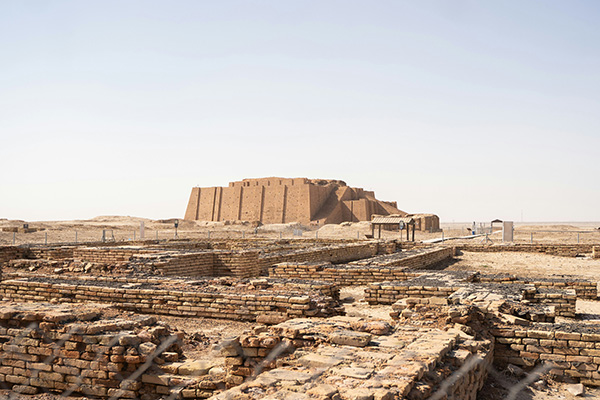
The dispute took place in the heart of ancient Mesopotamia, and more specifically in the Assyrian city-state of Ur – a flourishing trading hub in the Persian Gulf, located in today's Southern Iraq.
The year was 1750 BCE, and the unhappy buyer demanded to be repaid after being sold bad-quality copper ingots by a local copper merchant named Ea-nāṣir. Instead of trying to fix the situation, the merchant ghosted him.
Nanni's response?
"Terrible customer service. I rate this 1/10." Literally.
Proving that human behaviour never changes, the dissatisfied client did what most of us would do today: he complained, left a one-star review and vigorously demanded a refund.
This is the oddly relatable story of Nanni, the original one-star reviewer and author of the first written customer complaint EVER.
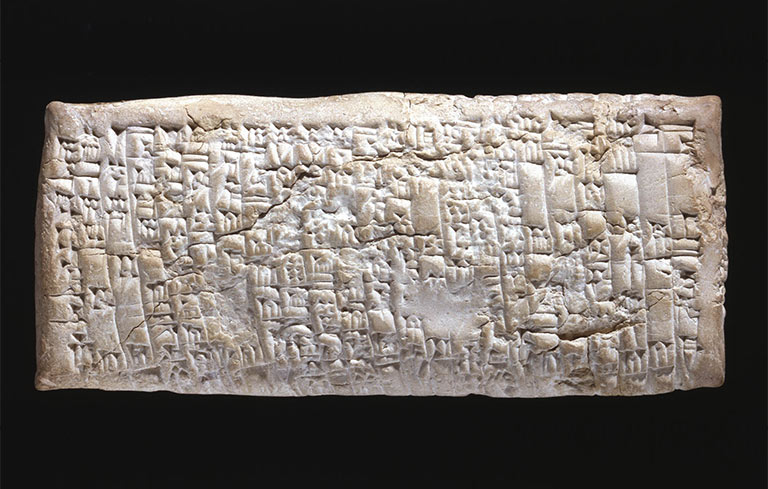
Nanni's accusations were etched on both sides of a small clay tablet measuring 11.6 cm in length and 5 cm wide (4.6x2 inches).
Despite being written in Akkadian (the now-extinct cuneiform language used in ancient Mesopotamia) long before the era of social media posts and one-star ratings, it is easy to imagine the tone of the smartphone-sized letter: today, it would more or less sound like an enraged review packed full of caps lock, angry emojis and exclamation marks.
The callout opens with a sinister: "Tell Ea-nāṣir: Nanni sends the following message…"
حسن /Unsplash
Through Nanni's words, we learn that Ea-nāṣir travelled to the flourishing kingdom of Dilmun to buy copper, which he then sold in Mesopotamia.
After an initial meeting, the customer appears to have paid upfront for the merchant's services, trusting him to return with a pre-agreed amount of good-quality copper ingots.
"When you came, you said to me as follows: 'I will give Gimil-Sin (when he comes) fine quality copper ingots'," Nanni writes.
"You left then, but you did not do what you promised me."
حسن /Unsplash
As one of the key resources of Bronze Age Mesopotamia, copper was vastly utilised as a commodity to build armours, artworks and all sorts of mundane tools. The demand was high, and disputes between sellers and buyers often got heated.
Moreover, the precious metal wasn’t easy to acquire: traders like Ea-nāṣir faced perils and crossed conflict zones to purchase the metal from the kingdom of Dilmun (roughly between Baraham and Southern Iraq, which controlled the copper trade at the time), and imported it back to Ur.
Unfortunately, once the trader returned with the purchased goods, Nanni was in for an unpleasant surprise.
"You put ingots [of copper] which were not good before my messenger,” he accuses.
“…and [you] said, 'If you want to take them, take them, if you do not want to take them, go away!'”
Even more frustratingly, despite sending several messengers, Nanni couldn't persuade Ea-nāṣir to give him his money back: "I have sent as messengers gentlemen like ourselves to collect the bag with my money (deposited with you), but you have treated me with contempt by sending them back to me empty-handed several times, and that through enemy territory."
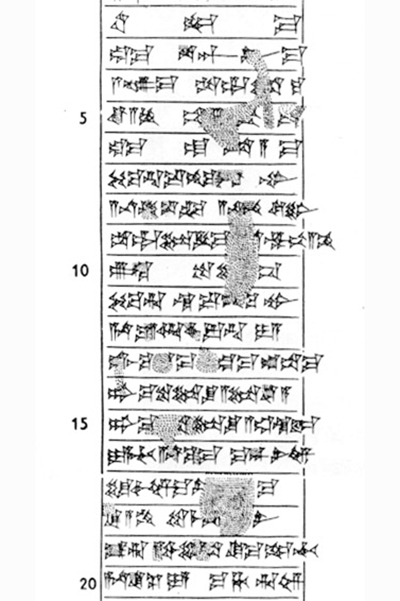
A transcription of the complaint tablet to Ea-nāṣir -Cuneiform Digital Library Initiative (CDLI) / Wikimedia Commons
Negative feedback always stings, but savvy business owners know that there are many ways to soften the blow.
In some cases, the right approach might even turn an unhappy customer into a returning one, avoiding the damage caused by a bad review.
For example, according to this TrustPilot's article on how to handle online backlash, it's possible to de-escalate a conflict with a disgruntled customer by following some simple but respectful steps.
The best practice is to acknowledge and apologize, offer a solution, and follow up.
Unfortunately, Ea-nāṣir did nothing of the sort.
On the contrary, the letter suggests that the seller's rudeness only worsened the situation: "What do you take me for," Nanni asks, "that you treat somebody like me with such contempt?”
"Is there anyone among the merchants who trade with Dilmun who has treated me in this way?"
Even many centuries later, it's all too easy to empathize with the poor man's frustration after being scammed.
I have sent messengers, gentlemen like ourselves, to collect the bag with my money (deposited with you), but you have treated me with contempt by sending them back to me empty-handed several times.
Unsurprisingly, Nanni did what we’d all do in his situation: he promptly demanded a refund.
"It is now up to you to restore (my money) to me in full," he declares.
He closes the letter by warning Ea-nāṣir that, now aware of his shady business and poor-quality materials, he’ll be extra careful in future trades: "Take cognizance that (from now on) I will not accept here any copper from you that is not of fine quality."
“I shall (from now on) select and take the ingots individually in my own yard," the man carries on, "and I shall exercise against you my right of rejection because you have treated me with contempt."
The clay tablet was then handed to a messenger who had the sorry task of hand-delivering it to the merchant.
Ea-nāṣir's reputation wasn't exactly pristine, and his abysmal customer service might not have been an isolated case.
Although Ea-nāṣir might not have cared much about his clientele, the same can't be said about his paperwork. A zealous record keeper, the merchant collected and stored several business letters in his home.
The list features many unhappy clients, such as:
- Two men, Imgur-Sin and Arbituram, wrote letters to Ea-nāṣir demanding good-quality copper on behalf of a third buyer. The implication is that the merchant supplied sub-standard ingots in the past.
- An anonymous customer complained about receiving less copper than agreed
- More clients lamented never receiving their order
Although Nanni’s is not the only one-star review the merchant received, it’s indeed the oldest one.
He could not possibly imagine, however, that the echoes of his many dissatisfied customers would survive for thousands of years, eventually resurfacing in modern-day Iraq and reaching a new generation of customers that, after all, might not have changed much since the Bronze Age.
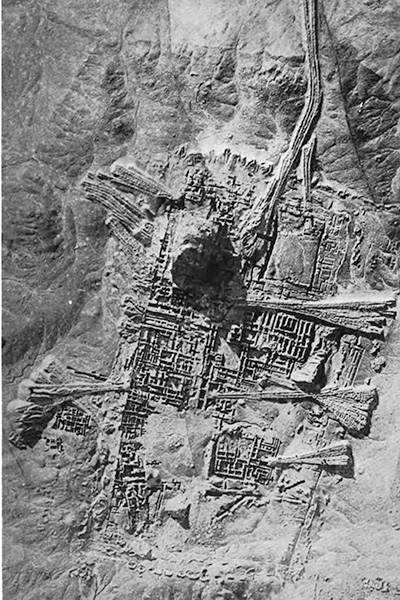
Aerial view of Ur, dated March 1927 - Royal Air Force official / Wikimedia Commons
Many centuries later, the tablets were unearthed by British Archeologist Sir Leonard Woolley, who led a decade-long expedition in Ur between the 1920s and the 1930s.
The discovery of Ea-nāṣir's belongings crowned the success of the expedition, which was born of the joint efforts of the University of Pennsylvania (US) and the British Museum (UK). And, perhaps most importantly, it turned Nanni’s story into a timeless example of how not to behave in customer service.
Acquired by the British Museum in 1953, the clay tablet is currently displayed at Abu Dhabi's Zayed National Museum, where it will be showcased until 2027.
Today, we can read Nanni's universal frustrations and the story of the first customer complaint thanks to an American-Australian Assyriologist, Professor Adolf Leo Oppenheim, who translated several lines of the tablet in a 1954 article for the Journal of the American Oriental Society.
The full translation appears in his 1967 Letters from Mesopotamia: official business, and private letters on clay tablets from two millennia, published by the University of Chicago Press.
We will never know if Nanni got his money back.
What is certain, however, is that the complaint earned him a Guinness World Records title, the sympathy of many unhappy shoppers, and the immortal status of internet meme.