


Pi-high computing achievement: technology companies calculate pi to 340 trillionth digit
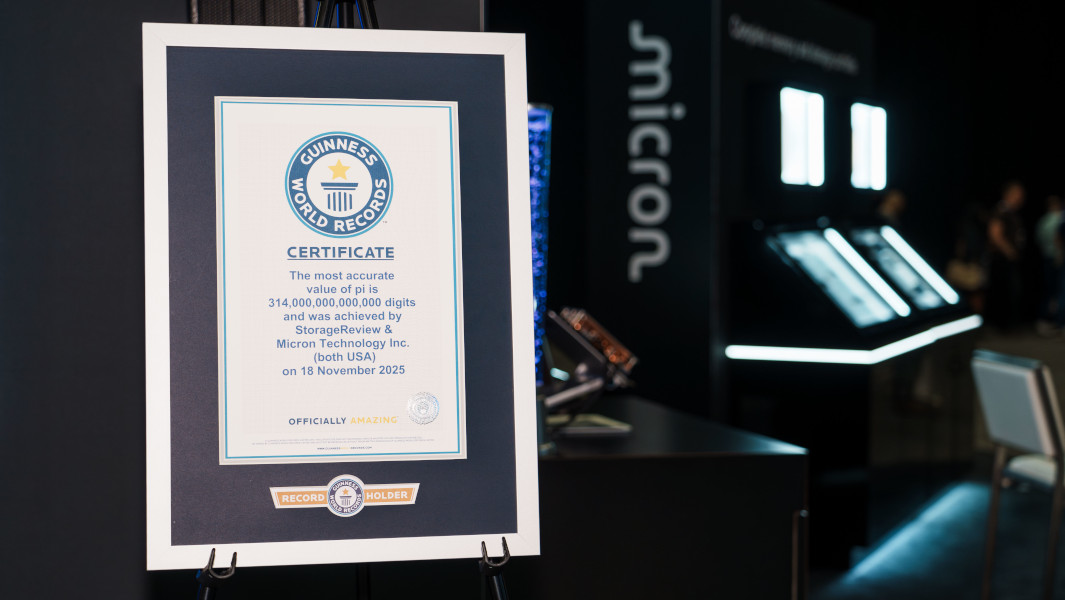
Math students, beware.
Thanks to the incredible technical abilities of the StorageReview system and Micron Technology (USA), it’s now possible to quantify Archimedes’ favourite number with a new degree of accuracy.
After nearly 110 days of constant computation on a single server, the companies were able to claim the Guinness World Records title for the most accurate value of pi to a mind-blowing total of 314 trillion digits.
They beat the record of 300 trillion digits held by Linus Media Group (Canada) and KIOXIA (USA), accomplished on 2 April last year.
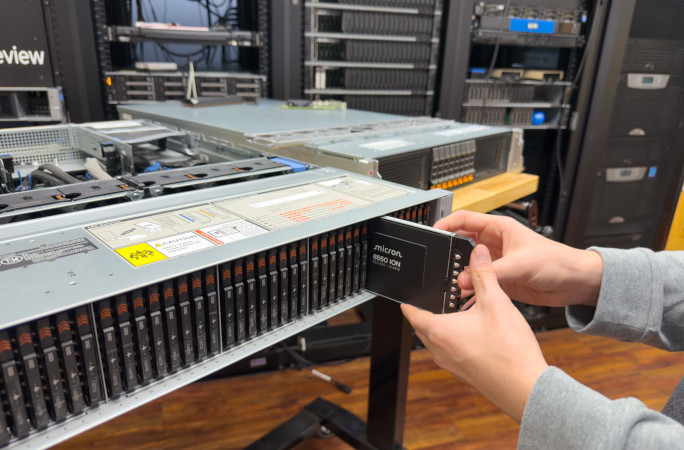
To calculate a number to a trillionth degree, it’s essential that the server contains enough reliable high-capacity storage for the program to be run. The system set up by StorageReview consisted of forty 61.44 TB Micron 6550 ION NVMe™ SSDs, a single Dell PowerEdge™ R7725 system, and dual AMD EPYC™ 192-core processors to push a modern server to its limits.
In early 2024, StorageReview was able to calculate pi to the 105 trillionth digit, and a few months later they were able to improve upon their results, this time to the 202 trillionth space.
“Of course, records invite challengers,” said the team at StorageReview. “Linus Media Group and KIOXIA grabbed the crown with a 300 trillion-digit run… That effort showed what storage-heavy traditional infrastructure could do – albeit with a rack of hardware, a large power bill, and cooling complexities.
“We couldn’t idly stand by and let that record stand!”
Read more stories about math and computers in our dedicated Science and Technology section!

When calculating pi, many coders use a computer program called a y-cruncher to help determine their constant variable. But when dealing with 314 trillion digits, StorageReview needed an incredible amount of available storage capacity to complete the test. Using the Micron 6550 ION SSDs, they had 2.4PB of total storage to use, 2.1PB to run the test and 0.3PB to store the results.
“For business and IT leaders, the most important takeaway is not peak throughput, but predictable performance at scale,” said Micron Technology, after taking the record.
“This record illustrates that high-capacity NVMe can shift that balance by keeping data consistently available to compute over extended periods, reducing variability and operational risk.”

So congratulations to all the hard-working minds at StorageReview, Micron Technology, Dell, and AMD – you are all Officially Amazing!