


Mexican Day of the Dead observations break records with largest altar, Catrina, and more
Each year on 1-2 November, Dia de los Muertos (“Day of the Dead”) is celebrated around the world, stemming from a Mexican cultural tradition to honour departed relatives and loved ones.
Reuniting the living with the dead, this national holiday is often a colourful, communal, and affectionate affair, featuring: brightly decorated Ofrendas (“offerings” to an altar), depictions of skeletons (in the form of costumes, skull-shaped candy, or La Calavera Catrina), and donations of food, prayer, and quality time to family gravestones.
And though some debate the exact origins of Dia de los Muertos, it nonetheless has evolved over the years into an important and widespread Mexican custom. Families and communities gather to remember their heritage and those who came before them, and across the world you may be able to spot lit candles and Mexican marigolds laid out for those who left too soon.
The holiday is therefore a time for love and memory – yet also a time for celebration, in honour of the reunification between spirits living and dead, as well as the gathering of those who are still alive. Families cook food together, lay out the favourite items of their departed loved ones, and commemorate their vitality through song, dance, and merriment.
And as such, some also celebrate in a record-breaking fashion.
So this year, as Mexicans around the world honoured the tradition, Guinness World Records was right there beside them – ready to witness three of the largest Dia de los Muertos titles ever taken.
Tallest Calavera Catrina
Skeletons and skulls are prominent iconography amidst Dia de los Muertos celebrations, serving to animate the symbol of death.
Of these images, perhaps one is the most famous – La Calavera Catrina (full name “The Dapper (female) Skeleton”). A tall, slender lady skeleton wearing a gigantic hat, she was first created by Mexican printmaker José Guadalupe Posada in the early 20th century, as commentary on wealthy Mexican women who adopted European fashions. Scholars seem to think that the picture represents that regardless of status, death comes for us all.
Several years later, Mexican artist Diego Rivera featured La Catrina in his famous 1947 mural, Dream of a Sunday Afternoon in Alameda Central (Sueño de una tarde dominical en la Alameda Central), as a tribute to José Guadalupe Posada – and La Catrina has thus become a significant figure in Mexican folk art, often featuring in celebrations for the holiday.
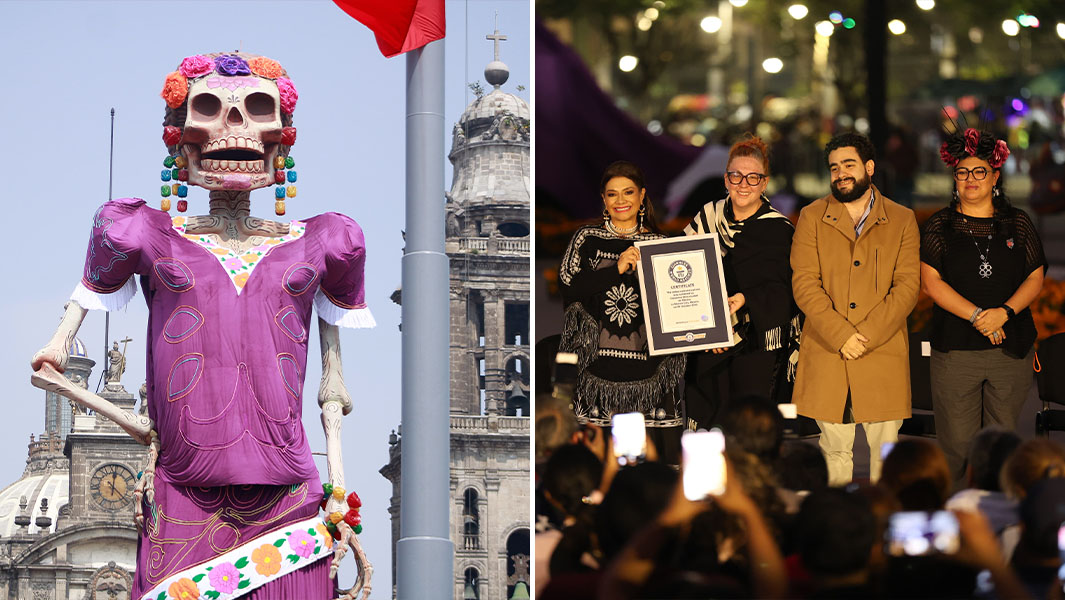
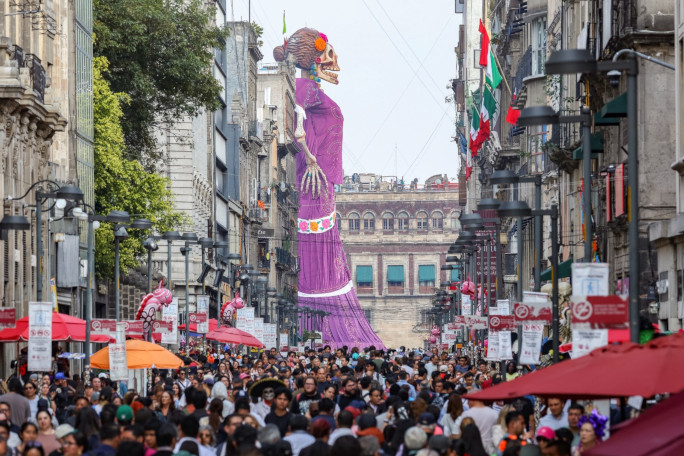
That said, the tallest Calavera Catrina in history was created this October by the Gobierno de la Ciudad de México, in Mexico City, Mexico towering over the public at a record-breaking 109.616 ft (33.411 m).
Designed and assembled by 150 different people, this Catrina was made out of steel, fiberglass, wood, concrete blocks, scaffolding, and LED lights.
The artists were inspired by traditional Mexican embroidery, so they draped the Catrina in nearly 10,000 ft (3,000 m) of fabric – some of which was hand-painted – and custom jewellry and accessories.
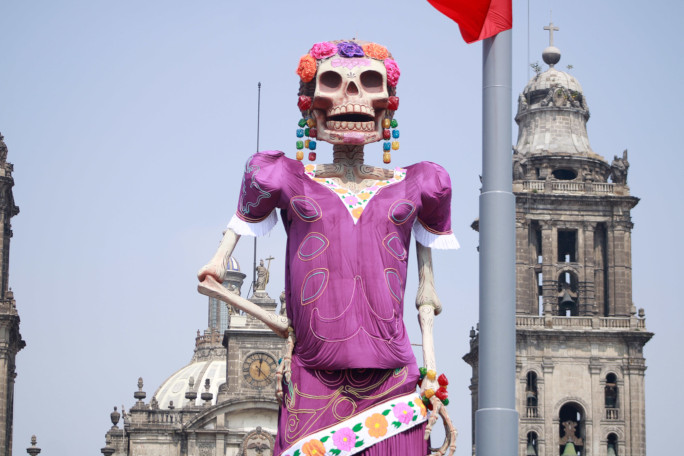
The government wanted to reach record-breaking heights, as well as honour the works of Posada and Rivera, so they truly went all-out with this version – placing her next to a field of golden marigolds in front of a historic plaza.
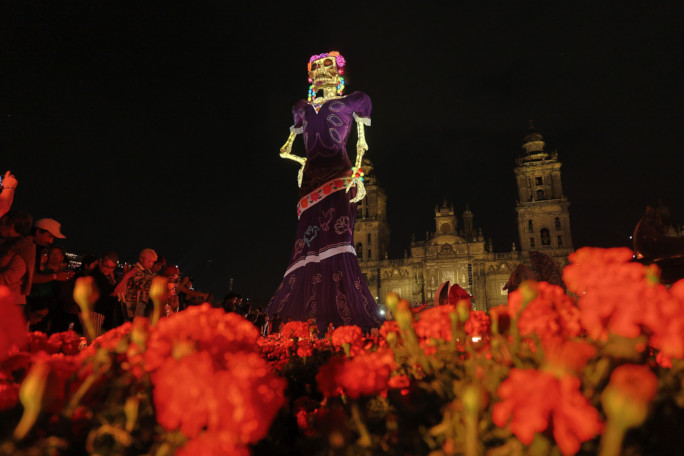
The end result was a Catrina of epic proportions, drawing the eyes of everyone in the capital city with its size and striking imagery.
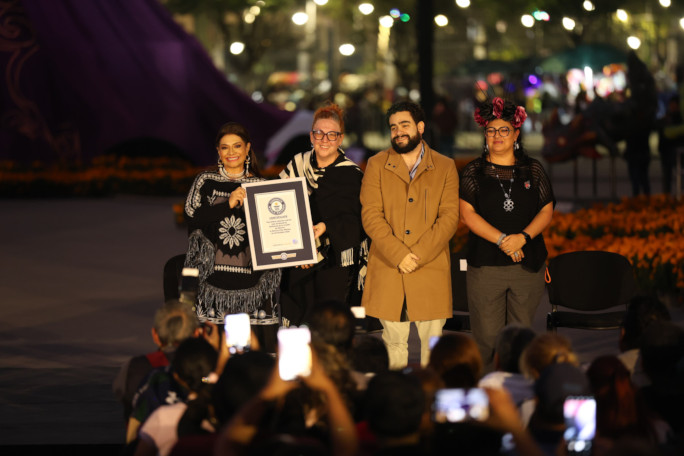
“It was breathtaking to see,” said Guinness World Records Adjudicator Alfredo Arista, who witnessed the measuring attempt.
“From several streets away, you could already admire the majestic work, leaving you with no choice but to stand in silence and simply marvel at it. A feeling of admiration, love, and pride is what you experience when standing before it and taking it in.
“That is how vast, how majestic, and how beautiful Day of the Dead is in Mexico.”
Read more stories about record-breaking gatherings in our dedicated People Power section.
Longest alfeñique
Related to the skeleton imagery of La Catrina, the skull (or Calavera) is often present in Dia de los Muertos celebrations.
These skulls can be created out of anything from clay to sugar, and are crafted by hand into the colourful, grinning shapes that adorn ofrendas.
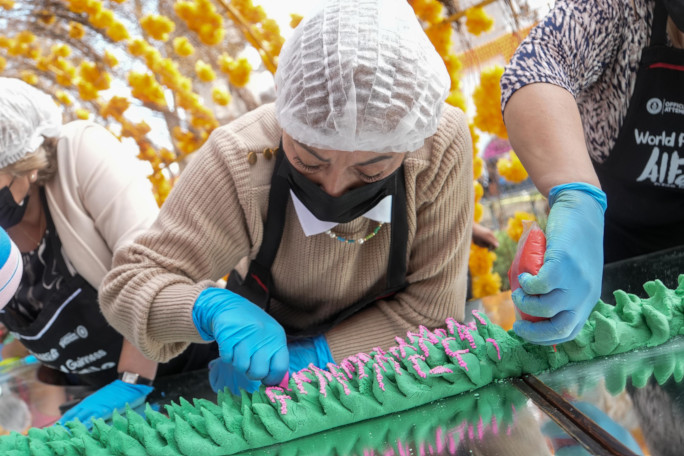
The shapes made from sugar are called alfeñique – and though the skulls are often the most popular, the sweet candy can take any form: such as animals, coffins, and even record-breaking serpents.
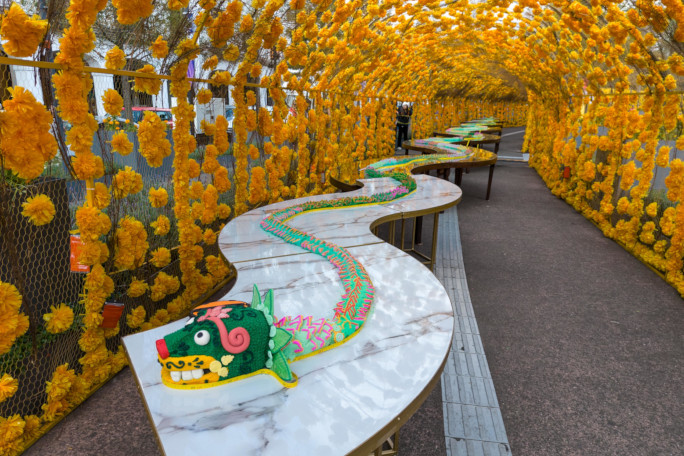
And as part of the Dia de los Muertos celebrations in Toluca, Mexico this 30 October, the Gobierno de la Ayuntamiento de Toluca (Mexico) arranged the creation of the longest alfeñique of all time, spanning a total of 120.43 ft (36.71 m).
Surrounded by a vibrant arch of marigolds, the sweet confection was rolled into the shape of the Mesoamerican deity Quetzalcoatl, later divvied up and shared with the public in a mouthwatering display of regional pride.
"From this day forward, the world will know about Toluca, its rich cultural heritage, and the beauty of a tradition that has been preserved for generations," said the event organizers. "Our beautiful alfeñique craftsmanship represents not only creativity and skill, but also the identity, pride, and legacy of our people.
"This achievement is an opportunity to share one of the most valuable expressions of our culture with the world."
Largest Day of the Dead altar
The record-breaking celebrations for Dia de los Muertos also continued north of the border this year, as Farmacias Similares (Mexico) brought the altar tradition into Los Angeles, California, USA – a city with a large Mexican-American population.
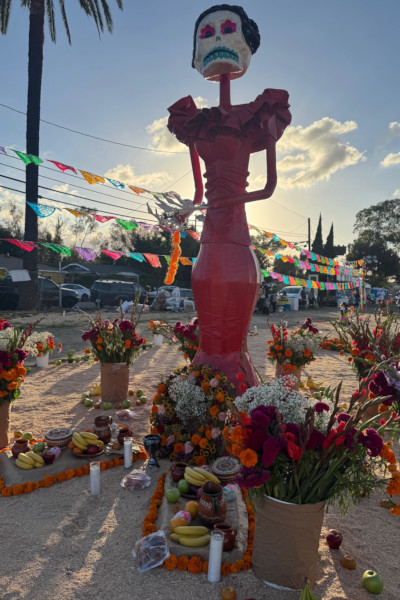
During the holiday, Mexicans will leave out photos of their deceased loved ones on an altar, and arrange their favourite items alongside the frames.
In the words of Guinness World Records Adjudicator Carlos Rojas: “Making an offering to loved ones who are no longer with us means remembering them with love, honouring their memory, and keeping alive the hope of having them back – even if just for one night – to share the things they loved most in life.”
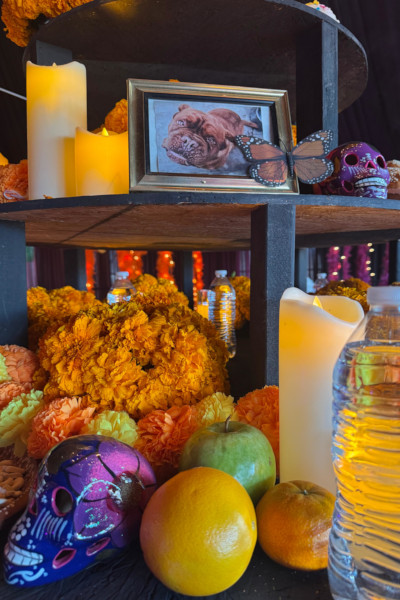
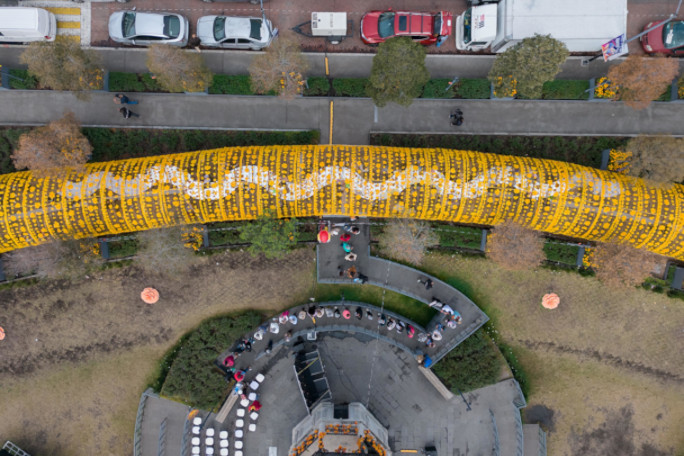
And to honour this tradition, the Farmacias Similares’ foundation “Fundación Dr Simi” created the largest Day of the Dead altar of all time, spanning a record-breaking 52,729.70 sq ft (4,898.75 m²).
More than 100 team members helped to assemble the piece, working uninterrupted for one day straight to create a display full of meaningful photos, food and beverages, and personal items for the community to experience.
The final product was a massive altar almost as large as a football field, inspiring respect and affection from visitors and serving as a colourful and sentimental representation of Mexican culture and loved ones gone by.