


Struck by a shooting star: The first person to be hit by falling space junk
In the early hours of Wednesday, 22 January 1997, a group of women – night owls who worked early or late shifts – were walking laps around O'Brien Park in Turley, Oklahoma, USA (a suburban neighbourhood a few miles north of Tulsa). It was a cold night, with temperatures getting down near freezing, and the women's breath came out in clouds as they power-walked under the streetlights. The overcast skies that had covered Tulsa throughout the day had mostly cleared away after nightfall, and there was a starry sky overhead.
At approximately 3:36 a.m., one of the group – a postal worker called Lottie Williams – noticed a bright shooting star crossing the sky from north to south. As it passed along the western horizon it briefly flared up to a bright flash – "like fire in the sky", Lottie would later say – before disappearing from view.
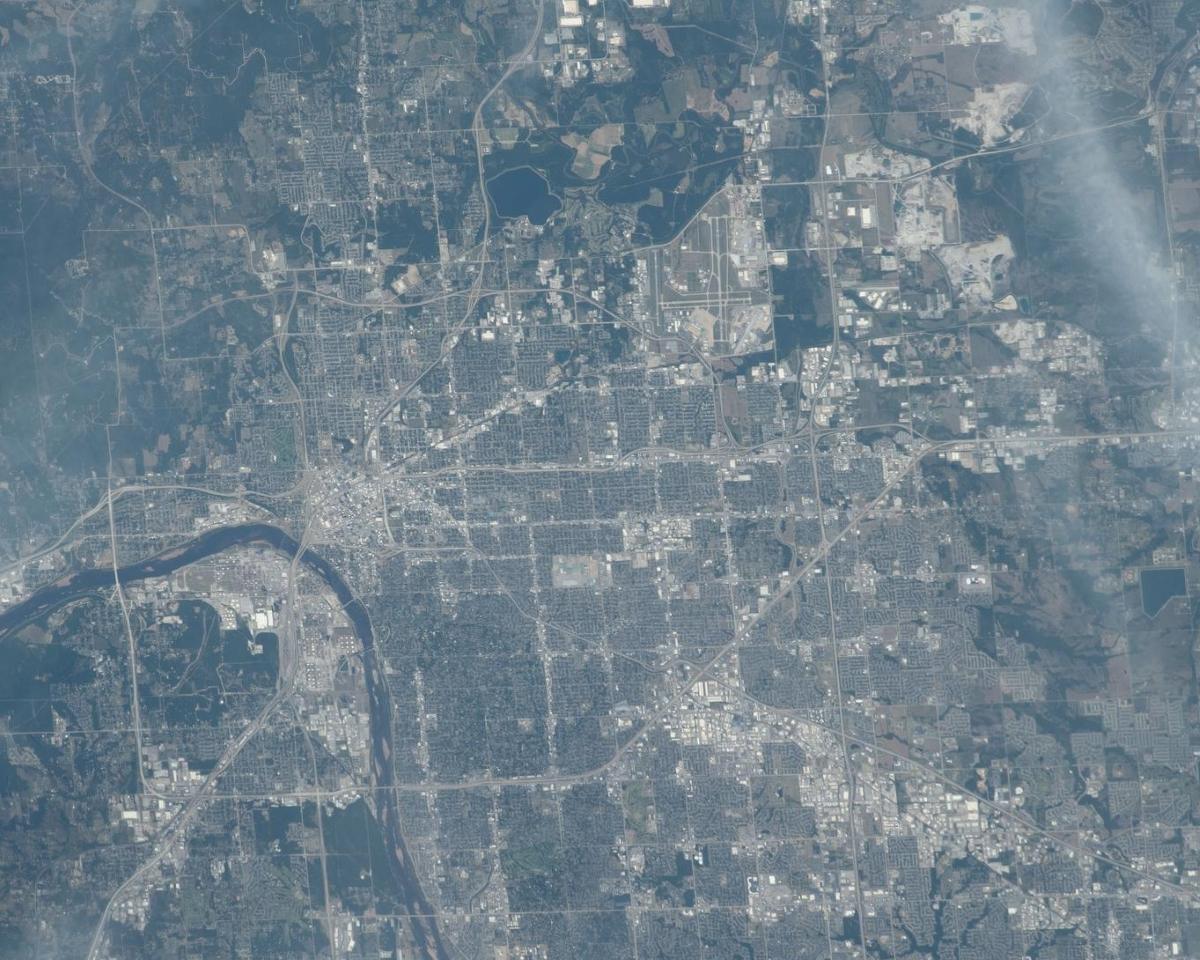
A view of Tulsa, Oklahoma, from the space junk's point-of-view. In this image, captured by Emirati astronaut Sultan Alneyadi from the International Space Station, O'Brien Park is visible right at the top of the picture, just to the left of where the freeway turns to the northeast. [NASA JSC/Sultan Alneyadi]
Thinking little of it, she and her friends carried on walking. A few minutes later though, Williams was startled by a sound akin to a foul ball crashing through the branches of a tree, and something small and light – about the size and weight of an empty soda can – hit her on the shoulder and bounced off into the grass.
Puzzled, Lottie walked over and picked it up. When she held the object up to the light, she saw that it was a strange distorted piece of blackened, melted-looking plastic. She didn't know it yet, but Lottie Williams had just become the first person to have been struck by a piece of space junk.
https://www.newspapers.com/article/the-daily-oklahoman/205473747/
Article from 21 Feb 2008 The Daily Oklahoman (Oklahoma City, Oklahoma)

Identifying the object
Thinking that this was perhaps connected to the shooting star she'd seen, Lottie took the strange object to where all research projects start – her local library. The staff there were intrigued and suggested she talk to Tulsa's astronomy club. They recognized that it was definitely something human-made, and helped Lottie get in touch with scientists at the University of Tulsa and the National Weather Service.
Eventually, word of this peculiar incident reached the US Air Force, and the strange piece of debris was sent off to The Aerospace Corporation (a federally funded research lab in Virginia with an oddly generic name). The scientists there examined the fragment with microscopes, X-ray spectrometers and a variety of other instruments.
The conclusion they reached was that this was a piece of melted aerospace-grade fiberglass, probably the insulating composite overwrap from a propellant tank of some kind. They also found little flecks of aluminium embedded in its surface, which they identified as residue from a rocket stage melting as it burned through the atmosphere.
So it was definitely a piece of space junk, but whose?
The guilty party
The clue that provided the answer to this question was the shooting star that Lottie had seen in the sky over Tulsa. From her testimony, and those of other witnesses across Kansas, Oklahoma and Texas, Air Force scientists were able to reconstruct the trajectory of the "shooting star" and check it against objects that were known to be in orbit at the time.
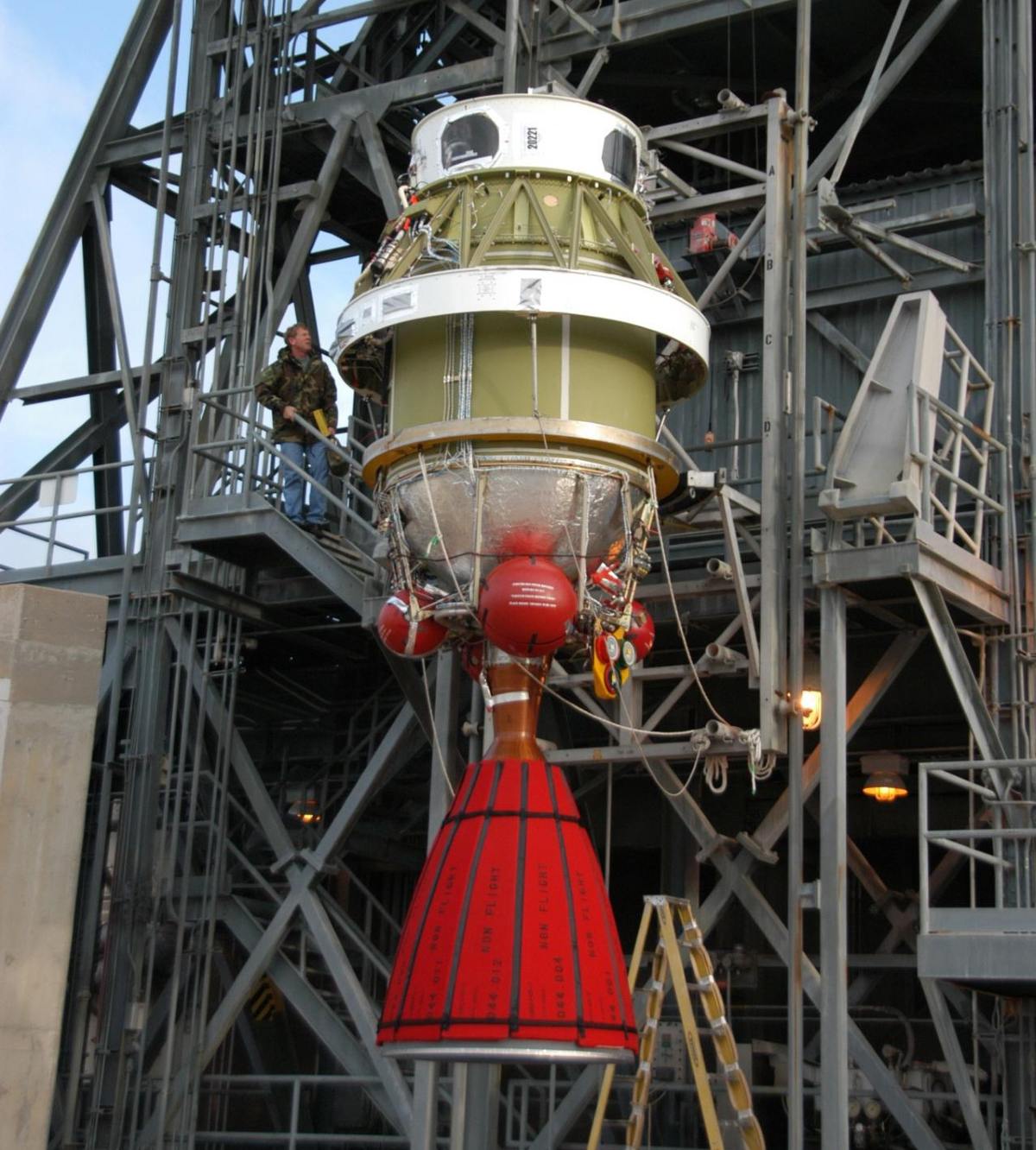
This is how that blackened piece of fiberglass started life. It was probably the insulation on the outside of the main body, or on one of the spherical pressurization tanks. [NASA/George Shelton]
The culprit was identified as an Aerojet AJ10-118K second stage from a Delta II rocket. It had been used to launch a US Air Force satellite from Vandenberg Air Force Base in California on 24 April 1996, and had been in a decaying orbit since. It re-entered Earth's atmosphere around 42 nautical miles (77 km) above Topeka, Kansas, and scattered debris across Oklahoma and Texas when it exploded (likely due to the detonation of unburned fuel) roughly 60,000 ft (18,500 m) above the Arkansas River near Cleveland, Kentucky.
The aftermath
Lottie suffered no injuries from the incident – the object hit her barely hard enough to feel it through her jacket – and regarded the whole thing simply as a funny claim to fame. The US Air Force let her keep the space junk, which she put in a Ziploc bag and stored in a safe-deposit box, a souvenir of her brush with the final frontier.
The only notable long-term impact of this event was that, for many years, reporters from all over the world would phone Lottie up for comment whenever something large was due to make an uncontrolled re-entry. She was bombarded with interview requests when the Russian space station Mir deorbited in 2001 and again in 2008 when the US Air Force shot down the USA-193 spy satellite.
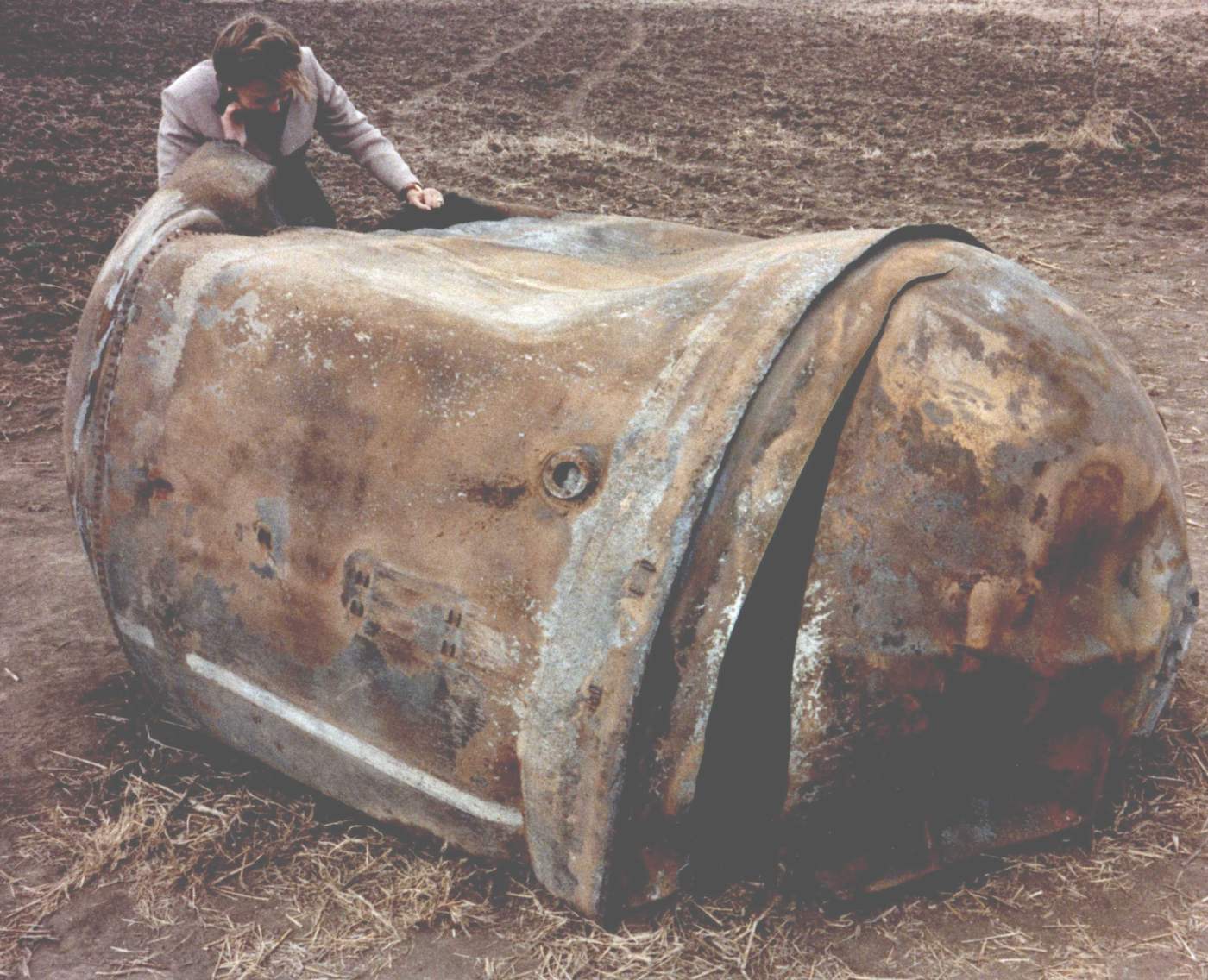
Things could certainly have gone a lot worse for Lottie. This is the largest single piece of debris that fell from the exploding rocket stage in 1997 – a 250-kg (551-lb) propellant tank, which landed near a farmhouse in Georgetown, Texas. [NASA ODPO]
At the time, some speculated that Lottie's tap on the shoulder might herald the beginning of an era where such accidents become commonplace, but this hasn't happened. Although more rockets go into space than ever before, launch providers are now expected to deorbit used components in a controlled and safe way. Best practice is to plan the re-entry so that as much as possible burns up in the upper atmosphere, and that any fragments that do make it to Earth fall harmlessly into the ocean. These principles aren't universally adopted, but most satellite operators at least keep end-of-mission safety in mind.
As of the time of writing, Lottie Williams remains the only person known to have ever been hit by space junk.
For more science & technology stories, click here.
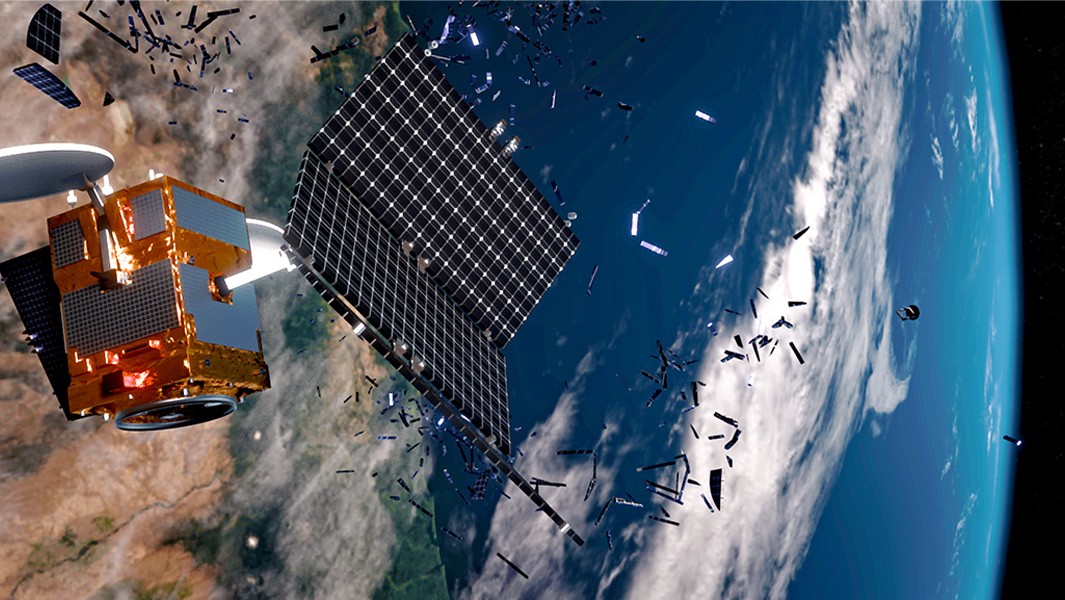
Header image: An illustration of a satellite break-up event commissioned by the European Space Agency's Space Debris Office. [ESA/ID&Sense/ONiRiXEL, CC BY-SA 3.0 IGO]