


Clear the Line! The greatest journey by a runaway train
The small town of Akron, in Colorado, USA, has made few appearances in the annals of history. It was founded as an unnamed construction camp on the Chicago, Burlington & Quincy Railroad (CB&Q) in the 1870s, and a small permanent community built up there to serve the rich farmland of Washington County.
Its chances of becoming memorable suffered an early blow when it was given the name "Akron" by the wife of a railroad engineer who missed her hometown of Akron, Ohio. Since then, the town of not-that-Akron has existed quietly and comfortably in the high plains of north eastern Colorado.
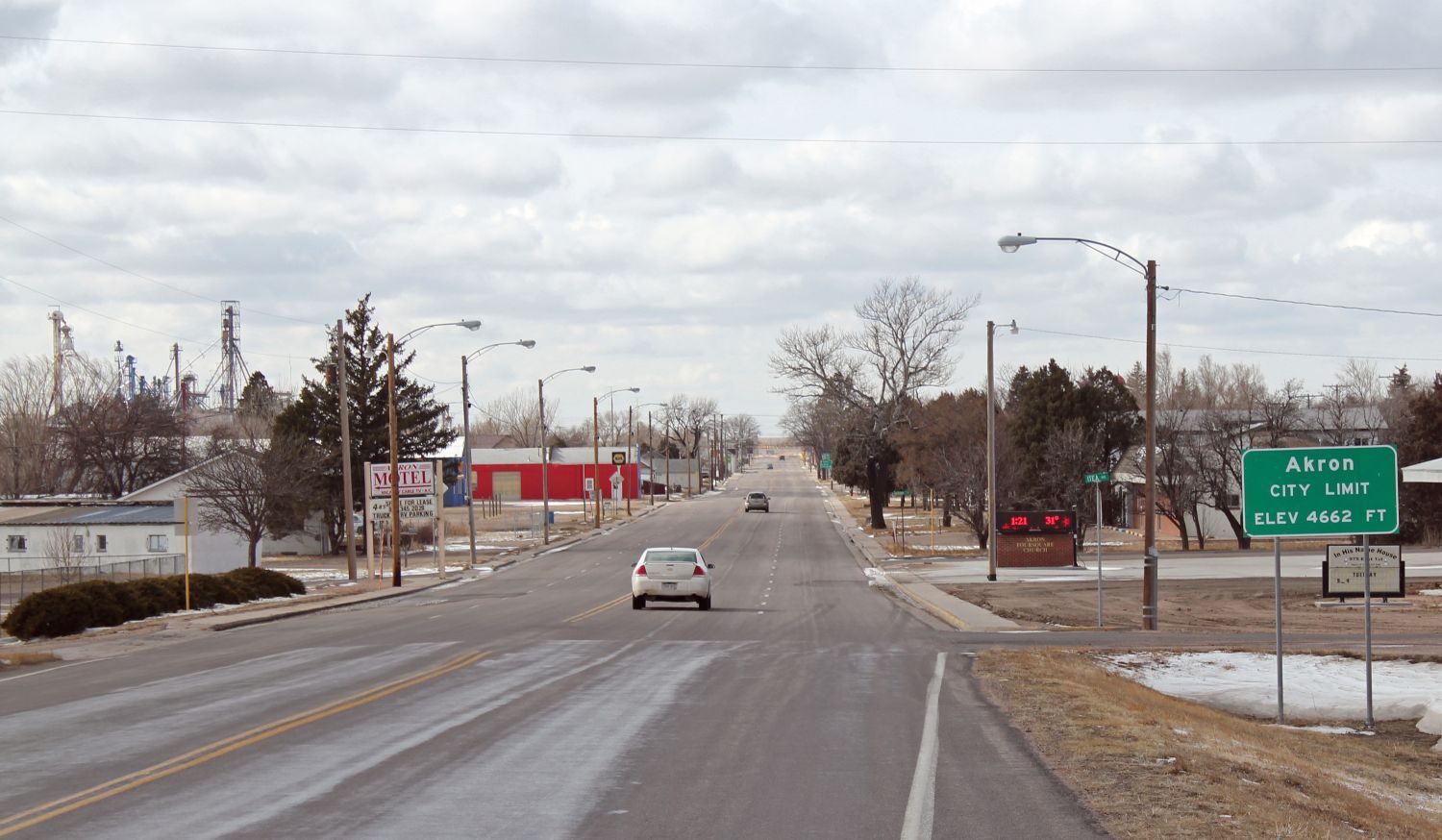
A recent picture of Akron, looking west along First Street from the edge of town. The railroad yard was located a few blocks to the left. [CC SA-BY 3.0/Wikimedia Commons/User:Jeffrey Beall]
Though you wouldn't necessarily guess from the flat horizon of cornfields visible from the town, Akron lies at the summit of a long climb up from the plains of Nebraska. It sits at an elevation of 4,662 feet (1,420 m), making it the highest point on the railroad between Lincoln and the outskirts of Denver.
As a result, Akron was for many years an important stopping point for railroad workers moving freight and passengers across the United States on the CB&Q – it had a complex of goods yards, silos and train sheds where boxcars from various points in the state could be marshalled before being sent down east.
The great storm
It's in one of these goods yards, on 12 April 1884, that our story – one of Akron's few claims to fame – begins. A powerful storm had swept down from the mountains that day, bringing winds that contemporary reporters said, "amounted almost to a tornado" (not unprecedented in that part of the world). The goods yards, off to the south of the town, were exposed to the full force of the wind. At around 5 p.m., while railroad workers were distracted by the aftermath of the roof getting torn off a train shed, a set of eight boxcars loaded with coal overpowered their brakes and quietly began to roll east.
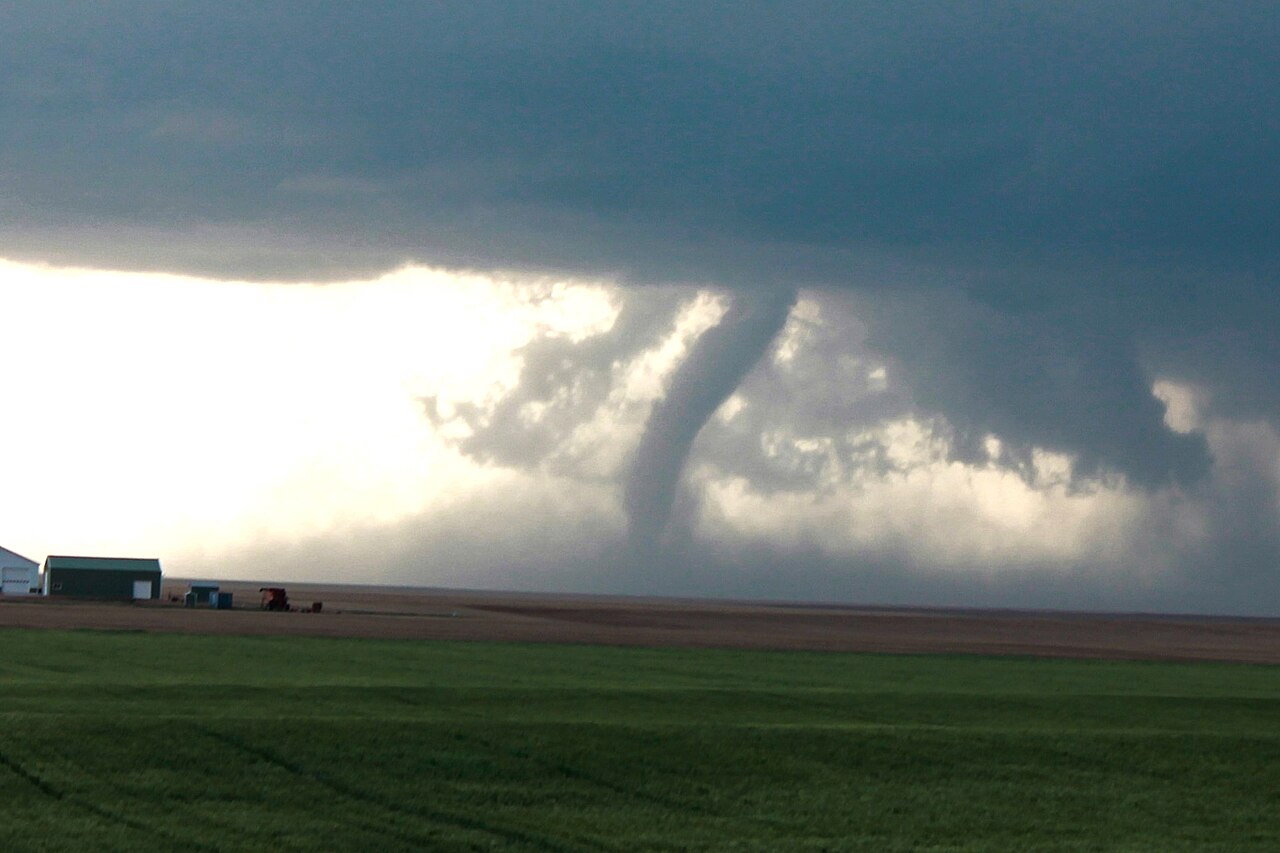
A tornado passes through farmland north of Akron, Colorado, in May 2025. [CC ZERO/Wikimedia Commons/User:BusyWikipedian]
Now, the people who design railroads aren't stupid, and even then – in an age of loose safety standards – they knew the risks of a loose train getting out of a goods yard. These yards were typically designed to be dead flat with a small hump in the track near the entrance, and the switches (points if you're in the UK) were laid out in such a way that runaway boxcars would usually derail before they reached the main line.
This didn't happen in April 1884. The wind was strong enough that those eight boxcars were pushed up and over the hump, and the switches happened to be in exactly the wrong position, allowing the train to glide out on to the main line. The workers in Akron saw it go, but there's not a lot you can do to stop a bunch of 50-ton boxcars when they decide to start moving on their own.
Clear the Line!
The operator at Akron immediately sent a warning down the line, watching as the eight boxcars trundled on to the gradual slope down to the Plains. The engineers on the CB&Q all knew that there was no natural obstacle to stop it now, the runaway train would descend through the fields of Washington County before dropping into the Republican River valley, which would carry it steadily downhill without hitting a significant uphill grade until Superior, Nebraska, some 450 km to the east.
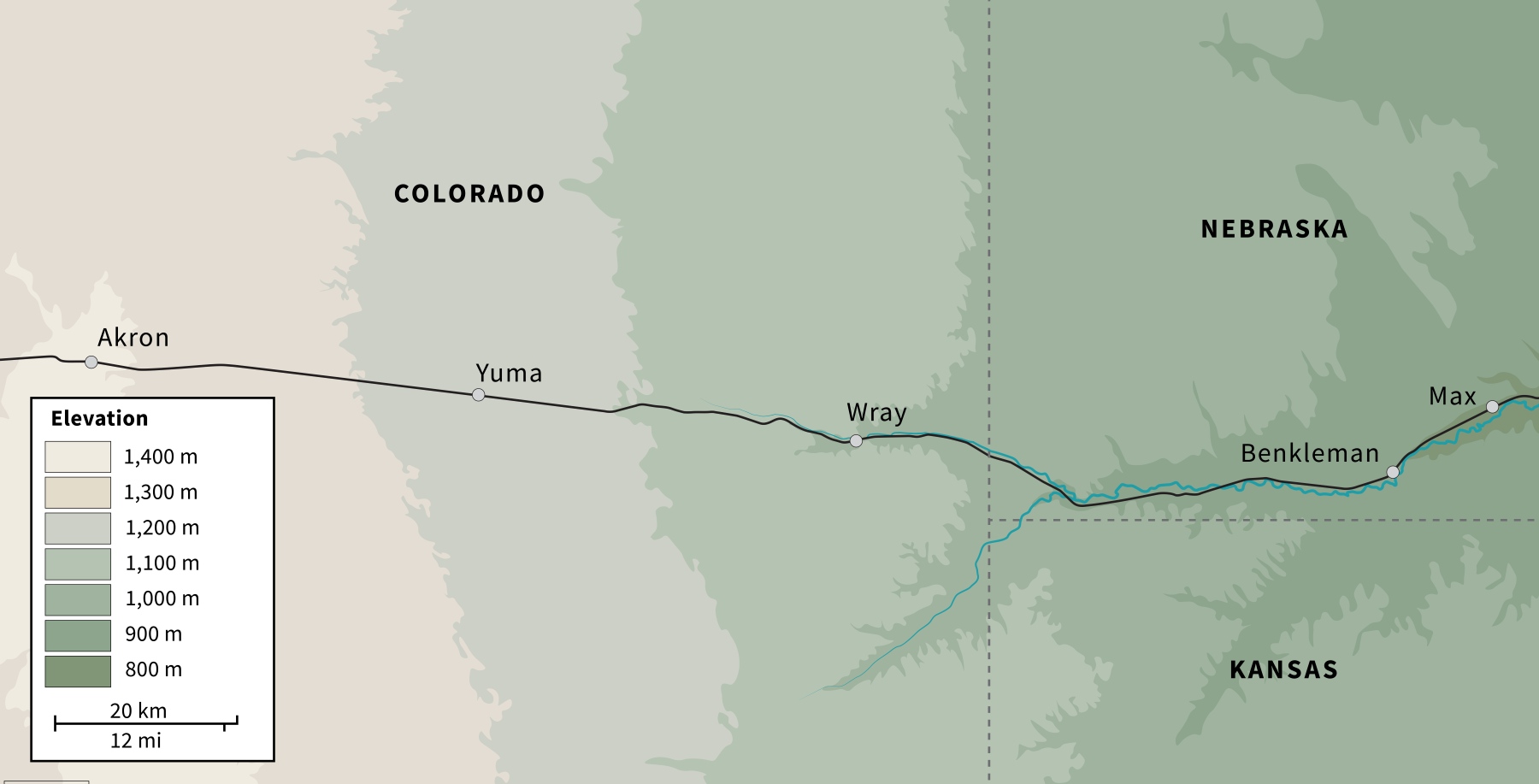
An elevation map of the railroad track that the runaway train travelled along.
Still aided by a powerful tailwind, the runaway train picked up speed as it headed east. The line drops about 1,300 ft (400 m) between Akron and the Nebraska border, which works out to an 0.4% grade – a barely perceptible slope, but enough to keep up the momentum.
All along the line, signallers were frantically having to order trains into sidings and branch lines. The high speed "cannonball" passenger service made it to a siding just two minutes before the runaway train thundered through. When it passed through Haiger, Nebraska, it was reportedly moving at around 40 mph (64 km/h).
Usually, runaway trains derail before they can go very far. They hit a junction or take a corner too fast and bury their wheels in the dirt. The line east of Akron, however, is mostly straight, with just a few gentle curves and no significant junctions. The biggest curve in the track is a 50-degree bend located just west of Wray, Colorado, and the train was likely still going quite slowly at that point.
So the runaway train just kept going.
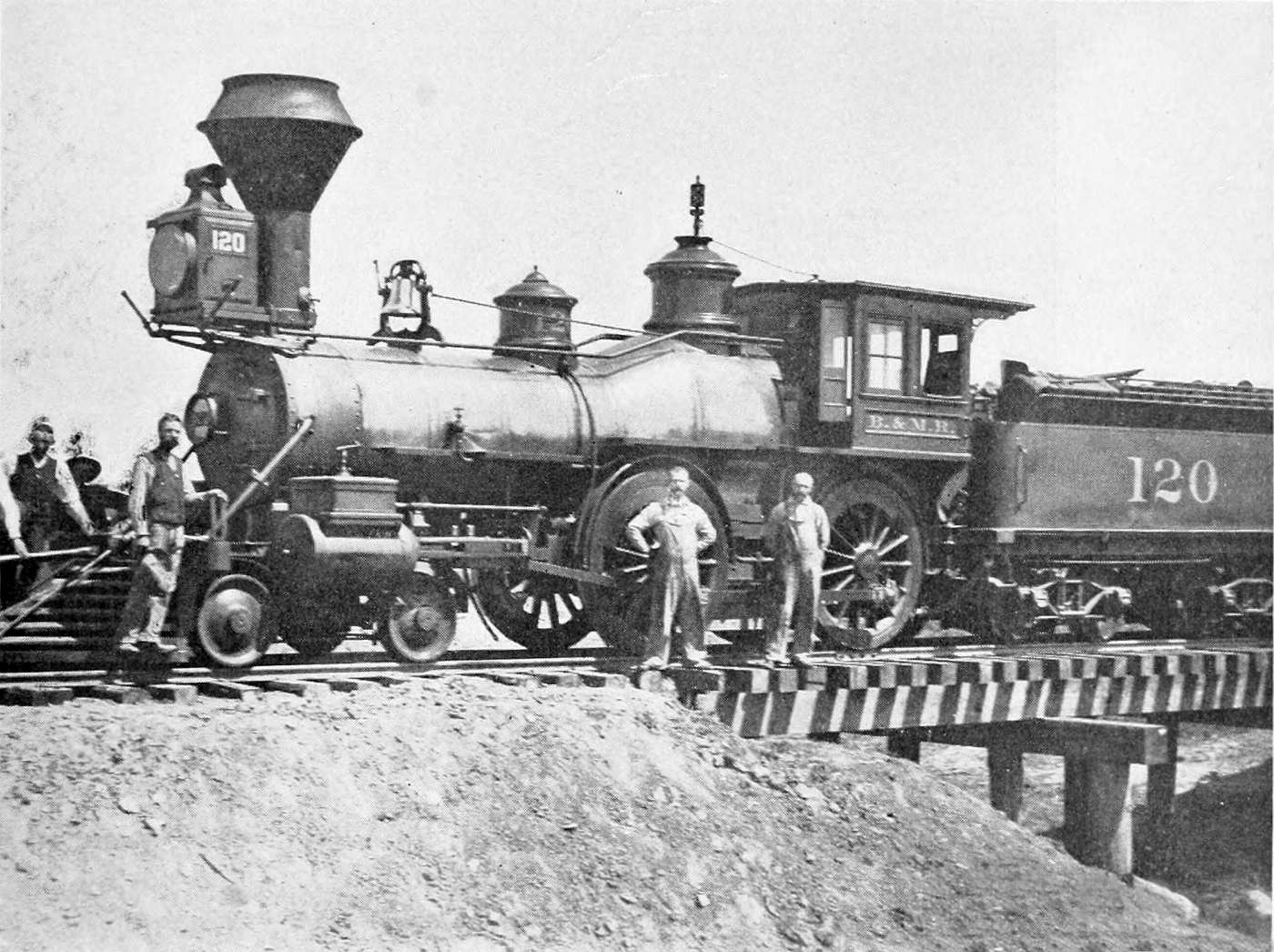
A CB&Q locomotive of the type that would likely have been used to catch the runaway boxcars. [Public Domain/Wikimedia Commons/User:Magnolia677]
Catching the runaway
In Benkleman, Nebraska, a locomotive crew decided to take action. Having just finished shunting their freight train into a siding, they set the brakes and uncoupled their engine. The moment after the runaway rolled through, they engaged their reversing gear and set off in pursuit. Sadly, none of the contemporary sources name this crew, presumably because the CB&Q's embarrassment about the whole affair outweighed their interest in celebrating the safe resolution.
As the engine sped down the track after the runaway, the brakeman climbed on to the tender and slid down to the coupling connector, clinging on to the front of the train as it bore down on the boxcars. This sounds like an insanely dangerous thing to do, and it was, but it was also not a whole lot more dangerous than the brakeman's day-to-day responsibilities – this was still the era where the brakemen on freight trains had to run along the roofs of trains, jumping between moving boxcars to manually adjust brakes. The job had a reputation for being deadly, and so attracted the sorts of people who had a casual attitude towards that sort of thing.
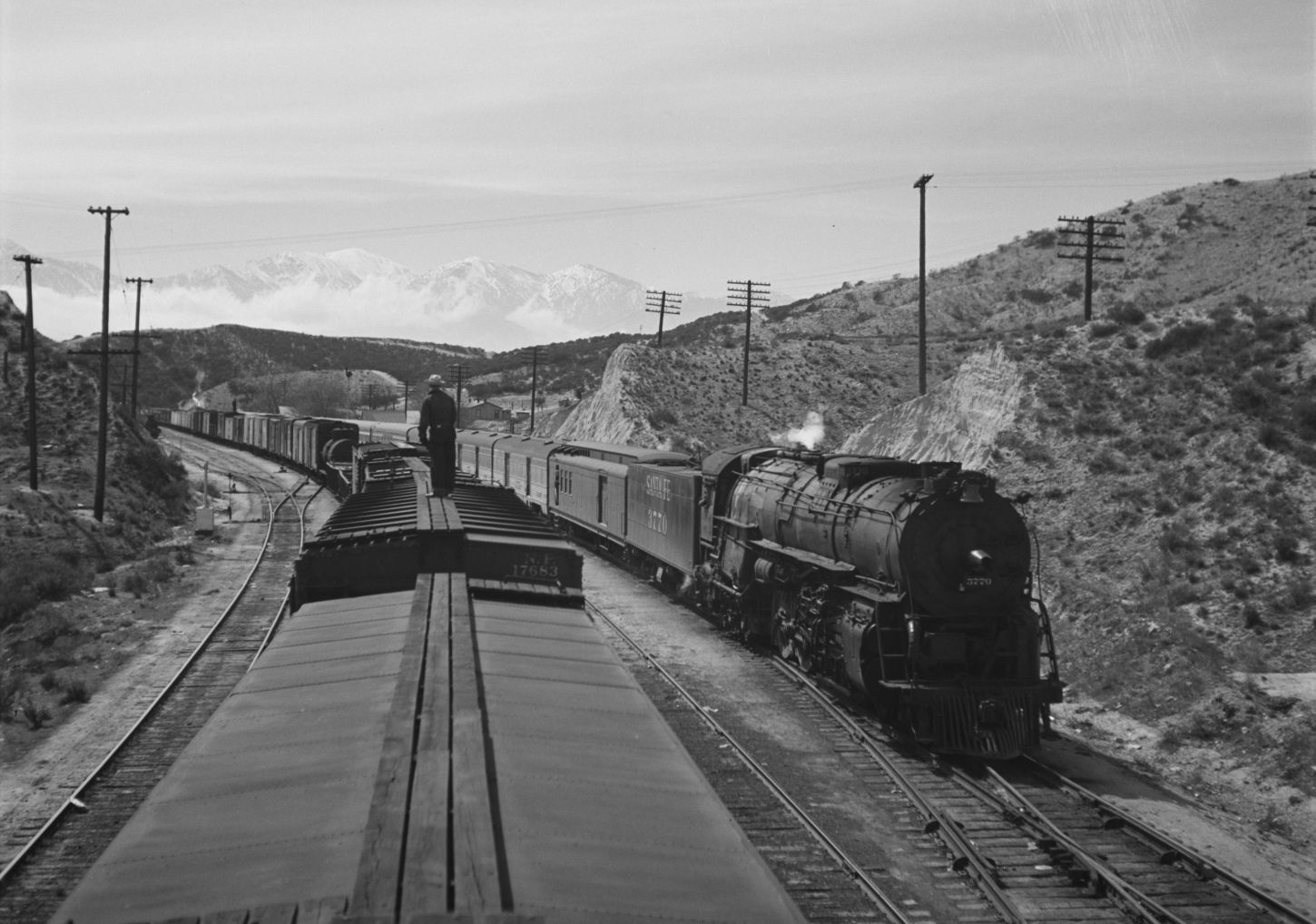
A brakeman riding on top of a train of boxcars somewhere in California in 1943. [Public Domain/US Office of War Information]
The pursuers caught up with the runaway train about half way between Benkleman and Max, Nebraska, and the brakeman was able to attach the coupling on the tender to the rear-most boxcar. The brakes were engaged, and the whole train was finally brought to a halt at about 7:30 p.m. – roughly two and a half hours after the train left Akron.
In total, the set of eight boxcars had travelled 97 miles (156 km) without anyone on board. This remains the greatest distance covered by a runaway train. The closest any recent incident has come is the infamous "Crazy Eights" freight locomotive, which went on an uncrewed adventure across Ohio in 2001. Although it made headlines around the world, the locomotive properly known as CSX 8888 only traveled 66 miles (106 km).
For more Science & Technology records, click here.
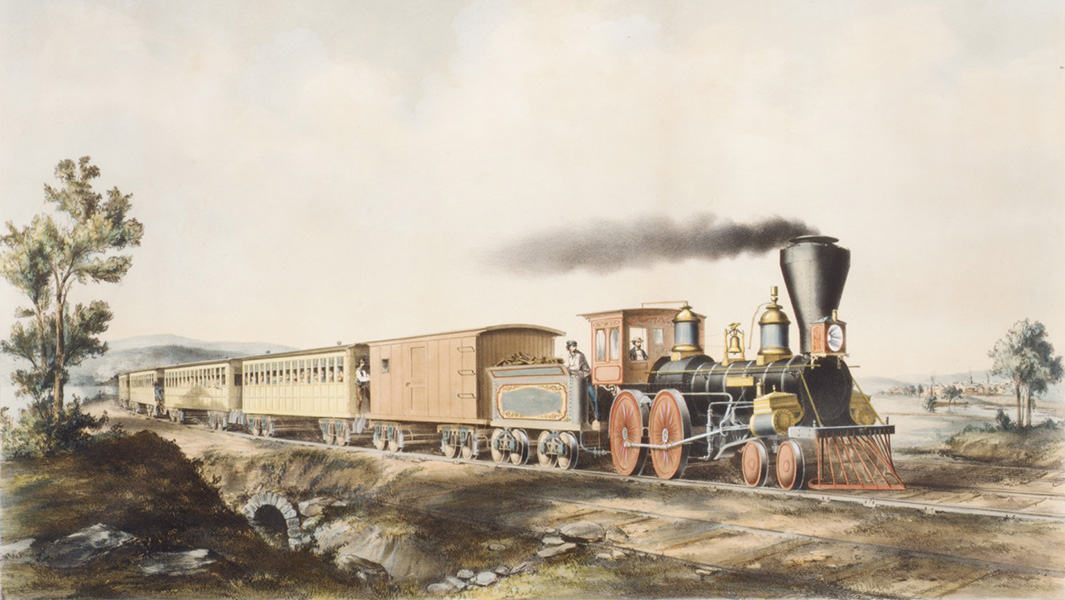
Header image: An 1859 lithograph by Currier & Ives, showing a "fast express" train. [Public Domain/Metropolitan Museum of Art]