


No Man's Sky is 10 years old and still has an amazing gaming record
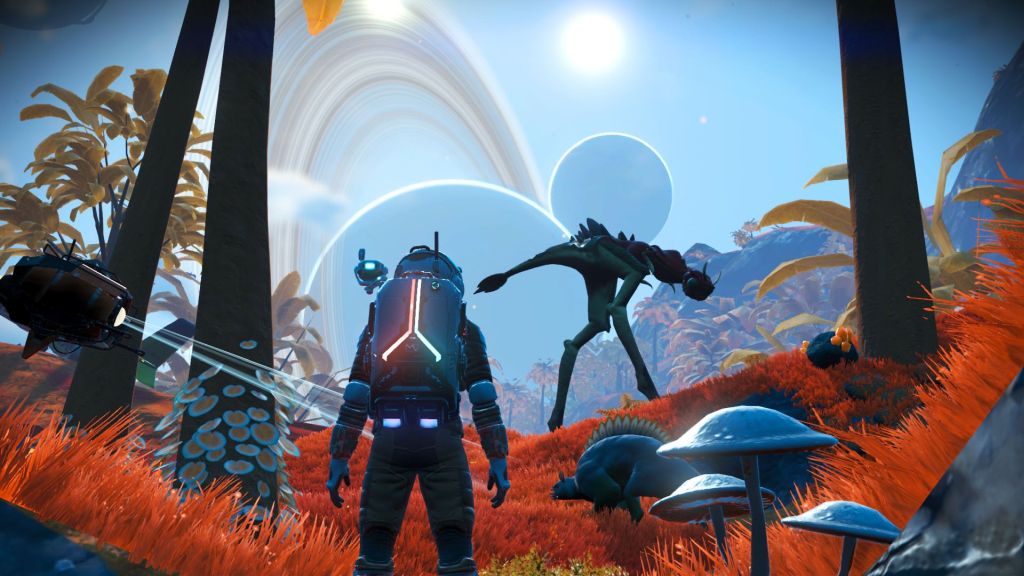
Yesterday, which marked 40 years since the release of the first Metroid game, I warned you that there are a lot of gaming anniversaries coming up, and I bet you didn’t believe me. Well doubt me no longer, because it’s been 10 years since ambitious space exploration game No Man’s Sky took one small step for games, one giant leap for gamekind – and earned what I think is one of the most interesting records in all of videogames.
No Man’s Sky is an interesting game by itself, though. The developers, UK-based Hello Games, had previously shipped the Joe Danger series of sort-of-racing games, so of course a huge space survival game with procedurally generated planets everywhere was a natural next step.
Sean Murray, one of the founders of the indie studio, didn’t want to end up making sequel after sequel, so while they worked on the Joe Danger games, behind the scenes they were making a sweeping sci-fi title inspired by classic stuff like the works of Isaac Asimov. An initial presentation of No Man's Sky set the industry abuzz, and Sony offered to fund development. Hello Games instead just asked for support with promo and marketing; thus No Man’s Sky was part of Sony’s presentation at the games expo E3 in 2014.
If you weren’t around at the time, it’s difficult to explain just how much hype there was for this game. For reasons I don’t fully understand, Murray even went on an episode of The Late Show With Stephen Colbert in October 2015. That’s not normal for a videogame, you know?
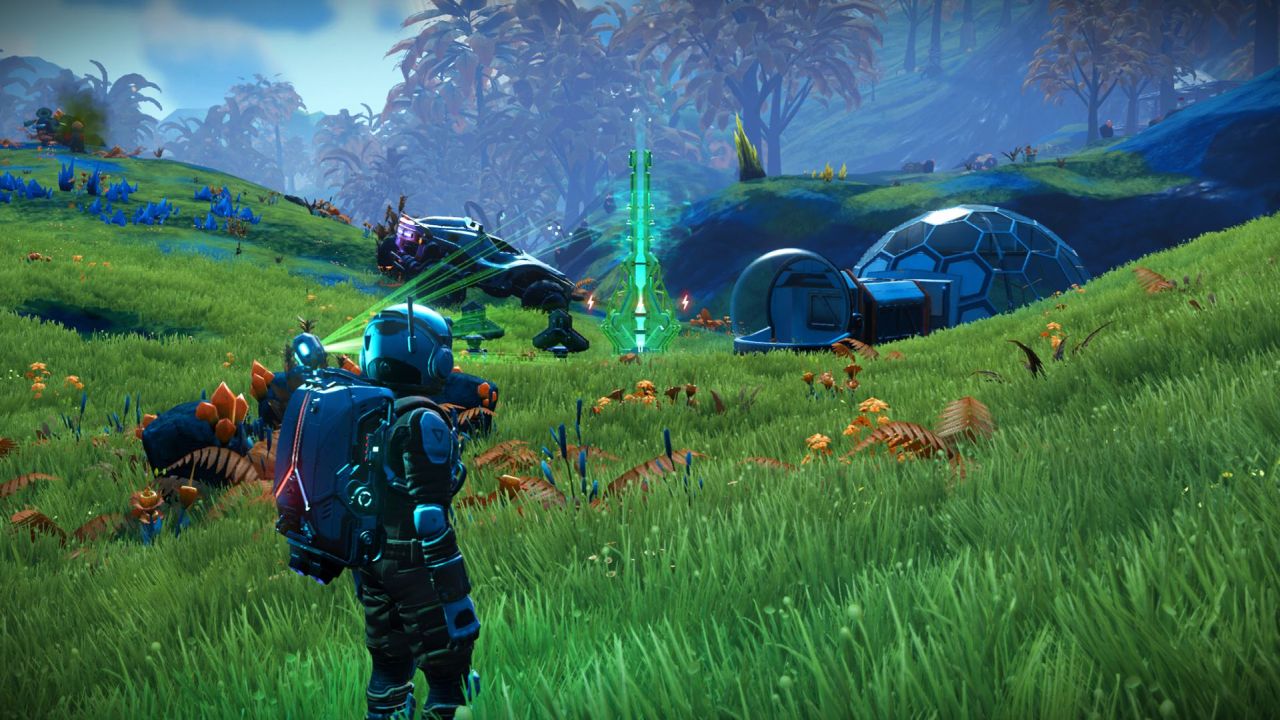
But it was an exciting pitch! You were a spaceman dropped on a random planet, in a whole galaxy of other, totally unique planets. No one person’s exploration would be the same. The procedural generation would guarantee different combinations of flora and fauna everywhere you landed on your journey to the centre of the galaxy. Without full details of what the game would be like, people imagined it would be the greatest game they’d ever played.
In practise, partly because the expectations were so high, and partly because of launch issues and bugs, it wasn’t what people expected. The initial 2016 release of No Man’s Sky was received as mid at best, with the proc-gen often throwing up the same sorts of animals, plants or rock formations between planets, and the gameplay involving a lot of harvesting minerals.
Other studios in different positions might have given up on the game and quietly moved on. But not Hello Games. They immediately started on a series of what would be expansive free updates to No Man's Sky, adding numerous new features. To date there have been 42 DLCs, and those of you who can do quick maths will note that average out at around four a year for the last decade. Broken down, there have bee 289 updates pushed through to the game.
The most recent DLC, The Swarm, came out on 27 May this year, and added new alien threat called the The Swarm of Glass. But over the years No Man’s Sky has received full multiplayer, base-building, new plants and animals, and loads of story stuff. It’s almost unrecognizeable from the game it was on release.
None of those updates added a record, though. In fact, the record was in No Man’s Sky from day one, because while the procedural generation wasn’t as initially dazzling as people thought, the maths was still sound. It shipped with 18,446,744,073,709,551,616 (“more than 18 quintillion”) possible combinations for unique planets that players could land on and explore. Murray estimated it would take “585 billion years to find them all”, even if players discovered a new planet every second.
That’s a long old time, and it won’t surprise you to hear that No Man’s Sky was awarded the record for most explorable planets in a videogame. Even heavyweight space MMOs like EVE Online don’t have 18 quintillion planets.
I’m glad No Man’s Sky has such a cool record, too. Hello Games always believed in the potential of their game, and spent a decade working on it. That’s exactly the kind of passion and sticktoitiveness that we like to see at Guinness World Records. Who knows what the next decade might bring?
To see what other gaming records and anniversaries are coming up, check out the Gaming section.