


“I’d been let into a secret society”: Martha Cooper on a lifetime documenting street art
A dive into the Guinness World Records archives reveals many titles that salute tenacious workers who love their jobs to such an extent that "retirement" seems like an alien concept. These vocations vary drastically, including professionals as diverse as surgeons and lifeguards to rather famous TV presenters, flight attendants and even popstar impersonators.
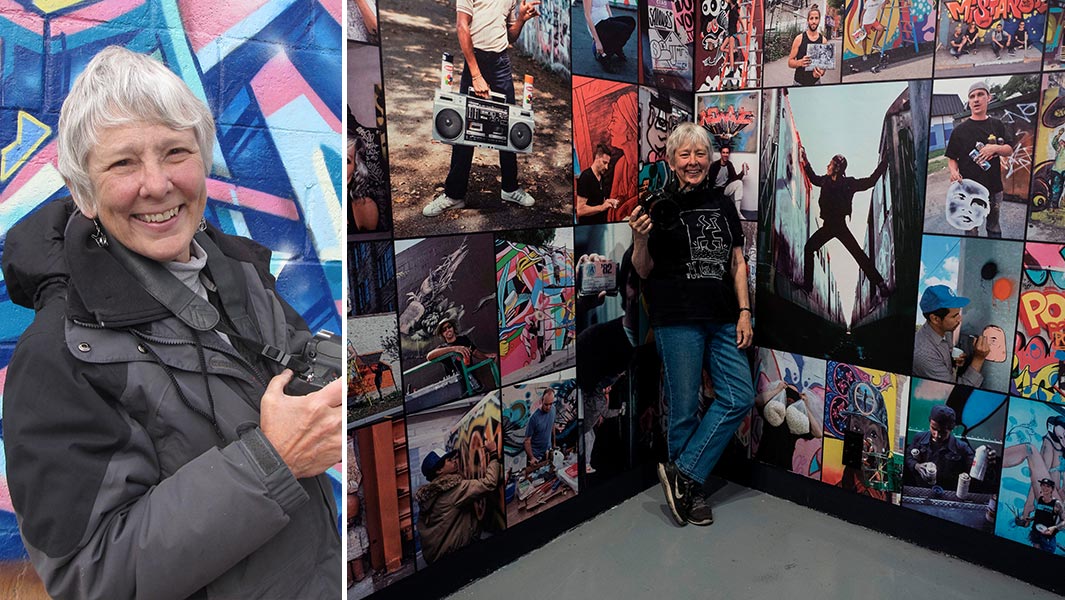
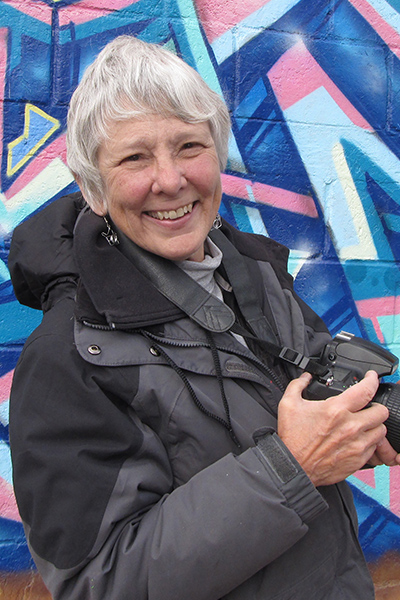
One of the most recent to join their ranks, who features in the upcoming GWR 2027 edition, is Martha Cooper (USA). Having dedicated her working life to documenting urban art for fast-approaching 50 years (based on when she decided to specialize in this subject matter in 1978), hers has now been recognized as the longest career as a street-art photographer.
Credit: Sally Levin
Technically, she took her very first pictures of street art more than a decade earlier, in the 1960s, though at that point she had not committed to it exclusively. Photography in general was very much a big part of her childhood, though, so what would become her vocation began to come into focus from an early age. “My dad and uncle had a camera store in Baltimore,” she told GWR. “I remember taking my first camera, a Kodak Baby Brownie, to nursery school when I was around three.”
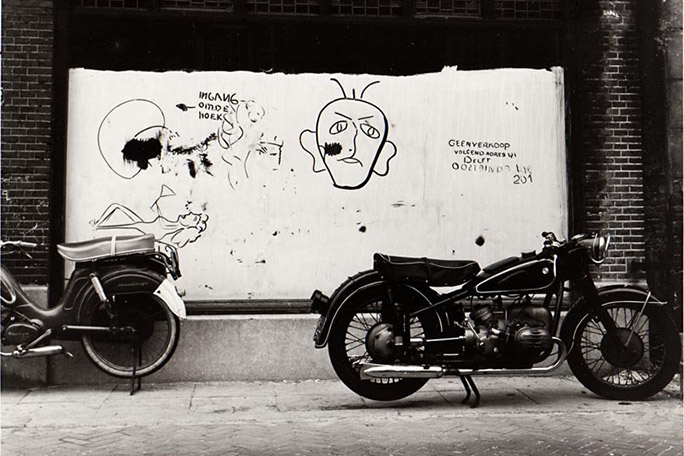
Photo taken in 1962 for a college project. Credit: Martha Cooper
Cooper’s very first shot of graffiti was captured in 1962, for a project she needed to graduate as an art major while studying at Grinnell College in Iowa.
Six years later, while interning at National Geographic, Cooper found herself once again drawn to graffiti and how it was increasingly forming a backdrop to urban communities.
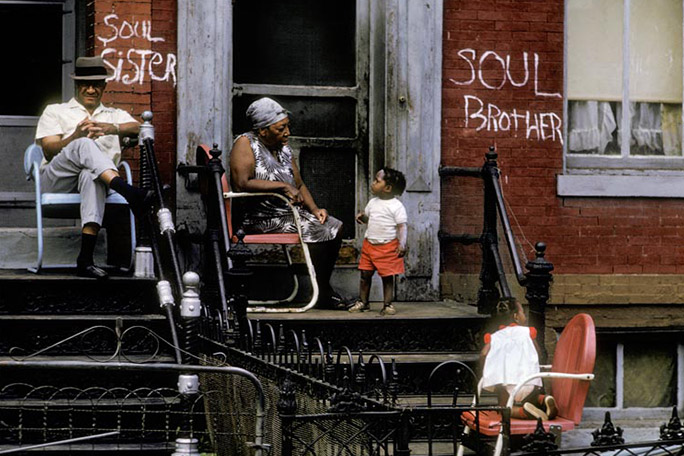
Photo taken in 1968 in Washington, DC, when Cooper was an intern for National Geographic. Credit: Martha Cooper
With the first modern graffiti emerging in cities like Philadelphia and New York in the 1960s, there was something about this innovative form of expression that captivated her from the get go. Cooper recalled: “I had been photographing a personal project about kids playing creatively on the street and in vacant lots in New York City. One boy showed me his notebook and explained that he was practising to put his name on a wall.
“That was the first time I understood that the tags I had seen everywhere were names. I was intrigued by the idea that kids had their own artform and aesthetics.”
It was an exciting time. I felt that I’d been let into a secret society. While graffiti is included in the term “street art”, I usually make a distinction between the two. New York graffiti or style-writing is letter-based. Street art is image-based. The tools of graffiti are mostly markers and spray cans while street artists use other techniques – Martha Cooper
One of the standout moments of her early career that would cement her presence as something of a legend in this field is the release of her 1982 book Subway Art. This photo showcase, which Cooper co-created with fellow photojournalist Henry Chalfant, focused on the rising trend of graffiti writers who were using the carriages of New York’s metro trains as their canvas. As you’d expect, capturing art that was often on the move – not to mention illegal! – was no easy feat, especially given the equipment of the time.
“The photos in Subway Art were all taken on Kodachrome slide (transparency) film with a low 64 ISO. I’m proud that I was able shoot moving trains in focus with that film. I’m also proud of night shots of writers painting in the yards.”
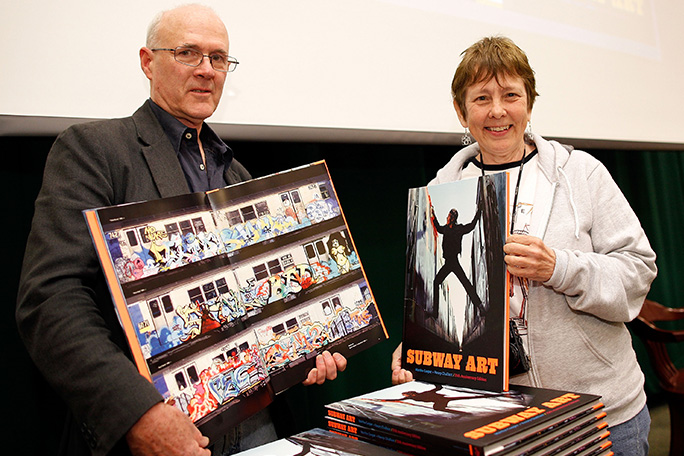
Cooper and Henry Chalfant with the 25th-anniversary edition of their book Subway Art in 2007. Credit: Jemal Countess/WireImage/Getty Images
Still in print to this day, Subway Art has sold hundreds of thousands of copies and is seen as a seminal tome that contributed to a paradigm shift in how street art is perceived. Along with progressive gallery curators who dared to showcase street art in the 1970s and documentary films like Manfred Kirchheimer’s Stations of the Elevated (1981), Subway Art helped to tilt the narrative away from graffiti being seen as mindless vandalism to something more nuanced and even something to be celebrated.
Cooper reflects on the impact she feels her and Chalfant’s book has had: “I think the book encouraged youths, especially boys, to be artists. We made art look like a fun, urban adventure.”
Nowadays, with works by some street artists fetching millions of dollars at auction, cities commissioning urban artists to regenerate rundown neighbourhoods, as well as exhibitions in some of the world’s most prestigious art galleries (and more recently even entire museums dedicated to the genre), it can be hard to imagine a time when it was subversive and taboo.
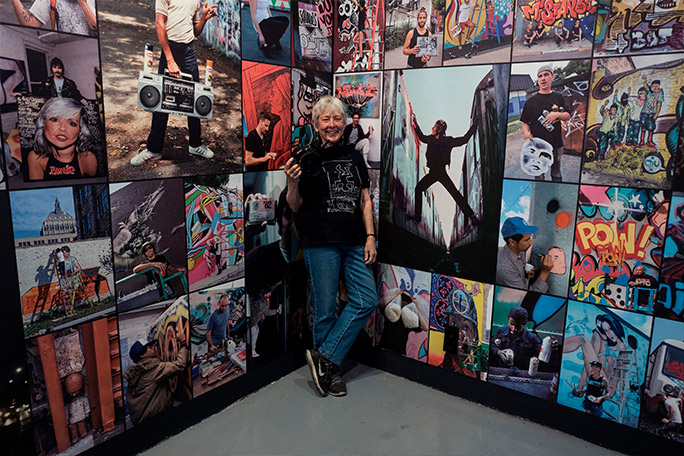
Cooper at an exhibition of her street-art and graffiti photography in Berlin, Germany, in 2016. Credit: John MacDougall/AFP via Getty Images
As Cooper recalls, when she first started documenting New York’s street-art scene “many people felt that graffiti was not worth wasting my time, energy and expensive rolls of film on.”
Times have certainly changed – and Cooper has had a front-row seat from the beginning, as an avid recorder of urban art from its formative days. “Graffiti was formerly a little-known, underground artform. Now it’s being called the ‘biggest art movement in the history of the world’,” she reflected. “Specialized tools such as ‘fat caps’ are now specifically manufactured for graffiti writing and sold in graffiti shops. Paint companies like Montana produce infinite colours of spray.”
For me, illegal graffiti is more interesting than permissive street art. But there is room for both. I’m still waiting to see major contemporary art museums like MoMA in NYC embrace graffiti and show some incredible "wildstyle" pieces along with their Harings and Basquiats – Martha Cooper
After almost half a century of documenting the work of hundreds of street artists all around the world, we asked Cooper if there are any particularly unusual shoot locations that stand out: “Geographically: Mongolia. Physically: maybe the Paris Catacombs.”
With all the experience she has amassed over the decades, what would be her main piece of advice to other photographers who love to capture street art for posterity – either professionally or for leisure? “Be sure to find out who the artist is and credit them if posting the photo.”
Finally, can there be any artists still left on Cooper’s wish list that she’d like to work with? Well, it turns out there is a rather well-known name in her sights… “I’m more interested in photographing artists at work than just the work itself. I would like to photograph Banksy stencilling.”
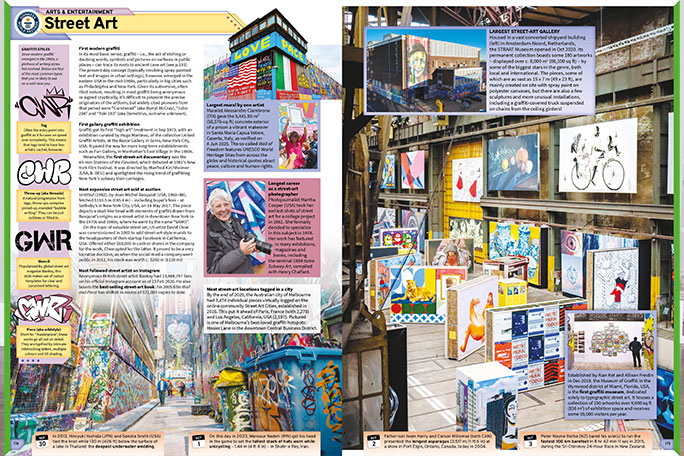
Discover more records all about street art and graffiti – carefully curated in conjunction with expert Cedar Lewisohn – in GWR 2027, which launches on 10 September.
Read more stories about incredible artists in our dedicated Arts & Entertainment section.
Thumbnail and header image credits: Sally Levin and John MacDougall/AFP via Getty Images