


The record-breaking journey that made astronaut Christina Koch a GWR ICON
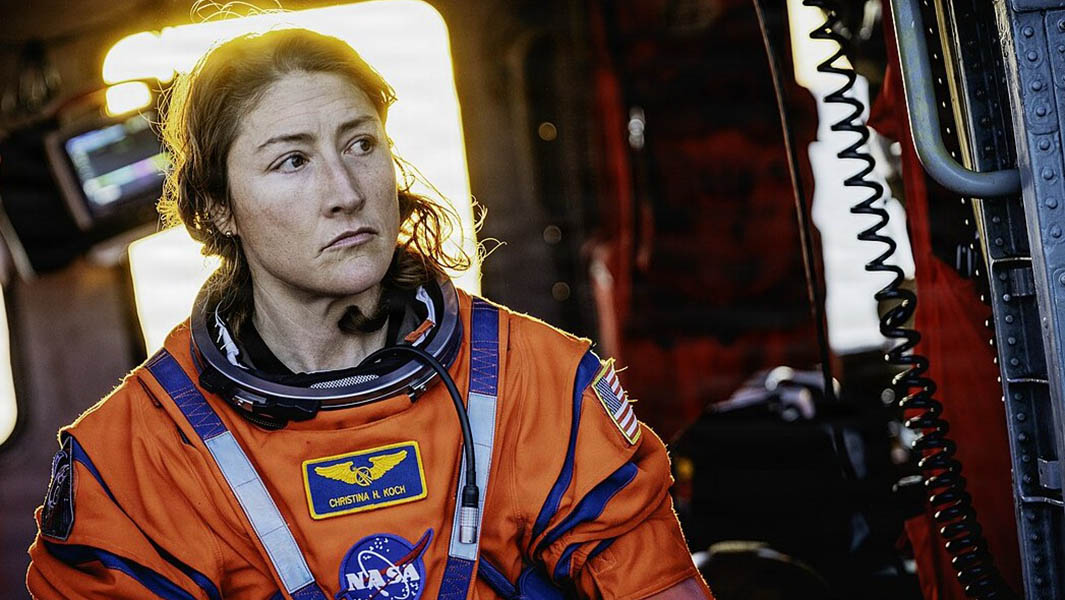
Christina Marie Hammock Koch (pronounced "cook") wanted to be an astronaut from such a young age that she genuinely doesn't remember when or how it started. In her childhood memories, the well-read copies of National Geographic, the cut-out pictures of explorers, astronauts and far-flung places, were always just there. Her dedication carried her through a stellar academic career, life as a travelling adventurer-scientist and then on to the International Space Station and the Moon. This remarkable career has seen Christina earn five Guinness World Records titles, including one of the most fundamental records in spaceflight, making her an deserving GWR ICON.
Christina was born in Grand Rapids, Michigan, USA, in 1979. Her parents – Ron Hammock and Barbara Homrich – had met while working at the same hospital a few years earlier. The family left Grand Rapids when Christina was still very small, ending up in Jacksonville, North Carolina, where Christina grew up.
She was, it's not surprising to learn, a strikingly high-achieving student – winning first prizes in science fairs, earning state-wide academic awards and making school honours lists year-in-year-out. At home, she read voraciously, but also spent a lot of time getting her hands dirty in what she called "shed heaven" – disassembling and fixing machinery with her dad.
Christina spent most of her summers in the village of Sparta, Michigan, joining various cousins and other relatives on the Homrich family farm. The only times she skipped those trips, or cut them short, were the three occasions she attended Space Camp in Huntsville, Alabama – an educational program operated by the US Space and Rocket Center.
Meeting her mentors
After two years at the prestigious North Carolina School of Science and Mathematics (an extremely selective residential school in Durham, North Carolina), Christina Koch was accepted to North Carolina State University, starting her degree in 1997.
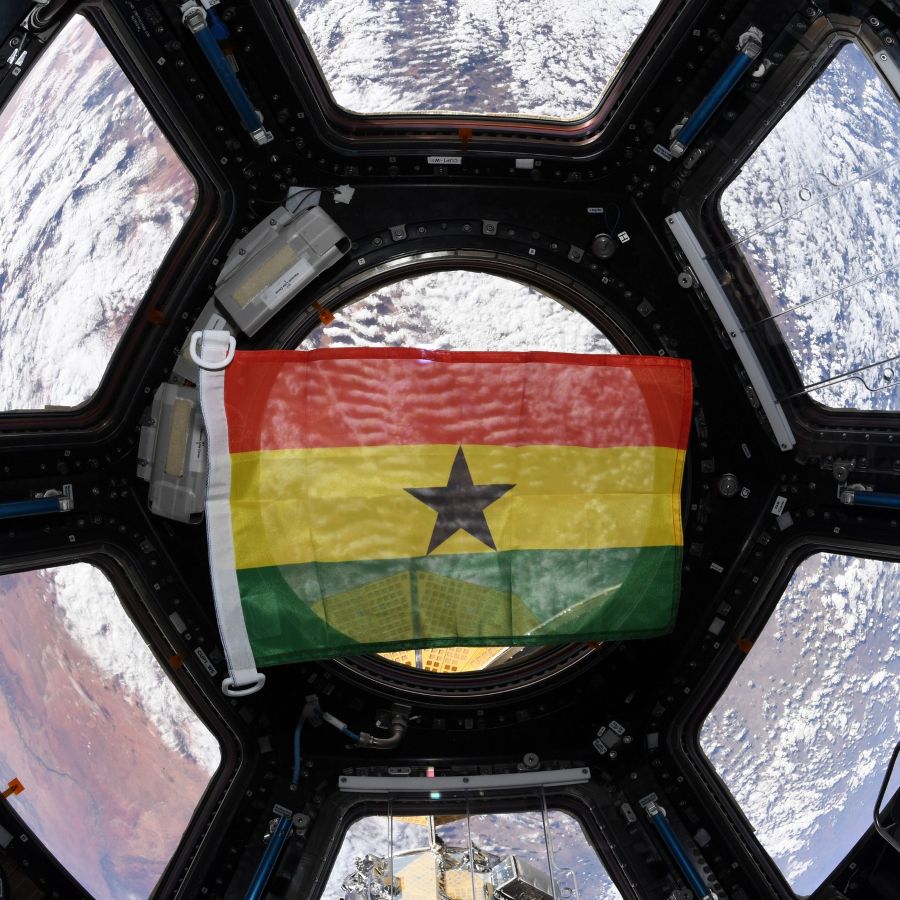
While she was at university, Christina found time between classes for her two degrees to spend a term as an exchange student at the University of Ghana in Accra. She would later bring this keepsake with her to the ISS in recognition of her time there. [NASA]
One of her academic mentors, Professor Cecilia Townsend, nominated Christina for a scholarship from the Astronaut Scholarship Foundation – an organization founded by a group of retired astronauts in 1984. This brought the gifted young scientist into NASA's orbit (pardon the pun) for the first time, introducing her to astronauts and Agency staff.
She graduated with a degree in electrical engineering in May 2001, but had accrued almost another entire degree's worth of academic credits in physics, so stayed on to take the last few necessary classes for a second degree while preparing to start her masters (in electrical engineering). Her two degrees reflect her lifelong interest in what she has described as "pondering the universe" and "tinkering".
A wandering scientist
After she finished her post-graduate studies, Christina began working as what can be best described as an itinerant, wandering scientist. She started as a researcher at the Laboratory for High Energy Astrophysics at NASA's Goddard Space Center in Maryland, before moving on to roles at the Admunsen-Scott South Pole Station (where she trained as a firefighter and search-and-rescue climber), the Johns Hopkins University Applied Physics Laboratory (where she designed instruments for the Van Allen and Juno probes) and Summit Station in Greenland (where she overwintered as an instrumentation engineer).
Christina took up new challenges during her travels. Already an experienced rock climber, she took up ice climbing during her time near the poles, and surfing while she was in the South Pacific.
In an interview with The Technician in 2013, Christina described the thinking behind these moves, "I followed the route of my own dreams and do things that draw and excite me, and later in my career, if the skills I have accumulated would make a good astronaut, then I would consider applying.”
(Her fall-back career plan – if the astronaut thing didn't work out – was to go to medical school and become a doctor.)
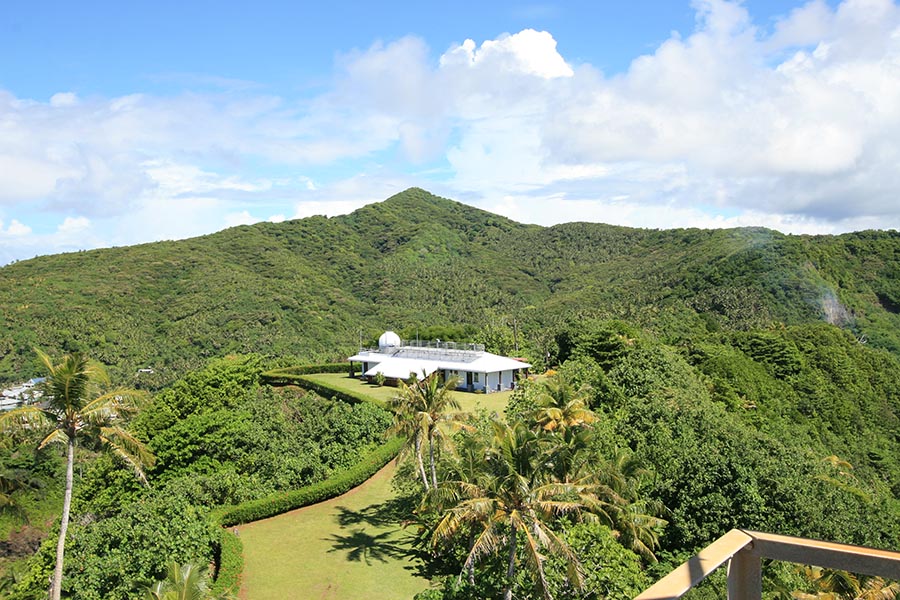
The NOAA American Samoa Observatory, which sits atop the cliffs of Cape Matatula at the northeastern limit of Tutuila Island, about half-way between Hawaii and New Zealand. [NOAA]
When the call finally came from NASA in April 2013, it found Christina working as the Station Chief at NOAA's American Samoa Observatory. Her days were spent tending to the array of delicate scientific instruments that bristled from the roofline of a small, single-storey building on a remote Pacific Island. It was during this time that she met her future husband, Bob Koch, who was also working on a US government project on the island.
Astronaut training
Christina joined NASA as part of Group 21, an eight person astronaut class that comprised four men and four women (the first time NASA's astronaut intake had equal numbers of men and women).
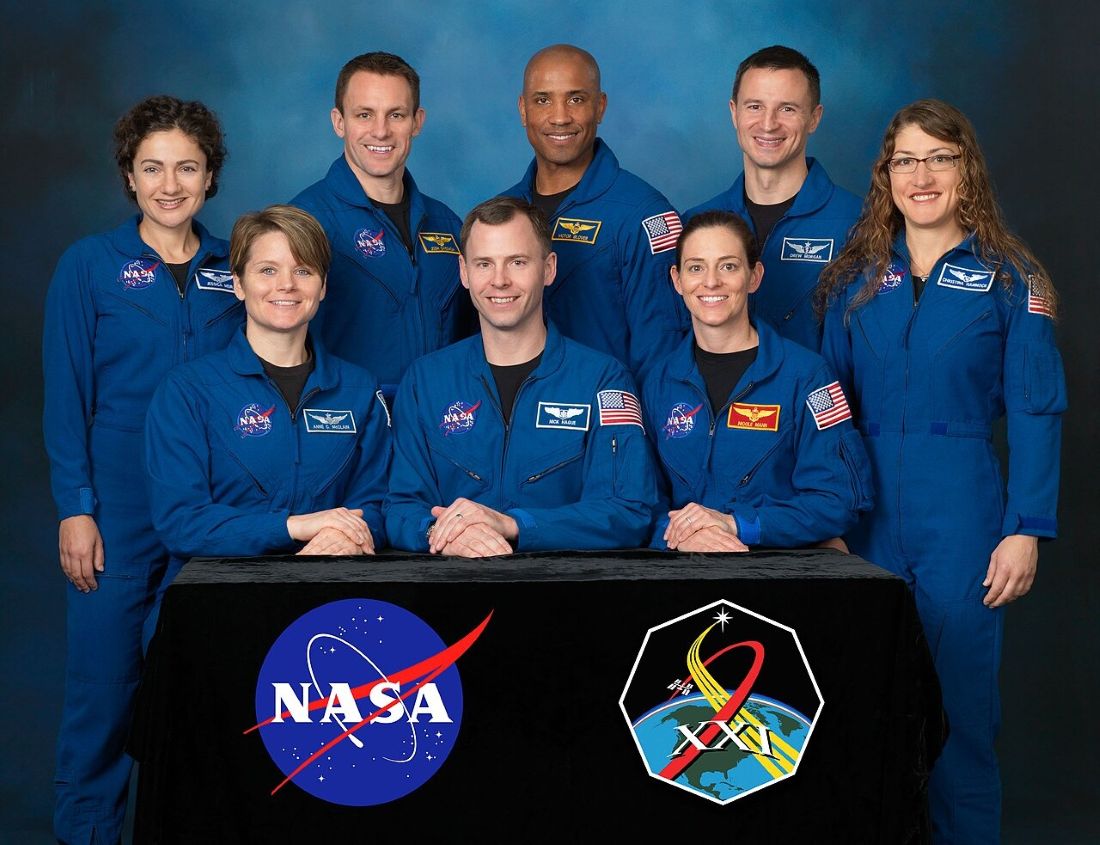
Astronaut Group 21 (left to right): Jessica Meir, Anne McClain, Josh Cassada, Nick Hague, Victor Glover, Nicole Aunapu Mann, Andrew Morgan and Christina Hammock Koch. [NASA]
The training for astronauts is intense and wide-ranging. Before they're added to the active roster, they have to be able to fly supersonic jets, scuba dive, speak near-fluent (and extremely technical) Russian and learn the ins-and-outs of a huge number of complex systems (ranging from space suits to space toilets). That's in addition to the practical, mission-specific training in how to operate particular instruments, conduct planned spacewalks, and so on.
Christina completed her astronaut training in July 2015, joining the active astronaut roster waiting for a mission assignment.
Record-breaking in space
Christina achieved her life's ambition on 14 March 2019, when Soyuz MS-12 launched from the Baikonur Cosmodrome in Kazakhstan, bound for the International Space Station. Christina was in the second flight engineer seat, alongside Group 13 classmate Nick Hague and veteran cosmonaut Aleksey Ovchinin.
For most astronauts, their debut spaceflight is a fairly straightforward assignment – insofar as any spaceflight can be described as straightforward. Christina, however, joined the ISS crew during a particularly busy and complicated phase of the station's operations.
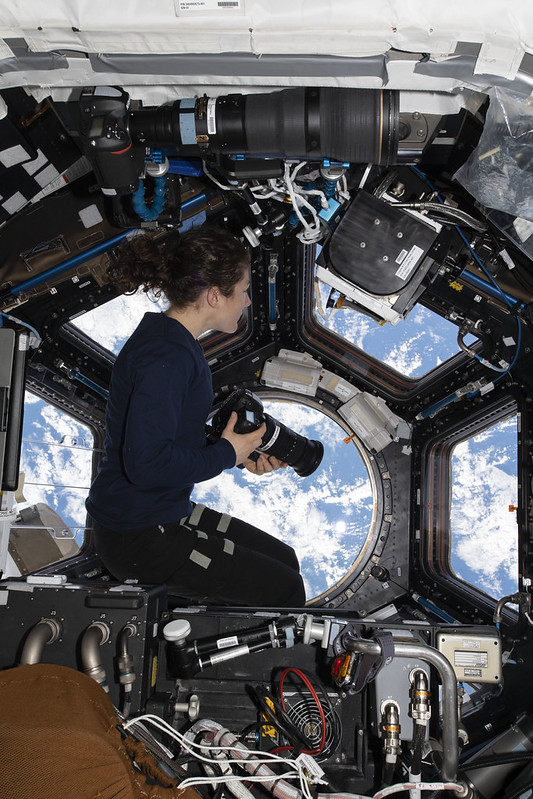
During quiet periods on the station, Christina would go to one of the more open spaces on the station – the Cupola or the docking tube – to watch the Earth and to do zero-g yoga. [NASA]
She was initially supposed to remain on board until October 2019, but schedule changes related to delays in the Commercial Crew Program missions (which would see SpaceX and Boeing taking over crewed flights to the ISS) meant that her return was pushed back to Feb 2020. This put her on track to break her mentor Peggy Whitson's record for the longest spaceflight by a woman.
Her first GWR title would come before that milestone, however.
Spacewalking
Christina's time on the ISS coincided with a major overhaul of the station's electrical systems. This meant that an intensive programme of spacewalks had been drawn up, with multiple sorties outside the station to install new battery packs, replace wiring and install new solar arrays.
As one of the station's resident electrical engineers, Christina was the obvious person to take the lead on this project. She made her first spacewalk on 29 March 2019, spending 6 hours 45 minutes outside the station fitting new batteries alongside Nick Hague. Her spacewalk partner was supposed to be Group 13 classmate Anne McClain, but a lack of available suits ruled her out.
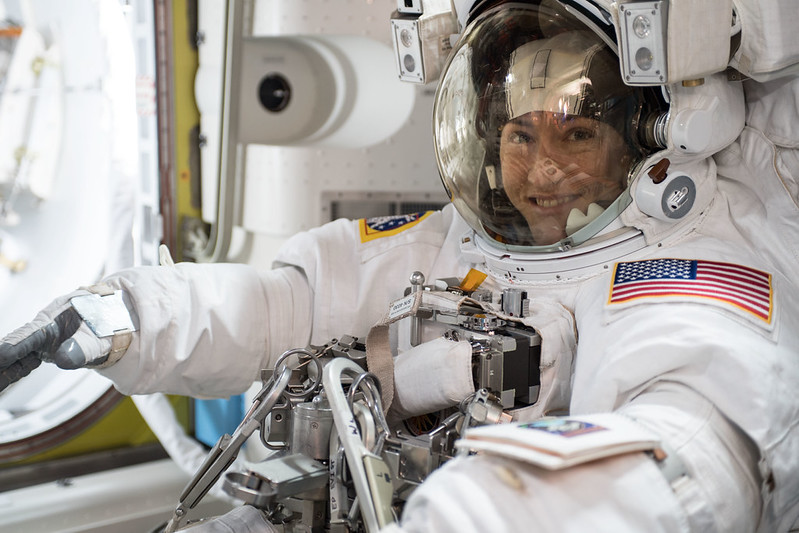
NASA's inventory of spacesuits dates from the Space Shuttle era, when there were far fewer women astronauts. As a result, the crew of the station never has enough "medium" sized suits (and the last functioning "small" suits had to be retired years ago). [NASA]
Over the course of her stay on the station, Christina made a total of six spacewalks with a cumulative time outside the station of 42 hours 15 minutes. This was enough to bump her from a spaceflight rookie to one of NASA's most experienced active-roster astronauts, and put her a long way towards catching up with Sunita Williams' record for most cumulative spacewalk time for a woman (62 hours 6 minutes).
On 18 October 2019, Christina and her classmate Jessica Meir departed from the station's airlock to carry out more work on the station's electrical systems. The 7 hour 17 minutes they spent in their suits represented the first all-female spacewalk. Christina's first GWR title.
Christina returned to Earth on 6 February 2020, having broken the record for the longest continuous spaceflight by a woman with a total time of 328 days.
Artemis and the Moon
Christina's next assignment was her most important project yet, the Artemis II mission. Beginning in 2023, she began training for what was going to be the first crewed flight to the Moon since 1972. It was to be the test flight for the spacecraft that would be used in future Moon landings, a journey out to the Moon and back designed to check all systems were operating as planned.
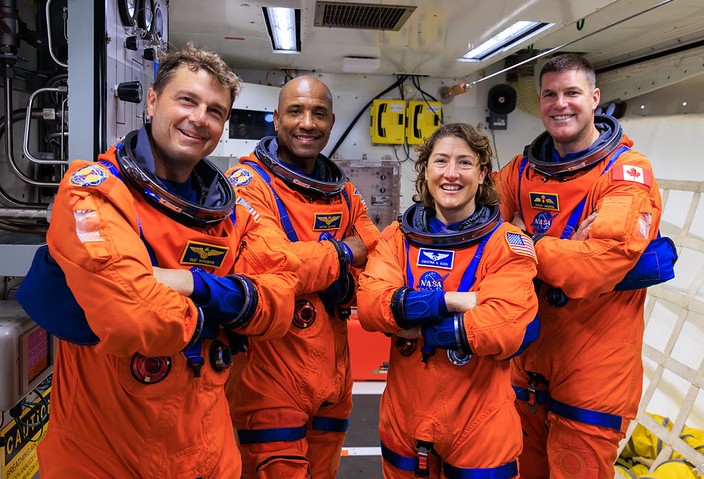
The Artemis II crew (left to right): Reid Wiseman, Victor Glover, Christina Koch and Jeremy Hansen. [NASA/Frank Michaux]
After several delays related to the construction and testing of the massive SLS rocket (which was at one point the largest and most powerful rocket in operation – titles now held by the SpaceX Starship), Artemis II finally launched on 1 April 2026.
The massive rocket was powerful enough to quickly carry the Orion spacecraft (named Integrity by the crew) further from Earth's surface than anyone had been since the 1970s. Christina broke the record for the highest altitude achieved by a woman – set by Anna Menon and Sarah Gillis (both USA) on board the Polaris Dawn mission on 11 September 2024 – within an hour of lift-off.
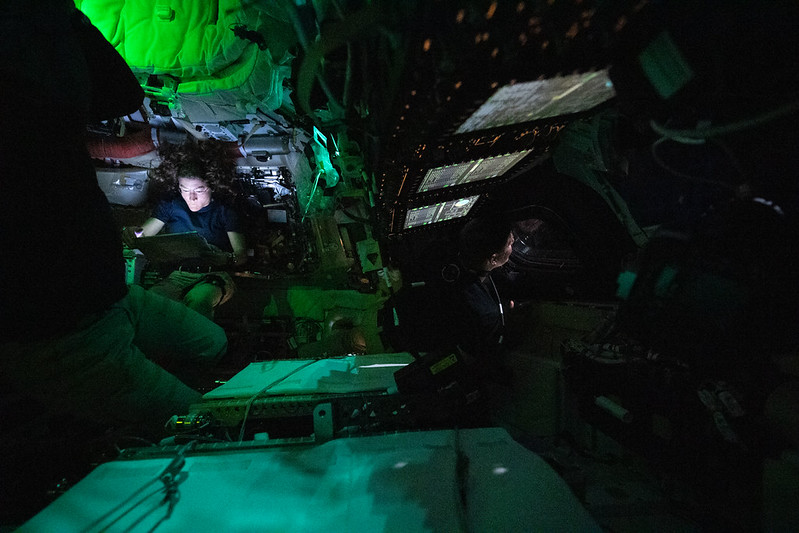
Christina (far left) reviews notes on a tablet while Reid Wiseman takes pictures out of one of the Integrity spacecraft's windows. [NASA]
For the next nine days, Koch and her crewmates settled into the busy routine of a team of test pilots. Each had a detailed schedule of tests and experiments, systems to check and measurements to take. Christina was also reunited with her old nemesis from the International Space Station – NASA's Universal Waste Management System space toilet. This fantastically complex (and, as demonstrated during the Artemis II mission, occasionally temperamental) piece of hardware also gets a profile in GWR 2027.
The highlight of the mission, and the culmination of many years of training, came on 6 April 2026, when the Integrity spacecraft passed around the far side of the Moon. Christina, along with the rest of the crew, broke the more than 50-year-old record for the highest altitude achieved by humans, reaching a maximum distance of 406,771 km (252,756 mi) from Earth's surface.
As an interesting extra, the crew were also part of a new record for the greatest distance between humans. At 10:20 p.m. on 6 April, the crew of Integrity and the crew of the Chinese Tiangong space station (passing by the far side of the Earth) were separated by a distance of 419,643 km (260,754 mi).
Back on Earth
The crew of Artemis II splashed down safely on 11 April 2026, against a backdrop of public excitement and curiosity (termed "Moon Joy" by a NASA mission controller) that few NASA missions manage to stir up. While she will remain involved with spaceflight, and potentially even future missions to the Moon's surface, Christina found the experience of travelling so far from home strengthened her appreciation for Earth and our role on it.
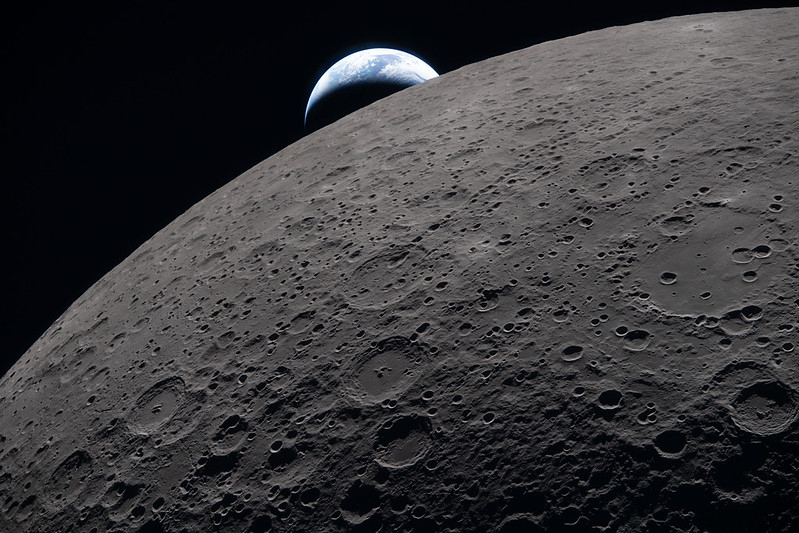
A picture of "Earthrise" taken as the Integrity capsule emerged from behind the Moon.[NASA]
"The thing that change for me looking back at Earth", she said in a post-mission interview, "was that I found myself noticing not only the beauty of the Earth, but how much blackness there as around it and how it just made it even more special. It truly emphasized how alike we are, how the same thing keeps every single person on planet Earth alive. We evolved on the same planet, and ewe have some shared things about how we love and live that are just universal. And the specialness, and the preciousness of that really is emphasized when you notice how much there is around it."
Header image: U.S. Navy photo by Mass Communication Specialist 2nd Class August Clawson