


Cave art from at least 67,800 years ago sets new record as oldest non-figurative painting
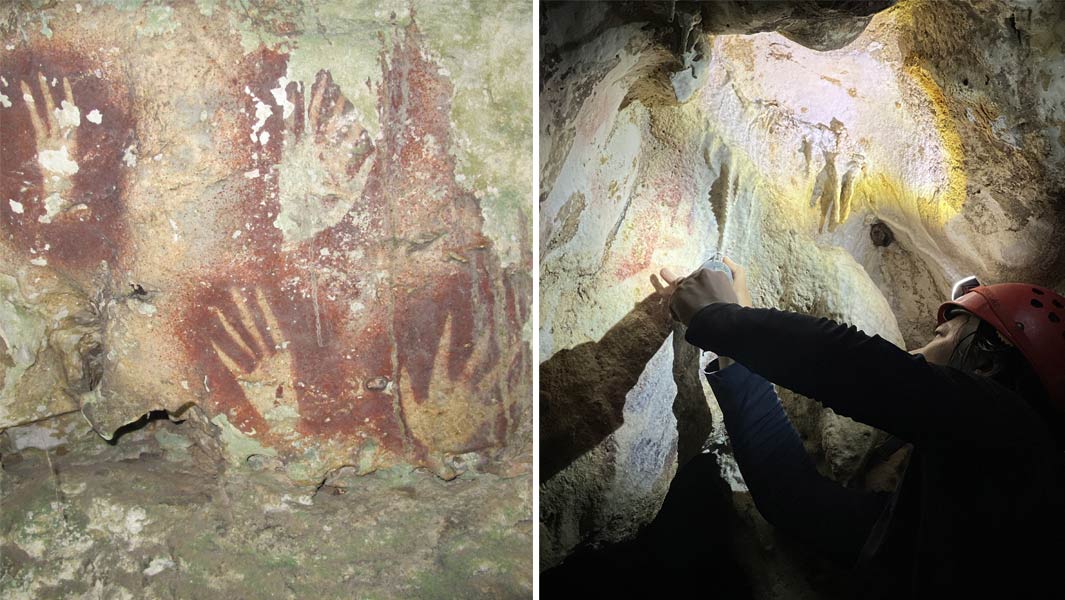
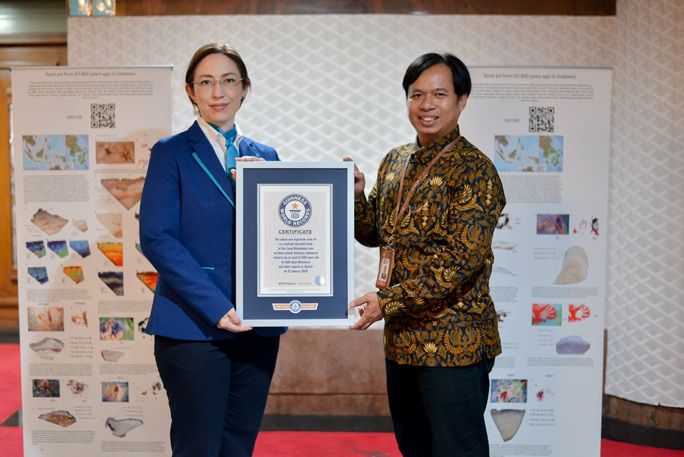
In a historic discovery by archaeology and archaeometry experts, a stencilled hand dated to at least 67,800 years ago was discovered in the Liang Metanduno cave on Muna Island in Southeast Sulawesi, Indonesia. It was one of several Palaeolithic artworks studied at the site, with details of the discovery published in the journal Nature on 21 January, and now formally verified by GWR as the oldest painting – non-figurative art.
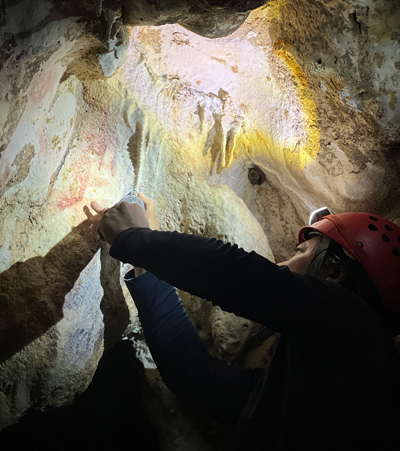
In an exclusive interview with three of the lead researchers in the study, GWR reveals the story behind this monumental discovery. Dr Adhi Agus Oktaviana is a researcher and archaeometry expert at the National Research and Innovation Agency (BRIN) in Indonesia, who closely studied the Late Pleistocene era cave art with Adam Brumm and Maxime Aubert, both professors of archaeology at Griffith University, Australia.
Work on dating the Sulawesi cave art was revealed to have started in 2012, although that effort was focused on sites in the southwestern peninsula of the island. It wasn’t until many years later that the research team started a fieldwork campaign on the adjacent southeastern peninsula, and on the nearby island of Muna, where they eventually dated the oldest rock art in the region thus far. Dr Adhi joined the team in 2013 as the principal in-field rock art researcher, and they began working with other experts such as geochronologist Renaud Joannes-Boyau in more recent years in order to develop a novel and more efficient method of dating the art.
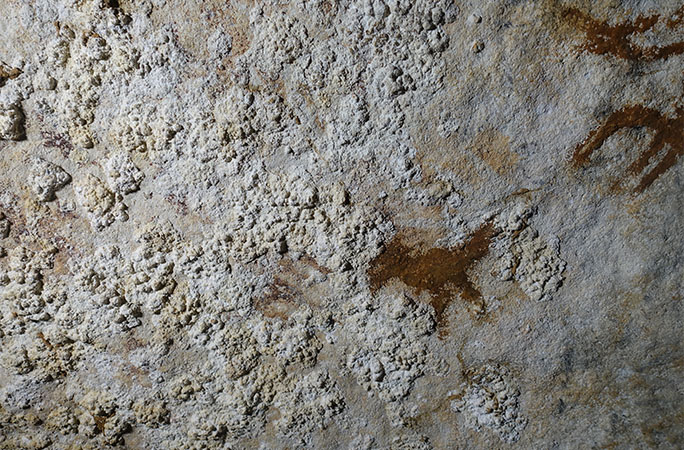
Considering the long years of research efforts into the rock art located in the region, the team was no stranger to these amazing archaeological discoveries, with other series of very old cave paintings in Sulawesi having been published several times prior in Nature. However, never anything this old has been discovered previously.
When asked about the difficulty in carrying out the research, Dr Brumm and Dr Adhi both mentioned that there are the usual logistical difficulties and occasional personal hardships of doing fieldwork in remote locations. Regardless, Dr Brumm noted that it is for the most part an exhilarating and life-changing experience. The real problems revolved around the usual scrabble for funds to support the research, and the long hours of technical work required in the lab to develop and test the new dating method used to determine the age of the rock art.
“Teamwork was integral to this type of research because it is inherently multidisciplinary; the skills and expertise of many different scientists from field archaeologists to dating specialists are required to uncover new archaeological data and solve the mysteries of the ancient past,” Dr Brumm highlights.
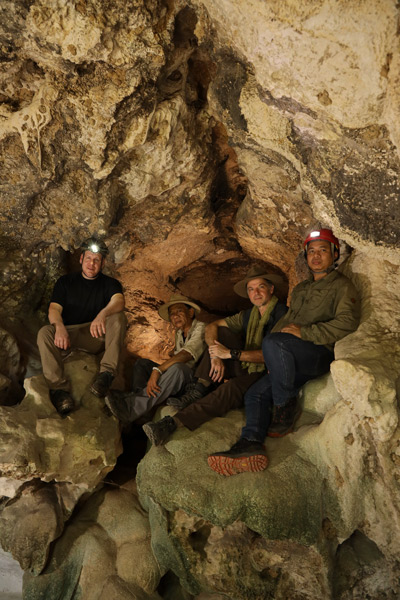
From left: Prof Maxime Aubert, Budianto Hakim, Prof Adam Brumm, Dr Adhi Agus Oktaviana
Dr Adhi expressed his pride as a researcher as the results of this work was not only recognized by the local Indonesian archaeological community, but also globally, including the recognition conferred by Guinness World Records. He also credited all contributors to the study, noting that it was the result of synergy between many individuals, experts, and institutions, including local archaeologists and universities.
All the lead researchers agree that this research sheds new light on the deep roots of artistic culture in our species, with Dr Adhi particularly noting how it provides some clue to the migration of early modern humans to the region and how it portrays their level of cognition which allows them to record their day-to-day activities in the cave through both non-figurative and figurative paintings.
Going forward, the team would like to find more examples of this extremely ancient art in Sulawesi and to understand more about the cultural lives and experiences of the people who made it. The team also hopes that they can preserve the sites digitally by collaborating with other institutions, considering that many of these ancient sites are under threat from either the flaking of surfaces or vandalism by certain groups of travellers who visit the sites.
Find more stories you might enjoy in our Hobbies and Skills section.
In a message from the lead researchers to aspiring, young researchers, Prof Brumm and Prof Aubert encourage them to remember that the world of the human past is a wonderful place, that archaeological stories are often stranger than fiction and more fascinating, and that there are still many, many mysteries left to uncover. Meanwhile, Dr Adhi says that local aspiring archaeologists in Indonesia should feel proud because of the vast amounts of ancient sites and cultural heritage that exist within the region, and that there is a need for more research and publication to further understanding them.
He said: “Take the time, as often as you can, to read or think about how amazing it is be a human being and the extraordinary journey from our earliest beginnings as upright apes to the astonishing creatures we are today.”