


Buried Alive! How an aristocrat's fears inspired generations of inventors
Duke Ferdinand of Brunswick-Wolfenbüttel was the quintessential 18th-century aristocrat. He lived his life in northern Germany, loved a well-powdered wig, had a wardrobe full of silk sashes and frock coats, and was a member of all the fashionable secret societies. He was also a record holder.
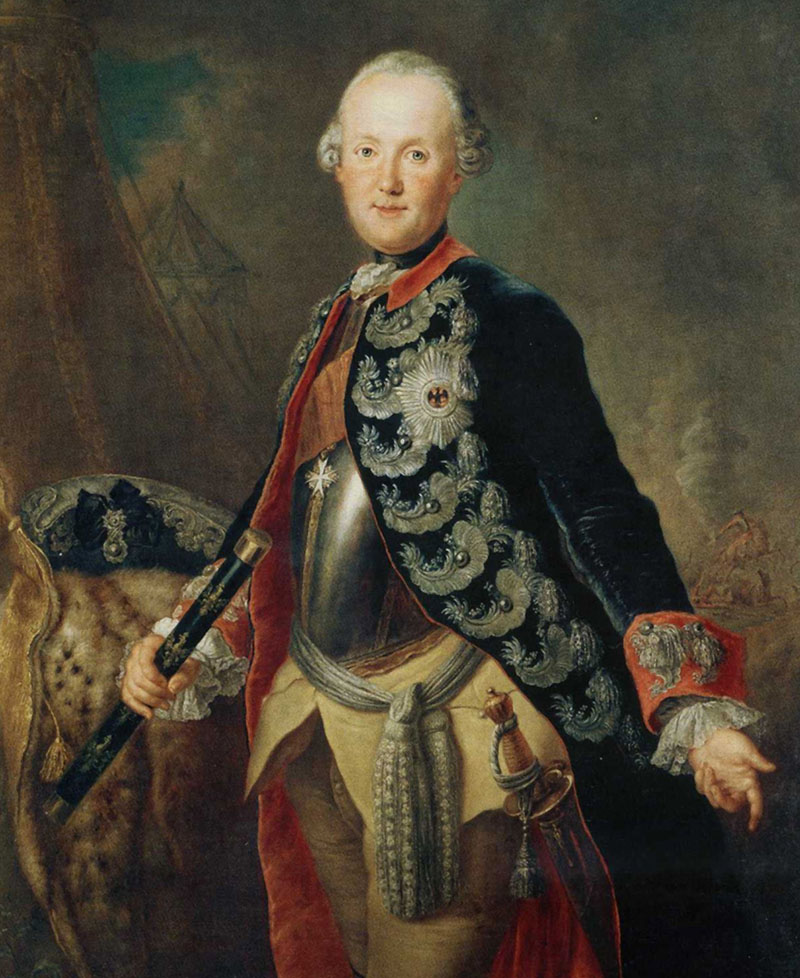
A young Duke Ferdinand of Brunswick-Wolfenbüttel. Public Domain/Wikimedia Commons.
Ferdinand spent his life as a military officer and commander of some renown – a field marshal who directed disciplined squares of musket-wielding infantry around the battlefields of Europe. He won great victories in battles that almost no-one remembers and led campaigns that changed the course of wars whose significance is hard to understand today.
There was talk at one point of giving him command of the British forces fighting the colonists in the American War of Independence. This would have given him a shot at the historical big-time and granted him a long afterlife as a moustache-twirling villain in period dramas, but it came to nothing.
We're not here to talk about any of that though.
Duke Ferdinand arrives in the record books through another, unexpected direction.
Enlightenment curiosity
As the quintessential 18th century aristocrat, Ferdinand was very much interested in the intellectual movement known today as the Enlightenment. He was raised to be a cultured, learned man with wide-ranging interests, and kept those up throughout his life.
He used his wealth to support writers, artists and scientists, and took a great interest in their work, maintaining a large kunst- und naturalienkammer – a sort of eccentric private museum, packed with paintings, natural history specimens and other oddities.
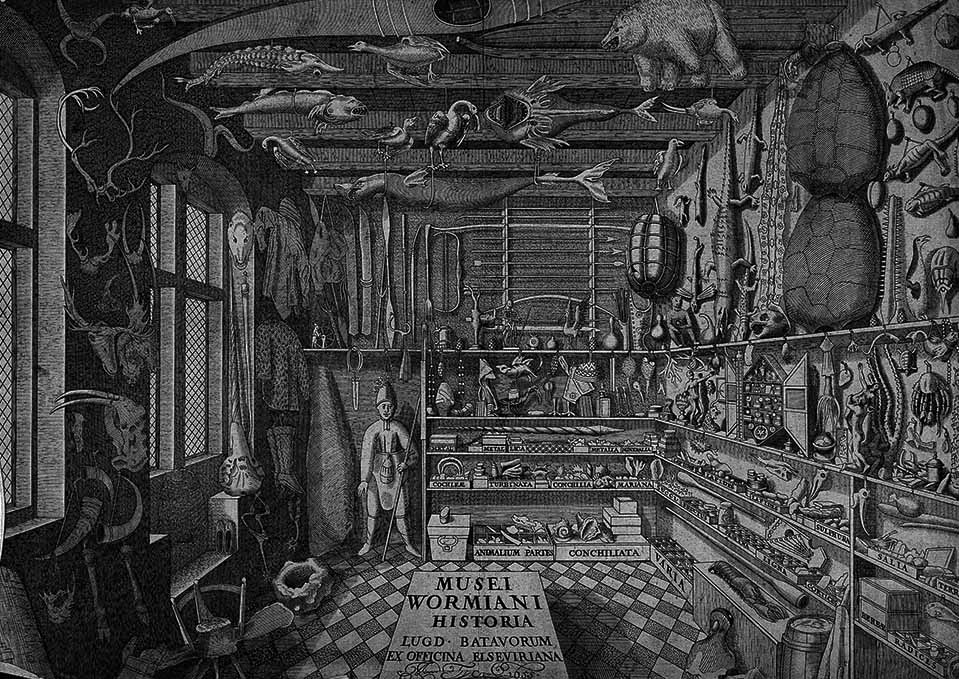
The museum of Ole Worm in Copenhagen, an example of an "cabinet of curiosities". The contents of these collections ranged from serious natural history specimens to stuff you'd expect in a travelling circus. The Feejee Mermaid is very much the sort of thing you'd find. Source: Wellcome Collection.
This relationship with the cutting-edge scientists (properly "Natural Philosophers") of his time was stimulating, but also disquieting. You see, the Age of Enlightenment fostered a great deal of curiosity about life and death, and specifically the nature of the transition from one state to the other.
When does something inanimate become alive? At what precise moment does something alive become an inanimate, lifeless corpse?
Back from the dead
For centuries life and death had been understood in simple, binary terms. Things were either alive and breathing, or dead and not. Over the course of the 18th century, however, natural philosophers and medical men realized that things were not so simple.
On 3 December 1732, in a mining town in central Scotland, a surgeon called William Trossach attended the aftermath of a coal-mine fire. A man called James Blair had collapsed when miners tried to re-enter the main shaft, probably overwhelmed by carbon monoxide fumes.
For approximately 45 minutes, Blair lay crumpled in a heap at the bottom of a ladder. When the gas had cleared and his friends were able to drag him out, Blair was not breathing. He was cold to the touch and had no detectable pulse. By all traditional criteria, he was dead.
Dr Trossach wasn't willing to give up on his patient, however, and so he began blowing air into Blair's lungs. It's not clear where he got the idea to do this – some theories had been put forward about the nature of life and breath in the years previously, so it could have been that, but it has also been suggested that similar techniques may have long been known to midwives, and used to revive infants following difficult deliveries.
After about a minute, James Blair's pulse picked back up, albeit very weakly. A few more minutes of work, and he was breathing unaided. About an hour later, Blair's eyes began to move, and then the man who had seemingly crossed over to "the undiscovered country, from whose bourn no traveller returns" yawned and sat up.
Blair was disoriented and had no awareness that any time had passed since he fell off the ladder, but was otherwise seemingly fine. He was back at work within a week. Dr Trossach had carried out the first recorded use of mouth-to-mouth resuscitation.
The Society for the Recovery of Persons Apparently Drowned
The revelation that, in some cases, death appeared to be reversible captured the imagination of both scientists and the general public. While people were happy about the idea of saving lives, they were less comfortable with what looked like bringing people back from the dead.
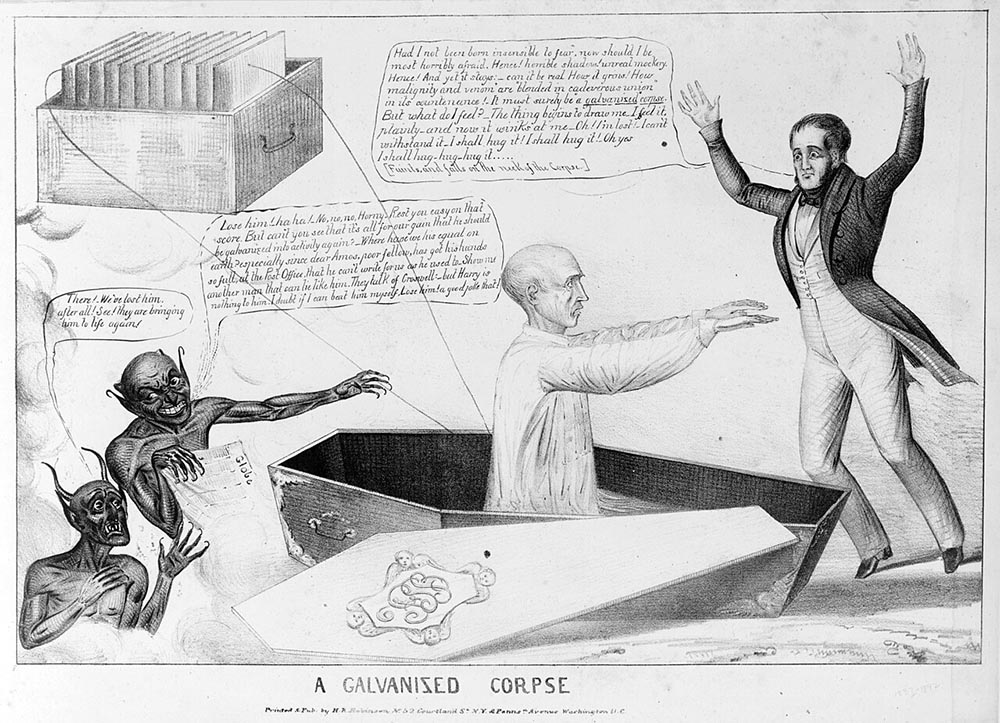
A contemporary cartoon, reflecting public fears about people being brought back to life using science. "Galvanised" here is a reference to the natural philosopher Luigi Galvani, who conducted famous experiments with electricity (that's a battery in the top left). It doesn't mean the corpse is now rust-proof. Public Domain/Library of Congress.
Over the following few decades "life-saving" societies were set up in the port cities of Europe, focused on reviving people who had fallen into canals and rivers. In addition to sensible approaches such as mouth-to-mouth (or "expired-air") resuscitation, these societies also experimented with some more esoteric techniques including bloodletting (always got to try bloodletting), powerful "smelling salts" and – there's no nice way to say this – blowing tobacco smoke up people's bums.
American founding father Benjamin Franklin went further by demonstrating that it wasn't just death by suffocation or drowning that could be reversed – he revived an electrocuted chicken through mouth-to-beak resuscitation in 1749. (Honestly a pretty normal evening's activity for Ben Franklin, he was an odd chap).
Buried alive
The flip-side of these discoveries was the realization that you could not always be absolutely sure that someone was dead before their funeral. Macabre stories of premature burial were reported in the press, and people began to develop what would later become known as "taphophobia" (a morbid terror of being buried alive).
Famous sufferers of this phobia included US President George Washington (1732–99) and, of course, Duke Ferdinand of Brunswick-Wolfenbüttel.
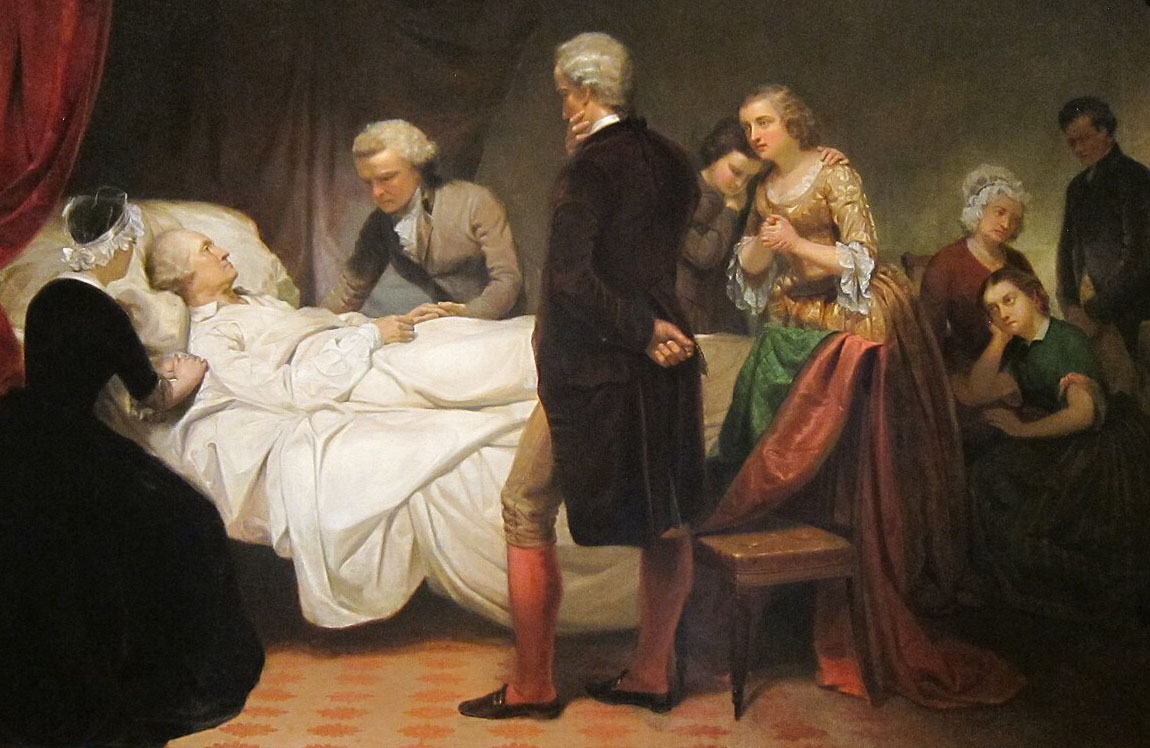
George Washington requested that his secretary, Tobias Lear, sit with his dead body for three days before burial, because he was afraid of being buried alive. Public Domain/Wikimedia Commons.
In the early 1790s, as Ferdinand was approaching the end of his life, his increasing taphophobia led him to commission the first security coffin for interment in the crypt of Brunswick Cathedral.
The coffin had ventilation holes and a glass window in the lid. The lid was not nailed down, but rather held closed by a lock. The key to this lock, along with a key to the crypt door, was placed in the pocket of his burial clothes.
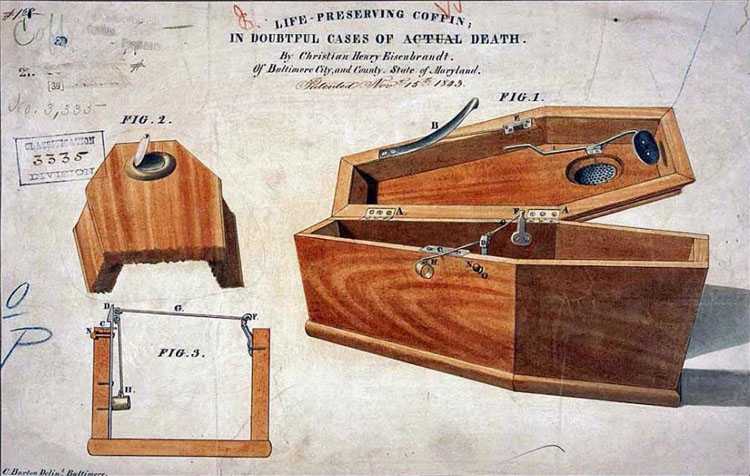
There are no pictures of the Duke's custom-made coffin, but the descriptions are broadly similar to this patented design from the mid 19th century. Public Domain/US Patent Office.
Following Duke Ferdinand's apparent death on 3 July 1792, he was placed in his custom coffin. That coffin was laid to rest in Brunswick Cathedral. Days passed, and nothing happened. There was no scratching of keys in the locked door of the crypt, no creak of an opening coffin.
BUT THEN!
Then nothing. Nothing happened. Duke Ferdinand was firmly dead. Indeed, despite the long-standing public fascination with premature burial, even in an age of much less advanced medical science, it was vanishingly rare.
In the German state of Württemberg, for example, authorities built great public mortuaries known as "Asylums for Doubtful Life" – where the dead were kept until they started to show signs of decay (the most unambiguous of proofs of death). Of the more than one million corpses that passed through these facilities between 1828 and 1844, not a single one came back to life.
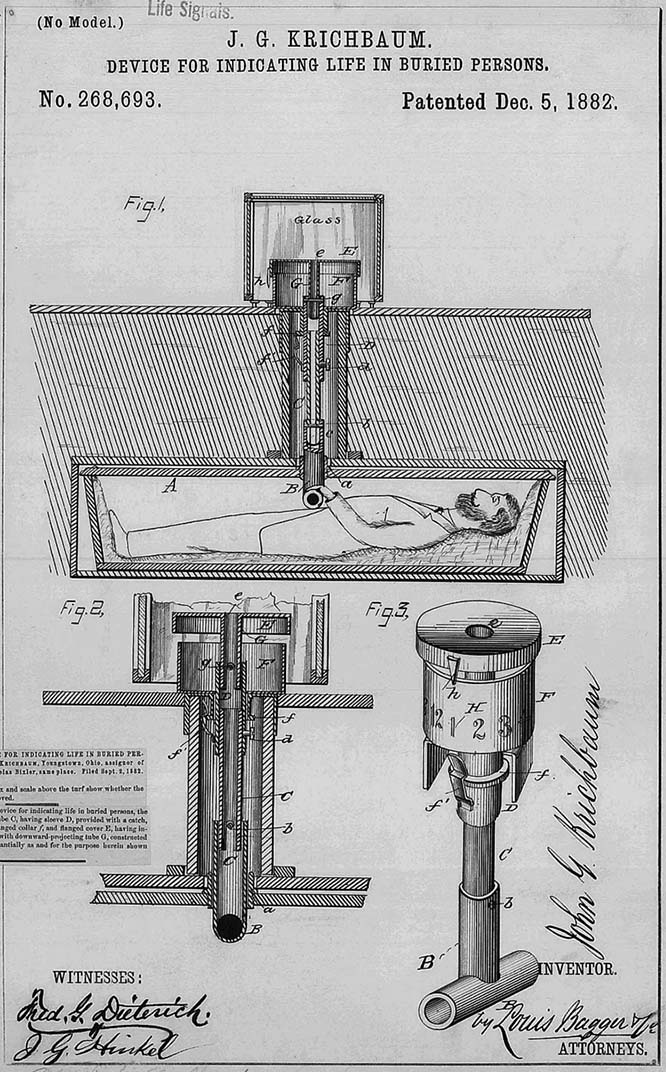
Another example of a 19th century live-burial-prevention device. There's hundreds of similar things in the archives of the US Patent Office. The simplest design was a bell attached to a string tied around the finger of the deceased, but this was prone to grisly false alarms when the body shifted as it decomposed. Public Domain/US Patent Office.
Nonetheless, Victorian worries about death and burial inspired a whole industry of "security" or "safety" coffins – descendants of the duke's special sarcophagus – fitted with features such as breathing tubes, remotely operated bells and even flare guns.
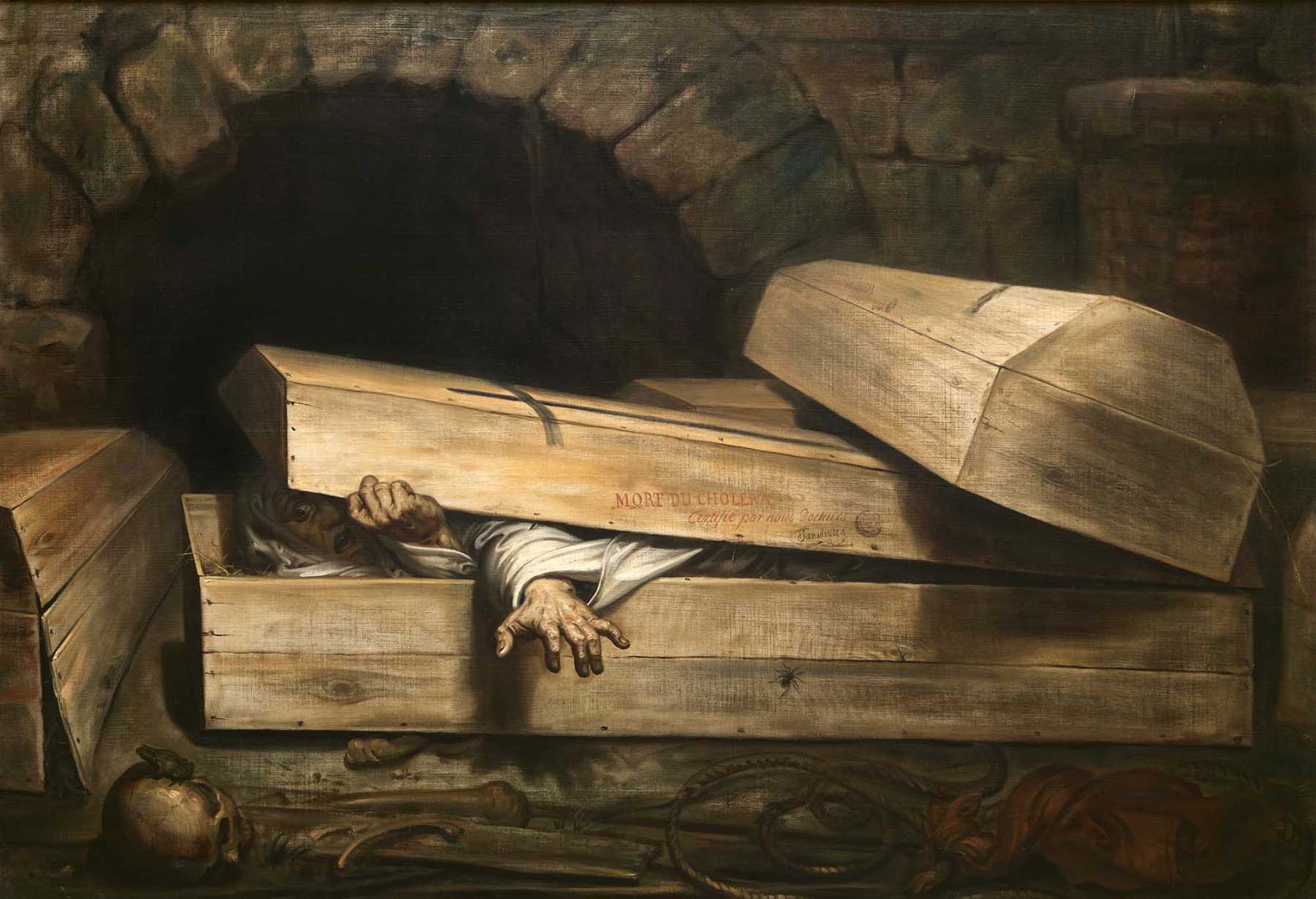
Header image: The Premature Burial (1854) by Antoine Wiertz. Public Domain/Wikimedia Commons.