


Miraculous but tragic tale of the first person to survive a drop over Niagara Falls
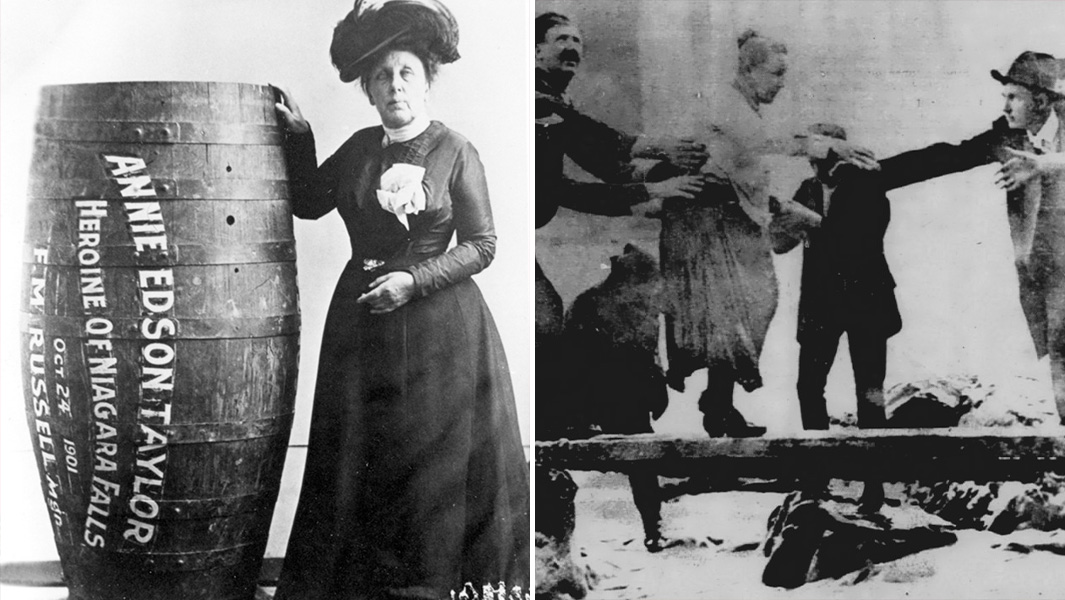
Standing at the foot of Niagara Falls, a crowd of people were left rubbing their eyes in disbelief when American schoolteacher Annie Edson Taylor climbed out of a barrel unharmed.
It was 24 October 1901, and she had just become the first person to survive a drop over Niagara Falls.
Annie had plummeted down the 51-metre (167-ft) drop in a barrel with her name, the date, and the words “Heroine of Niagara Falls” painted on the side.
The custom-made barrel was made of oak and iron and padded with a mattress.
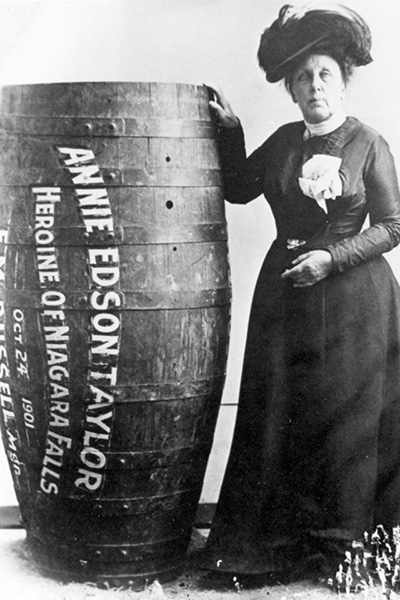
Image: Wikimedia Commons
It had been a money-making scheme, although sadly for her, fame and fortune did not come knocking despite her miraculous survival.
What made it all the more impressive was that the day of that daring stunt was Annie’s 63rd birthday.
The people watching from the bottom of Horseshoe Falls – the largest of the three Niagara waterfalls on the border of Canada and USA – were convinced she was facing certain death.
But Annie surprised them all, emerging from the barrel battered and bruised but still very much alive.
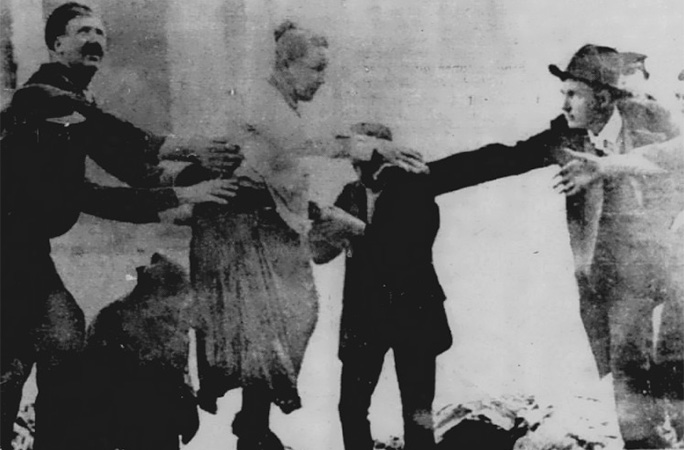
Image: Wikimedia Commons
She’s reported to have said at the time: “I felt as though I was being knocked to pieces and churned all over… I struck rocks three times and the water seemed to come in the barrel everywhere. I knew when I went over the fall, and lost my senses just a minute.
“People here have been good to me and I did this to help those who helped me. I hope some good will come of it.”
Her feat led to people calling her the “Queen of the Mist” and “Queen of the Falls”.
Born in New York, in 1838, Annie met a man named David Taylor while she was studying to become a schoolteacher.
They married and had a son who died in infancy. David died soon after fighting in the Civil War.
After spending her years between jobs and moving from town to town, she moved to Bay City, Michigan and opened a dance school.
By 1900, she had fallen on hard times and came up with a plan to ride over Niagara Falls in a barrel, believing she would make enough money to live out the rest of her days comfortably.
She had struggled to get it going at first, with people reluctant to be involved in the stunt.
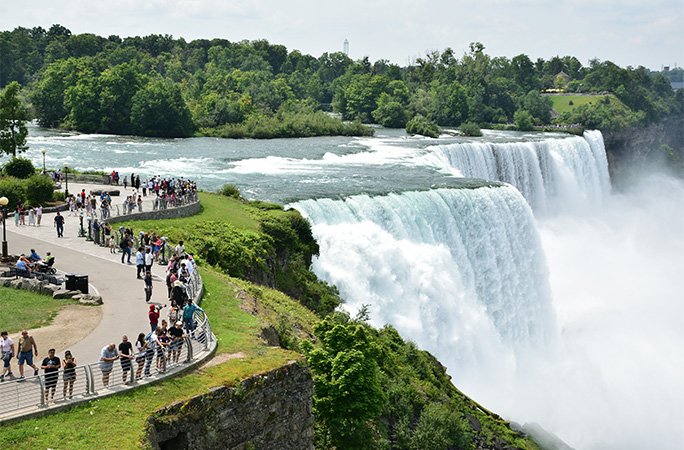
Niagara Falls in New York. Photo by reza hoque on Unsplash
Two days before she was to take the plunge, a cat was sent over Horseshoe Falls to test whether or not the barrel would break.
The cat survived, although it suffered a wound to its head.
But that was enough to convince Annie her plan was a solid one.
Some friends took her out in a rowboat before securing her inside the barrel, along with her lucky heart-shaped pillow. They screwed the lid down, used a bicycle pump to compress the air in the barrel and sealed the hole with a cork.
Annie was set adrift to the south of Goat Island and the current carried her over Horseshoe Falls 20 minutes later.
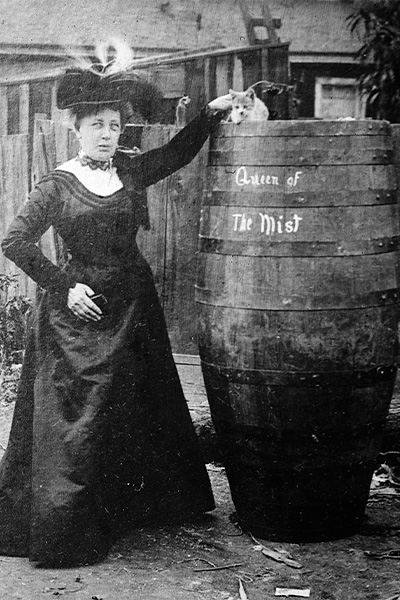
Image: Wikimedia Commons
When rescuers pulled her from the barrel some 90 minutes later, she was almost completely unscathed. Like the cat who had been used as her crash test dummy, Annie had a small gash on her head.
She is reported to have said to the press at the time: “If it was with my dying breath, I would caution anyone against attempting the feat... I would sooner walk up to the mouth of a cannon, knowing it was going to blow me to pieces than make another trip over the Fall.”
Annie did briefly earn some money from her stunt, but it hadn’t brought her the riches she’d hoped for.
She did write a memoir and returned to the Falls to sell it, but she ended up having to spend much of the money she’d made on private detectives to track down her barrel, that had been stolen by her manager.
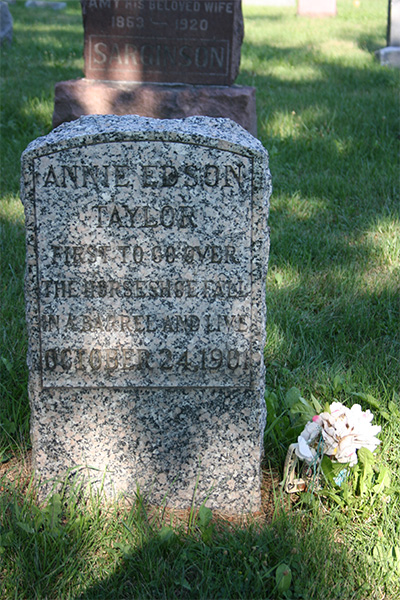
Image: Knightflyte / Wikimedia Commons
It was eventually tracked down to Chicago, only to be stolen again by her new manager.
Read about more amazing physical feats in our Sports and Fitness section.
Annie spent her final years posing for photographs with tourists at souvenir shops, trying to earn money on the New York Stock Exchange, trying to write a novel and reconstructing her 1901 plunge on film, although this was never seen.
She’s also said to have spent time working as a clairvoyant, and despite what she initially said, briefly talked about completing a second plunge in 1906, despite cataracts affecting her sight by this point.
She died on 29 April 1921, aged 82. She was penniless and her funeral was paid for by public donations.
10 years after Annie, in 1911, a British man named Bobby Leach became the second person to ride over the falls in a barrel.
He didn’t come out quite as unscathed, breaking both of his kneecaps and his jaw.
He had performed his stunt inside a steel barrel.
After Annie, 15 other people attempted to mimic her daredevil plunge. Tragically, only 10 of them survived.
It became illegal to go over the Falls in a barrel or any other apparatus in 1951.