
Literary records to blow your mind this World Book Day: from best-sellers to record theft
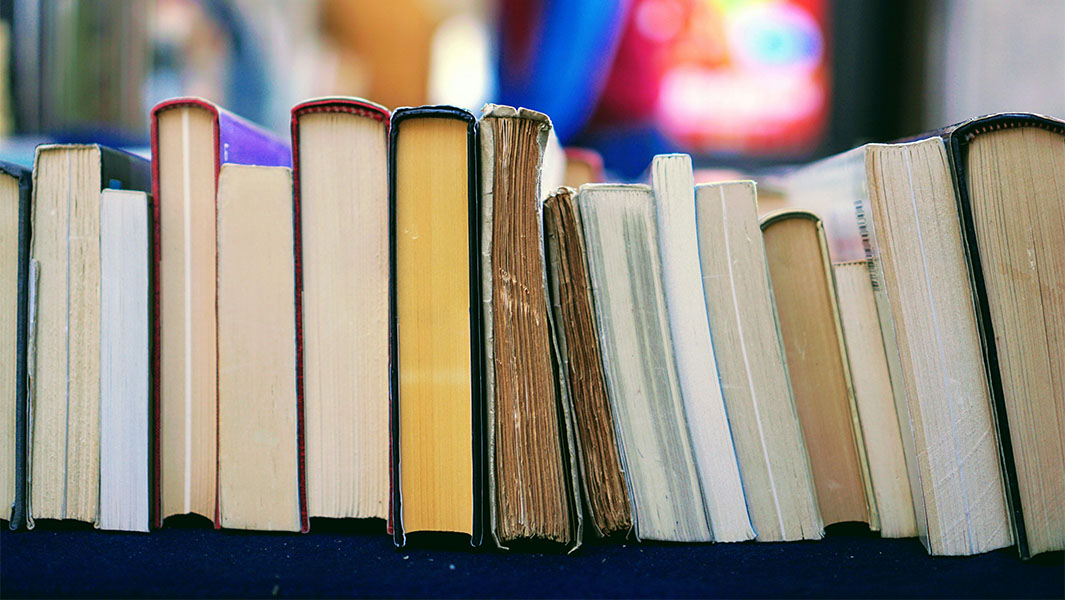
Thursday, 5 March 2026 is World Book Day, a chance to celebrate reading and literature in all its kaleidoscopic forms. Keep your eyes peeled: you may well see groups of children dressed up as their favourite characters! In the spirit of the occasion, GWR has rounded up a selection of classic and quirky book-related records.
In the ancient world, texts were written on a variety of different materials, including papyrus (Egypt, from around 3000 BCE) and strips of bamboo bound together (China, from around 1500 BCE). The Epic of Gilgamesh – a hugely influential Mesopotamian poem dating from c. 2100 BCE, and one of the oldest literary works – was inscribed on clay tablets in cuneiform script.
Fast forward a few millennia, and we come to the oldest book printed using movable metal type. The Buljo jikji simche yojeol (or, more simply, the Jikji) is a Korean collection of Zen Buddhist teachings printed in July 1377, and written by written by a Buddhist priest called Baekun. This makes the Jikji 73 years older than the Gutenberg Bible, which was printed in Mainz, Germany, c. 1455 by Johann Henne zum Gensfleisch zur Laden (or “zu Gutenberg”).
Movable metal printing wasn’t invented in Europe, it was perfected in Korea 200 years earlier.
— Arjun | The Watcher (@BlackInWhite434) December 22, 2025
Jikji (1377):
The world’s oldest surviving book printed with movable metal type was made in Korea during the Goryeo Dynasty, 78 years before Gutenberg’s Bible.
Advanced Metallurgy:… pic.twitter.com/5Gyu3jhkli
The Gutenberg Bible revolutionized Western publishing, though, making literature more accessible and speeding the spread of literacy. Although precise are impossible to come by, research conducted by the British and Foreign Bible Society in 2021 suggested that 5–7 billion copies of the Christian Bible had been published in the 1,500 years since it was standardized, making it the best-selling book.
Talking of all-time best-sellers, plenty of classic titles such as Miguel de Cervantes’s Don Quixote (published in two parts, in 1605 and 1616), Charles Dickens’s A Tale of Two Cities (1859) and J R R Tolkien’s The Hobbit (1937) are all thought to have shifted more than 100 million copies. But as we don’t have accurate sales figures for those historic works, it’s impossible to assess how much they actually sold. So the best-selling fiction book for which we have independently verified figures independently verified figures, might surprise you: it’s E L James’s Fifty Shades of Grey. Initially published in 2011, the title has now sold more than 17,000,000 copies.
2011
— Jude Atwood (@JudeAtwood) October 16, 2023
The biggest media franchise created in 2011 was Fifty Shades of Grey.
Author E.L. James began the blockbuster novel as Twilight fan fiction but reworked it into an original self-published ebook.
The series has now sold 150 million books. pic.twitter.com/6cLGOW5fNV
When it comes to writers, though, no one has yet topped that doyenne of crime fiction, Dame Agatha Christie (UK). The creator of beloved detectives such as Poirot and Miss Marple penned 78 crime novels, which have sold an estimated 2 billion copies in 44 languages, making her the best-selling fiction writer. For good measure, she also wrote 19 plays, including The Mousetrap, which debuted in London’s West End in 1952 and is still putting bums on seats after more than 30,000 performances – the longest theatrical run.
Find more stories like this in our dedicated Arts and Entertainment section.
The acclaimed writer Ursula K. Le Guin once wrote that “Knowledge sets us free, art sets us free. A great library is freedom.” For the renowned poet and civil-rights activist Maya Angelou, “A library is a rainbow in the clouds.” Even in the age of the internet, a good library can give you the definitive answer to a question (whereas the internet all too often gives you thousands of near-but-not-quite-on-the-mark answers!). A quiet space where you can read to your heart’s content, and even take books home – for free! What a brilliant – and brilliantly simple – idea.
And an old one, too. The oldest continuously operating library is St Catherine’s Monastery in Sinai, Egypt, which has housed a body of Christian texts since its founding in around 527 CE. There are around 3,300 hand-copied manuscripts in its “Old Collection”, including many palimpsests – books written on recycled pages that still carry legible traces of older, often lost, books.
Historical Book Fact: The oldest library in continuous operation is at St. Catherine’s Monastery in Egypt, dating back to 548 AD! It holds over 3,300 ancient manuscripts. A true time capsule! 🌍 pic.twitter.com/643zyLQHYj
— Book Boost (@freeboostpromo) November 10, 2025
For the world’s largest library, however, head to the American Library of Congress in Washington, DC. It has more than 173,000,000 catalogued items, including more than 41 million books on 838 miles (1,348 kilometres) of shelving. That’s about the same as the distance from Paris in France to Algiers in Algeria!
And in a story that could have come straight out of a novel, the largest theft of books by an individual… was by a librarian! Between 1967 and 1978, Danish academic Frede Møller-Kristensen filched titles from the Royal Danish Library, where he was working as head librarian in the Oriental Department. Remarkably, the enterprising book thief was never caught and continued to work at the library until his retirement in 2000. (He died three years later.) But in September 2003, one of the Royal Library's lost books was offered for sale, setting investigators on the trail. A police raid on 5 November 2003 recovered 1,565 books from the homes of Frede Møller-Kristensen's widow, his son and his son's mother-in-law. The authorities discovered that another 76 books had been sold between 1998 and 2003. In all, the stolen books had an estimated worth of 206 million Krone (around $36 million, or £19.1 million)!
We hope this record-breaking round-up will inspire you to join in, however you can, with World Book Day 2026. And what’s more, until 15 March, children receive a £1 token from National Book Tokens Ltd to get one of 16 specially chosen World Book Day books for free, or to put towards a regular-priced book. These titles are also available in braille, large print, and audio. Find out more here.
So what are you waiting for? Get involved, get yourself a book and get reading! And just to note, some countries celebrate World Book Day on 23 April.
Header image: Photo by Tom Hermans on Unsplash