
How science has changed our world: a look at record-breaking inventions and discoveries
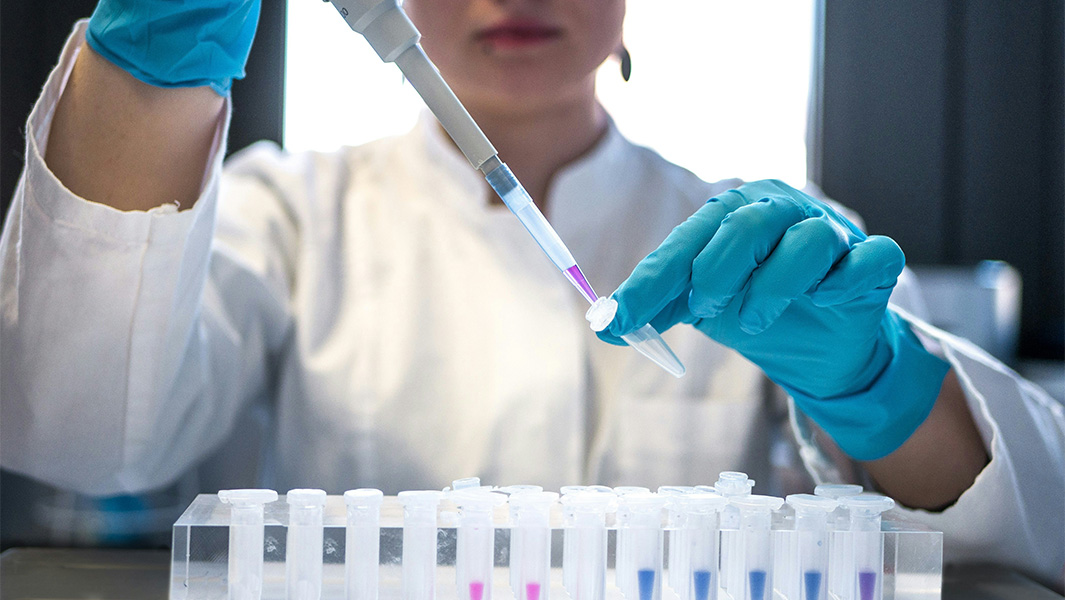
Eureka! From 6 to 15 March, British Science Week puts inventiveness and innovation under the microscope, paying tribute to the past while firing up future generations. To mark this 10-day STEM celebration, GWR presents some record-breaking lightbulb moments to inspire and excite you.
Science impacts on everything we do, from working on a laptop to – well – simply getting around. The first use of the wheel for transport dates back 5,500 years to Mesopotamia (modern-day Iraq). Before this, humans moved heavy objects by simply rolling them over logs, but the invention of solid wheels (developed from potters’ wheels) was a game-changer. People and goods could be carried across greater distances, and more quickly, on carts, with obvious benefits for agriculture and the military too.
Question: when was the first computer invented? Answer: probably a lot earlier than a lot of you thought. At the turn of the 20th century, a 2,000-year-old, heavily encrusted device was discovered in a shipwreck close to the Greek island of Antikythera. Dubbed the “Antikythera Mechanism” it featured bronze gears that had been engineered with a mechanical complexity unknown in any other object prior to the 14th century. Incredibly, though, most scientists and archaeologists didn’t appreciate its importance. And when researcher Derek de Solla Price and Greek radiographer Dr C Karkalos x-rayed the device in 1971, and proposed that each gear represented the motion of a heavenly body, the academic world simply sniffed and ignored them.
Price and Karkalos were right, though: in 2005, computed tomography (CT) scans revealed that the mechanism would have been used to forecast the motion of the Sun and Moon, and the planets Mercury, Venus, Mars, Jupiter and Saturn – the only cosmic bodies visible from Earth with the naked eye. Today, the Antikythera Mechanism is widely regarded as the oldest analogue computer, used by the ancients to predict eclipses, astronomical events and the timing for major athletic contests such as the Olympic Games.
But being too far ahead of your time can, it seems, also be bad for you.
History offers myriad examples of scientific breakthroughs being ignored, or actively repressed. Ancient Greek philosophers believed that Earth was the centre of the cosmos, and the Bible echoed that view. So when the Renaissance polymath Nicolaus Copernicus dared to suggest otherwise, society (and the Catholic Church in particular) stonewalled him. Just before his death in 1543, Copernicus published On the Revolutions of the Celestial Spheres, in which he outlined the first heliocentric model of the Solar System – the idea that planets travel around the Sun. But it took at least another 150 years for his idea to become widely accepted. And when the Italian astronomer Galileo Galilei voiced his support of Copernicus’s theory, he was put on trial, sentenced to house arrest for the rest of his life and his books were banned; he wasn’t officially exonerated by the Vatican until 1992.
A historian has discovered that a 16th century printing of The Almagest—a highly influential ancient astronomy text—contains extensive annotations from Galileo Galilei, the astronomer who later overthrew that text’s conception of a geocentric cosmos.
— News from Science (@NewsfromScience) March 5, 2026
Learn more:… pic.twitter.com/FSutp9UDu4
Clocks transformed the way humans organized life, moving from the natural rhythms of day, night and the seasons to precise, measurable time. The world’s oldest surviving working clock is a faceless mechanical timekeeper dating from around 1386 at Salisbury Cathedral in Wiltshire, UK, designed to chime at regular intervals. After some 498 years, and having ticked more than 500 million times, it was replaced and put aside, but a make-over in 1956 restored it to full working order.
And clocks weren’t just useful for telling the time. In the 18th century, British clockmaker John Harrison devised timepieces that were accurate enough to allow sailors to calculate their longitude, thereby revolutionizing navigation. Developed in 1730–35, Harrison’s H1 was the first marine chronometer, able to keep time in conditions that would have made a pendulum clock useless. He continued refining his design, eventually creating the large pocket-watch-style H4, which kept time on long ocean crossings and was first tested in 1761.
Hybrid cars are a relatively new thing, right? Wrong. The first hybrid vehicle – one that used a mixed internal combustion/electric drivetrain – was the Lohner-Porsche Semper Vivus (“Always Alive”) built in late 1900 in Vienna, Austria. Designed by the 25-year-old engineer Ferdinand Porsche, it combined two “Systeme Porsche” electric hub motors with a pair of petrol engines. Those engines acted as generators that fed the battery, and had no mechanical connection to the wheels. By the 1920s, however, advances in internal-combustion engine design had pushed electric and hybrid vehicles to the sidelines, where they stayed for decades.
Some scientists have been able to predict something purely by theory, long before it could be proved. On 11 May 2016, Albert Einstein published his Theory of General Relativity, upending widely accepted ideas about gravity, space and time. He introduced radical new ideas: that massive, moving objects, such as planets, curve the fabric of space-time and bring about the phenomenon we call gravity. That space contains black holes. That the universe is expanding.
“The measure of intelligence is the ability to change.”
— Essential Mastery (@EssentialMastry) February 24, 2026
- Albert Einstein pic.twitter.com/OdskPFW81m
Einstein also argued that movements of massive cosmic phenomena (exploding stars, or colliding black holes, say) cause gravitational waves – ripples in the fabric of space-time. But it took a century before the proof arrived. On 11 February 2016, an international team of scientists from the LIGO Scientific Collaboration and the Virgo Collaboration announced the first detection of gravitational waves, using the Advanced Laser Interferometer Gravitational-Wave Observatory, at two sites in the USA. They deduced that the waves had been caused by two black holes merging in a galaxy around 1.3 billion light years away.
Science turns humanity’s dreams into reality. Science enabled ancient philosophers to study the stars, and astronauts to leave Earth. Now, NASA’s Artemis II programme offers the tantalizing prospect of new horizons in space exploration. Science may one day enable us to live on other planets, a concept hitherto confined to science fiction.
Our whistlestop tour of scientific milestones has taken us from the invention of the wheel to the creation of computers and the theory of space-time. So, with British Science Week now upon us, the question is: what can science do for you?
Header image: Photo by Julia Koblitz on Unsplash