


Blazing trails on ice: GWR celebrates first disabled solo skier to the South Pole
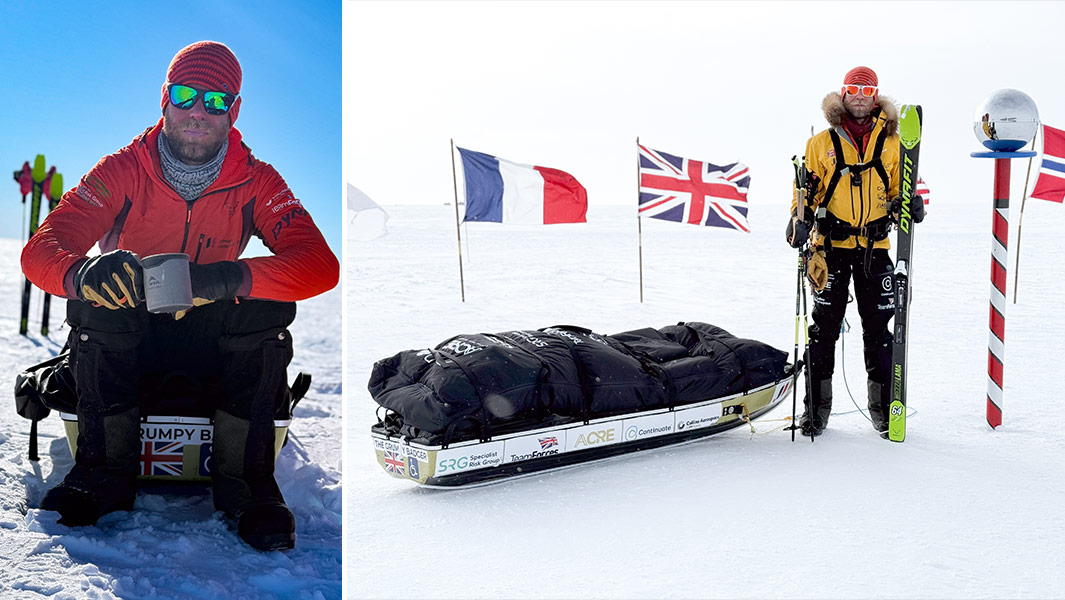
On 6 January 2025, former British Army officer Jonny Huntington (UK) became just the 52nd person ever to ski to the South Pole solo from the coast under their own power without any assistance.
This achievement alone already earns him a hallowed place in a fairly exclusive club of intrepid explorers (spearheaded by Norway’s Erling Kagge who became the first solo unsupported South Pole expeditioner on 7 January 1993), but Jonny’s feat also broke new ground for adaptive adventurers.
While there have been people with disabilities to have skied to the South Pole before him, including the first blind person and the first amputee, they had, until now, always been part of a group effort. Jonny is the first solo disabled person to take on this epic journey across Antarctica.
Departing from the Union Glacier on 6 November 2024, in total his route would cover 911 km (566 mi) across the frozen continent (about the same as a road journey from London, UK, to Zurich, Switzerland), culminating at the world’s most southerly point 45 days 20 hours 42 minutes later.
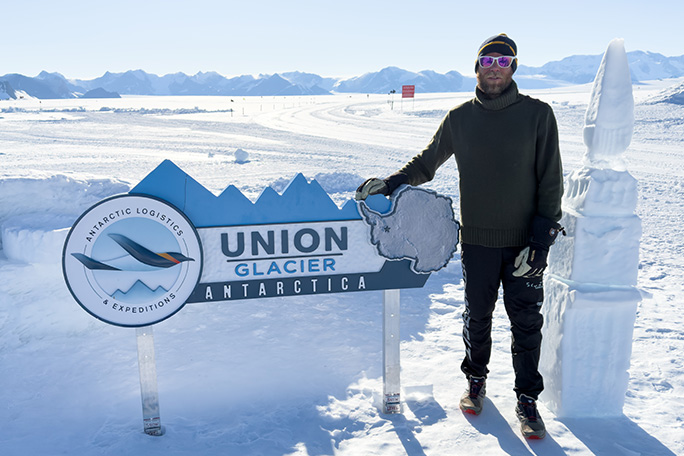
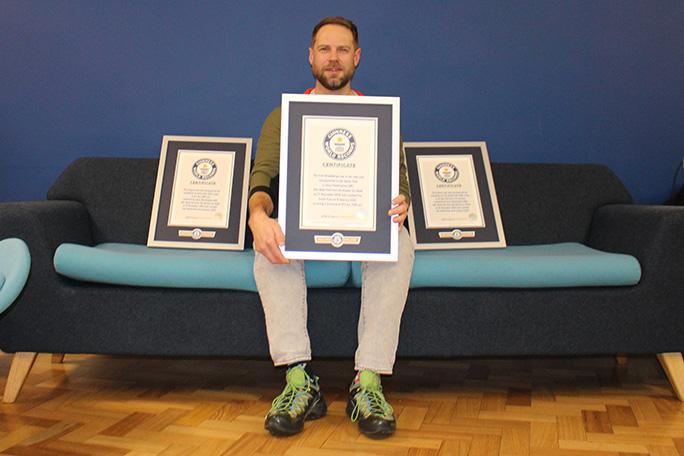
This means that Jonny’s Antarctic expedition also set two records in GWR’s CIH (coordinated impairment – hemiplegia) impairment category for distance and speed.
Given the health crisis that upended his world just over a decade earlier, it’s incredible to look back at the path that led Jonny to this unprecedented feat. On a visit to GWR HQ in London, UK, in January 2026 – marking a year since he reached the South Pole – Jonny recounted the event that would change his life for ever.
Just two months after commissioning from the Sandhurst military academy in April 2014, Lieutenant Huntington was training at the gym when, out of nowhere, he “started to feel a bit weird”.
Within minutes, he found himself on his back, unable to move from the neck down and with no clue what was going on. Fortunately, his senior officer was nearby and, recognizing the symptoms, swung into action to swiftly get medical attention.
It transpired that Jonny had had a massive stroke. It’s not something that many would associate with someone young, fit and at the start of their army career but for Jonny, at least retroactively, it was a relief to find out this wasn’t something he could have foreseen or prevented.
“There was no reason for it, other than it was it’s time. There were no exacerbating factors. This was a nice thing to find out because it meant that at least there wasn’t that level of latent guilt of I’ve done this to myself.”
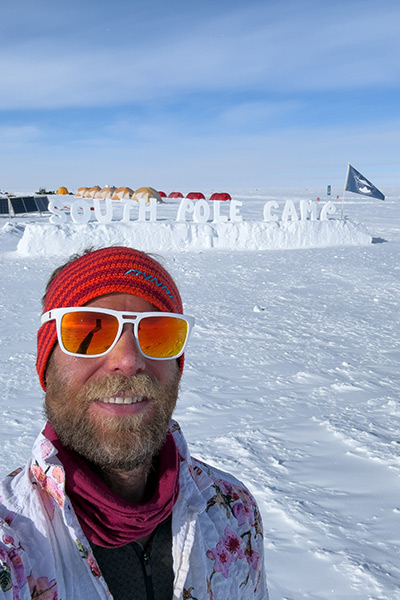
Of course, regardless of what triggered it, Jonny nevertheless had to deal with the consequences: namely, total paralysis of his left side.
He counts himself very lucky that he was able to receive treatment from some of the best physiotherapists in the country, but as any physio will tell you, their input can only go so far. The success of rehabilitation often comes down to the individual and how much they’re willing to put into the recovery process, both physically and mentally. A big part of Jonny’s rehab journey was alighting on a whole new hobby: cross-country skiing.
Prior to the stroke, Jonny had been a keen ultramarathon runner, so he knew he had the stamina to go great distances. But even some six years after his medical emergency, he was still living with severe “foot drop” in his left foot – a common condition in stroke survivors where it’s difficult to raise the front of the foot. As a result, a return to long-distance running was not on the cards. But snow sports – something introduced to Jonny through a couple of military charities he’d connected with during his recovery – on the other hand, could just work.
“Cross-country skiing was this thing that provided the best of both worlds,” Jonny said. “It let me get out and about and be active, but it also compensated for the foot drop.
“I should state, I was never very good at it! It’s sort of amazing that when you’re moving at like 2 km/h with a massive sledge attached to the back of you, you can make a plethora of skiing technique-related sins and no one notices – apart from the penguins!”
It’s safe to say that Jonny is a modest guy. Regardless of his self-deprecation, for several years he was a member of a para-Nordic ski team that represented Great Britain on the world stage. He also made it to the 2018 Winter Paralympics in PyeongChang, South Korea, selected via Team GB’s Paralympic “Inspiration Programme”.
But it’s one thing going from Nordic skiing – even at a competitive level – to embarking on a one-man attempt at skiing to the South Pole, all the while dragging more than 100 kg (220 lb) of gear! So how exactly did that leap occur?
“It was born out of basically having too much time while in hospital following the stroke when I was just lying there, barely able to move,” Jonny told GWR. “I was listening on the radio to fairly prolific British polar explorer Ben Saunders [one of a pair who achieved the longest polar trek on 7 February 2014]. He was a guest on the music show Desert Island Discs.
“In my naivety and slight hubris, at a time where I couldn’t even get to the toilet about three metres away from my bed without significant problems, I was listening to this dude describing a 450-mile ski to the North Pole and thinking it doesn’t sound that far.
“That’s when I first started looking into the possibilities of polar expeditions. But in terms of this South Pole project, I started looking at that more seriously in 2020, right at the start of COVID, as I suspect a lot of people with hare-brained ideas did!”
While the possibility of breaking new ground for adaptive adventurers was an alluring prospect, it also brought with it added pressure: “I was well aware of the fact that I was going to be the first person with a disability to even attempt this journey in this manner. As such, it did feel like there was a weight of responsibility basically not to **** it up!
"You want other people with disabilities to be taken seriously in the outdoor space and so I needed to make sure that I was as prepared as I could be in order to make a good fist of it.”
I knew that if I didn’t turn up with a level of credibility, I’m doing a disservice to everyone who might attempt to do it after me. This was much more important to me than a lot of the other stuff around the expedition: making sure that I represented the disabled community and did it proud - Jonny Huntington
As such, to say Jonny felt on edge as his expedition approached would be an understatement: “For someone who knew he was about to lose 10 kilos in bodyweight, I didn’t eat lunch the day I flew to my start point, which for me is unheard of. My stomach was doing somersaults as I was super-nervous, like the most nervous I’ve been for a long time.”
But the nerves dissipated pretty quickly once Jonny had touched down in Antarctica. “The plane flies away and it’s like, right, I’m doing the bit that I actually know how to do now. I can ski and I can put a tent up. That’s kind of all I need.”
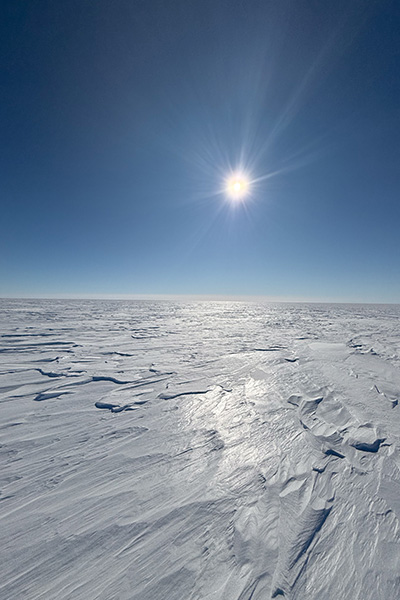
In terms of the landscape, Antarctica was basically what I expected. I will caveat that by saying it was also unbelievably beautiful – like the whole thing is staggeringly pretty. To the extent that none of the photos do it any justice at all - Jonny Huntington
With a “there’s a job to be done” mentality fully kicked in, Jonny could focus on what he’d trained for and establishing a daily routine, drawing on the discipline and pragmatism that he’d gleaned from his military training.
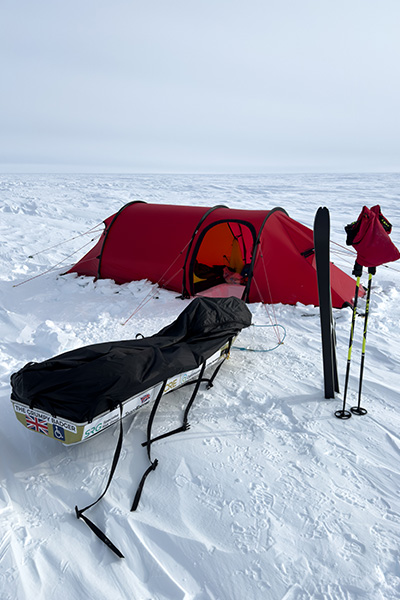
“A standard day on Antarctica is very straightforward, which is kind of the beauty of it,” Jonny explained. “You do three hours’ admin at the top and tail of the day.
"That typically involves things like melting snow for water, cooking, eating and ‘washing’ – that’s in inverted commas as, you know, it’s pretty much a wet wipe! And there’s doing comms back home to make sure everyone knows you’re alive.
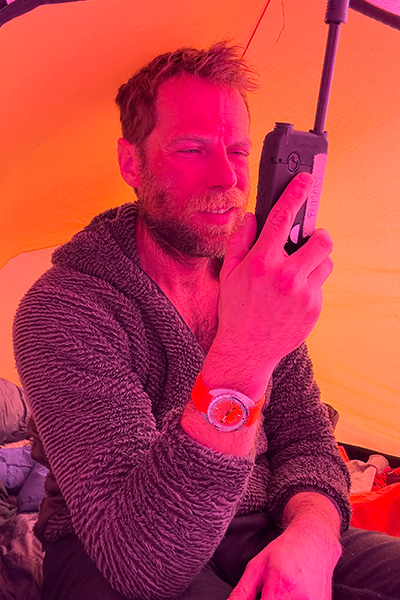
“Then you basically sleep, get up, do exactly the same thing in the morning. Twelve hours’ worth of skiing later and that’s about it. Rinse and repeat.”
The other great thing is that there is zero mobile reception so you’re not being interrupted from what you need to do. I think it probably took me at least a week to get out of the habit of getting out my mobile and clicking on to Instagram to see if anyone’s liked anything - Jonny Huntington
Oddly enough, the greatest challenge that Jonny faced over his one-and-a-half month slog across the Antarctic Ice Sheet is perhaps one most of us would never consider: “… it was hotter than expected!”
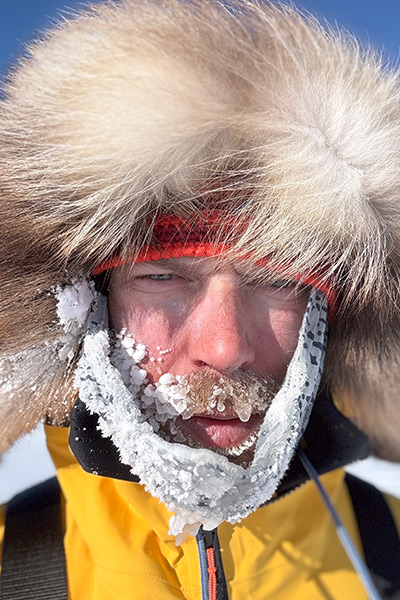
“I’ll try not to be too much of a nerd here, but for anyone that’s been skiing in the Alps or anywhere like that, when the snow melts, it’s got high water content and the air also has a relatively high water content. The snow retains a lot of its water, so you get slush. Conversely, down in Antarctica, it gets sticky, because there’s zero humidity in the air [indeed, many are surprised to hear that the Antarctic Ice Sheet is the world’s largest desert, surpassing the Sahara by about 50% in area].
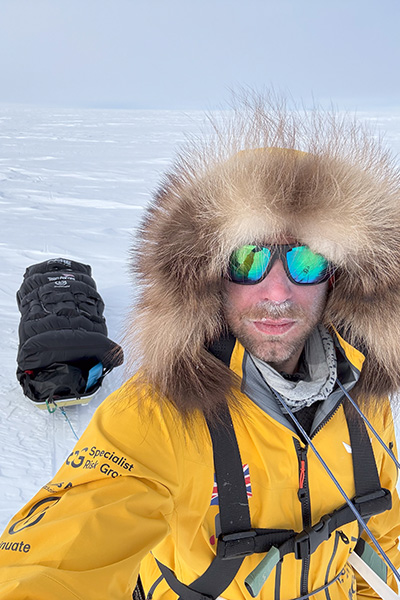
“So actually what you get is a very granular snow. It’s like dipping your hand into a bag of sugar. What you end up with is effectively an inch and a half of powder on the ground and it’s like skiing up a beach.
“I got two days of really good movement where you’re skiing on ice basically, which is what you want. The other 44 were soul-destroying in a lot of ways.
“The biggest problem I specifically had is that my left leg simply doesn’t do as much work as my right. By about the third week, my right leg had started to develop some Achilles tendonitis just because it was having to work so much harder to compensate for the other side.”
Through a combination of grit, painkillers, a proper coffee each morning (the one luxury item he allowed himself to take), all the while remembering the disabled community that he was representing, Jonny persevered.
Until eventually, out of the barren icescape, he caught his first glimpse of human presence since he'd departed the Union Glacier on the horizon: a massive rounded structure that put Jonny in mind of a giant oil barrel. In fact, it transpired to be the huge electromagnetic telescope located at the Amundsen-Scott South Pole research station. Before long, he had made it to the facility, but his mission wasn't over quite yet.
“It’s the first people you’ve seen for a while, which is a nice thing and they’re all waving at you and happy. But at the same time, I’m very conscious about needing to avoid shaking hands or hugging anyone, or indeed accepting a beer if someone offered one!
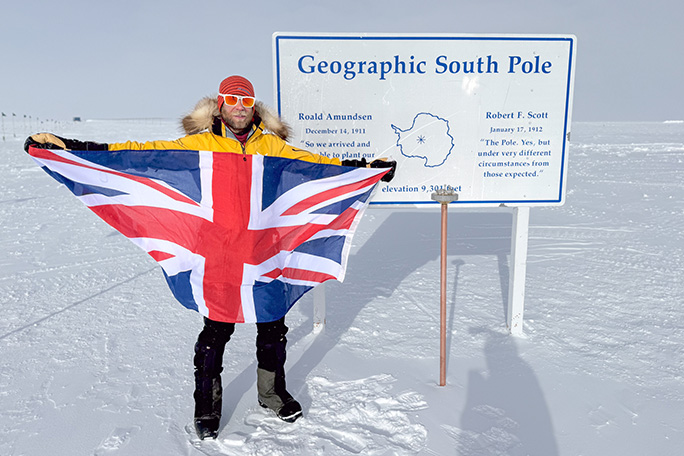
“As a soloist who is doing this journey unsupported, there are very, very strict rules around interaction. So I had to keep focused on reaching the South Pole marker, otherwise it could have all gone kaput, so close to the end!”
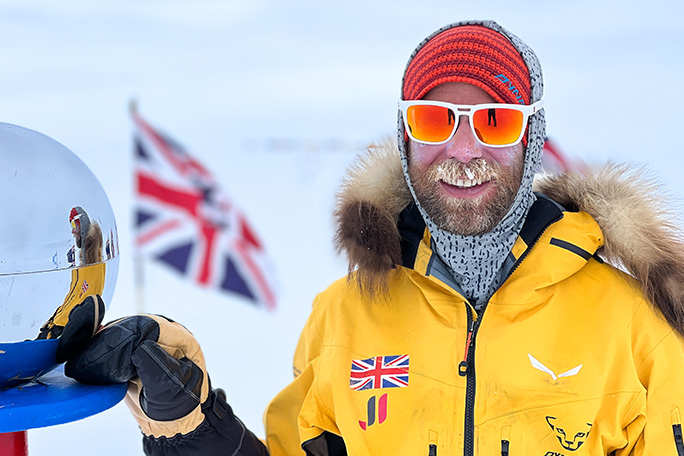
Suffice it to say that Jonny resisted and made it to his final destination: the fairly simple sign, flags and steel orb that marks (at least ceremonially) the world’s most southerly point. He had officially completed his journey, cementing his place in history as the first disabled person to ski solo and unsupported to the South Pole from the coast.
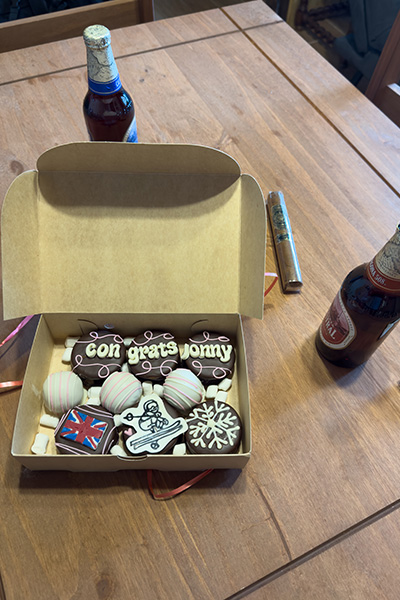
As Jonny reflected, reaching this place “represented a lot more than just the end of a 46-day trip. The project itself had taken six years to get to that stage. And there were elements of the preparation that were significantly harder in an acute sense than the trip itself, such as the fundraising side of it.
“What’s more, by that time it was about 10-and-a-half years post-injury for me. And that also meant a lot to have achieved something that I was proud of – to have scratched a lot of itches that compensated for stuff that I wasn’t able to do because of my injury.”
We suspect it won’t be long before the record-breaking itch comes along again because for someone with as much drive as Jonny, it’s all but inevitable. We look forward to seeing where his path leads him next, and what further boundaries he can smash in the adaptive-adventure field.