


Öndör Gongor: The search for Mongolia's lost giant
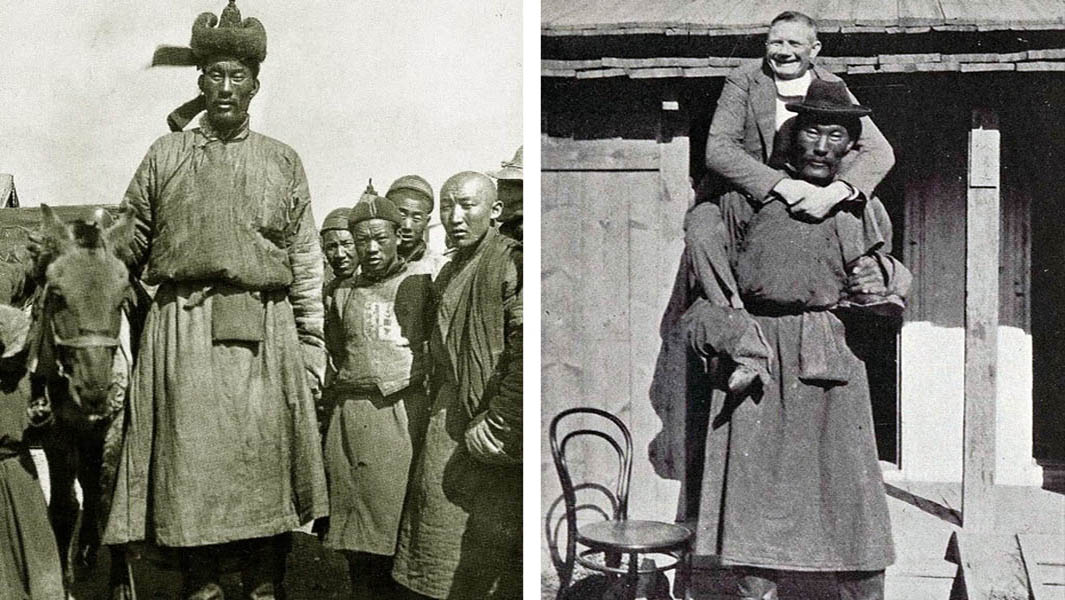
This story is a kind of postscript to our series on the history of the world's tallest men. I wanted to mention one of the candidates that didn't make the final list, and talk through the GWR investigation into his claim to the title. This is the tale of my quest to learn more about Öndör Gongor, the Keeper of the Khan's Elephant.
Narrowing the field
It starts, as all good (and bad) research projects do, with a trip to Wikipedia. When this feature was originally proposed (as something for the 2025 edition of the book), we decided that the history of the tallest man couldn't reasonably be extended to before 1900.
That made things easier, but it still left a long blank stretch of timeline between Willie "Bud" Rogan and the founding of GWR in 1955. There are a lot of names that get thrown around, but the number of credible candidates for the title of world's tallest man is much smaller.
Working with our expert consultant, Dr Wouter de Herder, I started going through lists of notably tall people, making notes and gathering what information I could. After a week or two, I was pretty confident in the shortlist that I had, but there was one person who made various online lists that I couldn't verify much about – a Mongolian man called Pureviin Gongor, who was better known as Öndör Gongor ("Tall Gongor").
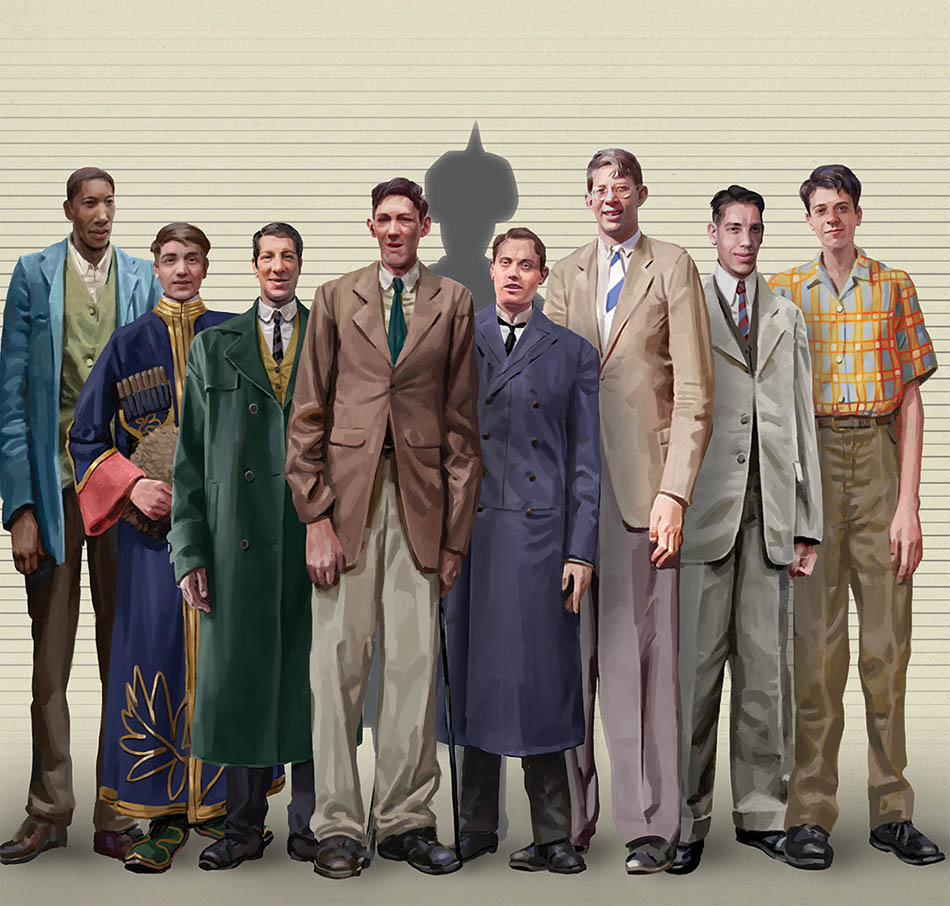
Here is roughly where Öndör Gongor would sit in the timeline we established, if he was proven to be as tall as was claimed.
The basic information I was able to glean online was that Gongor lived in Urga, Mongolia, (the present-day city of Ulaanbaatar) between c.1880 and the end of the 1920s. He was undoubtedly the tallest man in Mongolia, with a height variously stated as 236 cm (7 ft 9 in) or 245 cm (8 ft), and he worked for the ruler of the country, the Bogd Khan. Some accounts said he was an elephant keeper, others a bodyguard or wrestler.
My only promising lead was reference to someone called Roy Chapman Andrews, who reportedly measured Öndör Gongor in 1922. Armed with this information, I set off for the London Library and their collection of esoteric old books. I didn't realize at the time, but this was the beginning of a very odd week's reading.
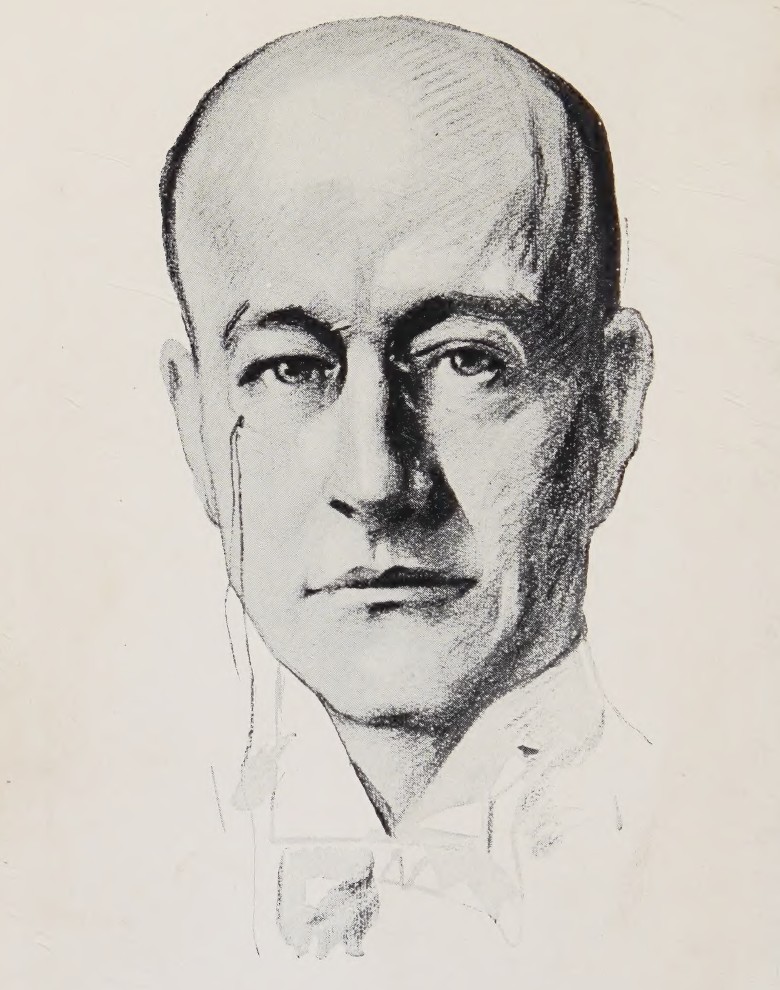
From Chapman's 1926 book On the Trail of Ancient Man
Roy Chapman Andrews
This is Roy Chapman Andrews (1884–1960). He was an American palaeontologist, anthropologist and general all-round gentleman adventurer (though he personally didn't like that description). He was an early member of the Explorer's Club and later the director of the American Museum of Natural History. He was also, according to his autobiography, a "self-taught taxidermist", which isn't a hobby you get much these days.
"Adventures" are a mark of incompetence. If a man goes into the field with a knowledge of the country he is to visit and with a proper equipment, he probably will have very few "adventures."
- Roy Chapman Andrews
Chapman wrote books with wonderfully evocative titles such as Quest for the Snow Leopard, On The Trail of Ancient Man and Whale Hunting With Gun and Camera. He had a slightly unsettling 1920s pince-nez-wearing interest in human evolution and conducted several years of palaeontological field work in Mongolia and northern China, so the idea that he'd met and measured Öndör Gongor seemed perfectly plausible. If there's one thing 1920s naturalists loved, it was obsessively measuring people.
The first book of his I cracked open was Across Mongolian Plains – a personal memoir and travelogue that detailed his adventures in Mongolia between August and December 1918. It didn't mention Öndör Gongor, or anyone who might have been him, but that didn't stop me reading the whole thing.
To give you an idea of how obscure this book is – the London Library's copy still had this at-least-80-year-old bookmark tucked into it. I wonder who she was?
Life in the Legation Quarter
After that book, I couldn't help diving into the bizarre and disturbing world of expat life in 1920s northern China, reading a whole bunch of similar books – books that, in my defence, did every now and then mention Öndör Gongor in passing.
For a bit of context, China was in a very bad way during the first few decades of the 20th century. Its economy had collapsed; it had been mauled by its encounters with European colonial powers, who carved off cities and ports as "concessions" and flooded the country with opium; and its ancient central government had weakened to the point where most of the country was now effectively run by a patchwork of violent local warlords.
Against the background of what was effectively a decades-long civil war, a community of foreign missionaries, diplomats and businessmen lived out a roaring-twenties lifestyle entirely insulated from, and often seemingly indifferent towards, the death and destruction that surrounded them. The following quote gives you an idea of the atmosphere:
In the spring of 1926, we were confined within the city walls. The gates were barred and sandbagged, the Chinese panicky, the foreign population having a glorious time. Every morning promptly at ten o'clock an aeroplane sailed out of the south, dropped a few bombs on the city and flew back again to Chang Tso-Lin's lines. The roof of the Peking Hotel was the best place from which to see the show.
"Bombing Breakfast" became the newest social diversion. A dozen guests would be invited to breakfast in the hotel at nine o'clock. At five minutes to ten, they would adjourn to the roof, watch the plane do its stuff and then jump into motor cars to inspect the scene of devastation. As they were small bombs filled with black powder, the damage was slight. Usually a coolie [local laborer] or two would be the only casualties.
- Roy Chapman Andrews
Looking for Gongor
Darkly fascinating though this was. it wasn't getting me any closer to finding the answer to the question of Öndör Gongor's height. For that, I was going to have to bring out the big guns.
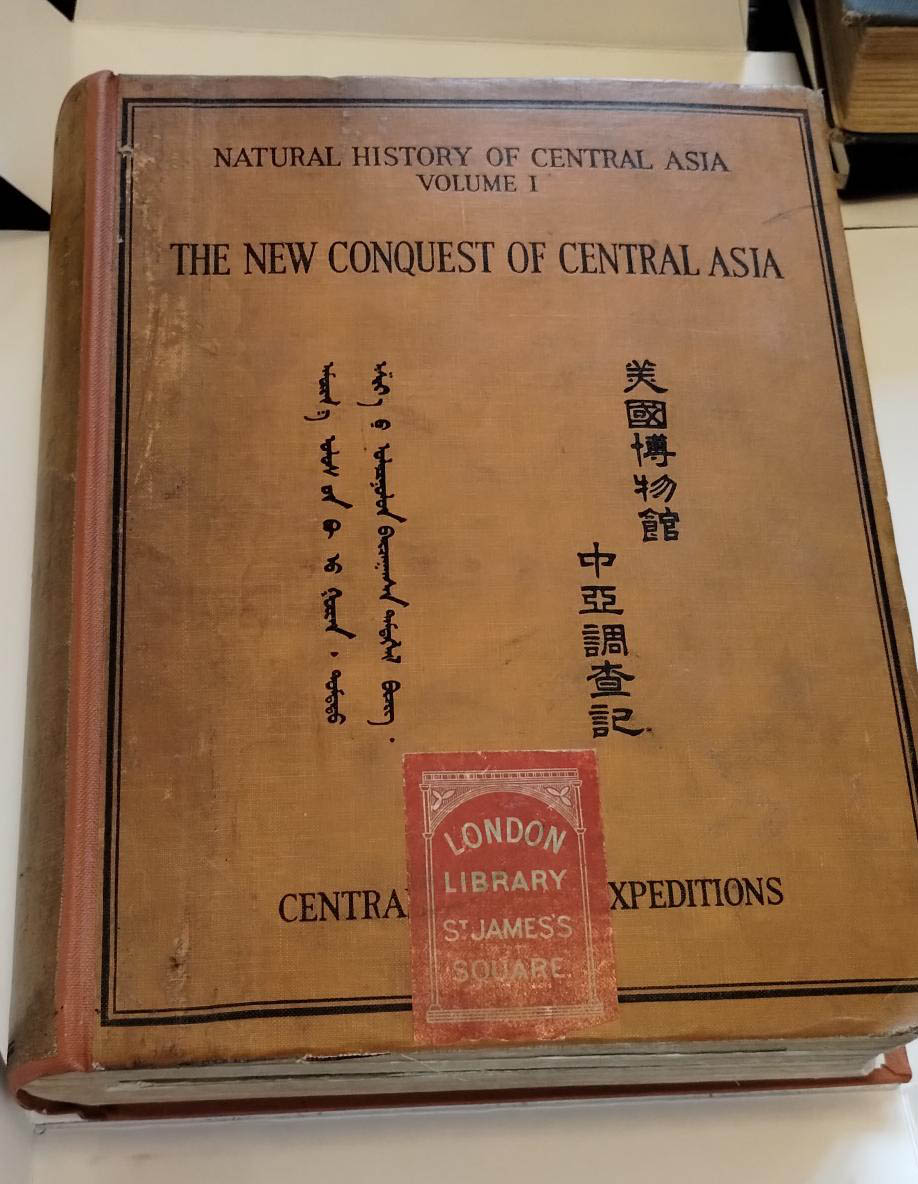
I audibly oof-ed when I had to pick this up. I need to lift more.
This 5-kg (11-lb) quarto volume is the official report on the American Museum of Natural History's various expeditions in Central Asia between 1921 and 1930. It was delivered to my desk on a trolley by a librarian. She supplied me with a set of foam wedges and specific instructions on how to turn the pages. (No gloves though – apparently these are considered bad practice these days as people who can't properly feel the pages are more likely to tear them.)
I gingerly opened the book and there, opposite page 61, was a familiar picture of Öndör Gongor. Along with a caption that read "A MONGOL GIANT AT URGA. This man was nearly eight feet tall and weighed 307 pounds".
The odd specificity of the weight was encouraging, even if the vagueness of "nearly eight feet tall" wasn't. I searched through the surrounding pages, then the rest of the chapter, then the whole book, but found – to my disappointment, absolutely nothing else about Öndör Gongor.
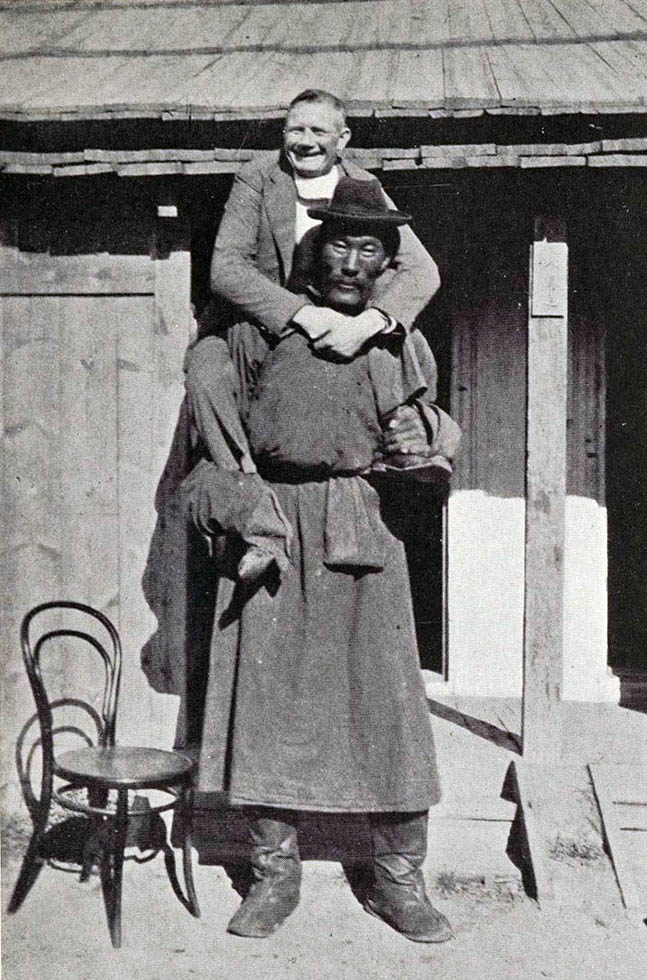
Gongor with Swedish missionary Frans Larson, from Larson's 1930 book The Duke of Mongolia.
If Roy Chapman Andrews did measure him, he didn't think the results were significant enough to be worth mentioning in the book. However, I personally doubt any measurement took place as "nearly eight feet tall" is a very common description of anyone over 7 ft (213 cm). It comes up all the time in newspaper articles and descriptions of anyone exceptionally tall.
The oddly specific weight measurement of 307 lb could well just be a conversion artifact from the traditional Mongolian system of measurement his weight had been originally estimated in.
The works of Roy Chapman Andrews weren't a total bust, however. Years later, in the book Meet Your Ancestors: A Biography of Primitive Man, he wrote the following story of his experiences in the company of Öndör Gongor.
Of course, glandular disturbances can make a giant almost overnight, so to speak, and frequently does. I knew such a giant in Mongolia. He was eight feet tall and had a voice that seemed to rumble out of his shoes like the deep tones of an organ.
I could walk erect under his outstretched arm. Moreover, he was as strong as an ox, which is not usually the case with abnormal humans. Once, I saw him pick up the Mongol pony he was riding when it balked at crossing a shallow stream, carry it over, mount again and ride away. The Living Buddha of Mongolia [Bogd Khan] sent him as a present to the Czar of Russia, but the giant sickened for the open plans. So he was returned with thanks and lived out his life near Urga.
His fame travelled so far that a circus 'Scout' tried unsuccessfully to entice him to America. I visited his yurt one day and met his father and mother. They were both of normal size. Obviously his gigantism was due only to an excess secretion of the pituitary gland.
- Roy Chapman Andrews
So was he the tallest?
So after all that, I finally had an idea of who Öndör Gongor was as a person, and the sort of life he lived, but I still didn't have an answer to the question "how tall was Öndör Gongor?" The sad truth is that if Roy Chapman Andrews didn't measure him, then all we have to go on are the pictures his team took.
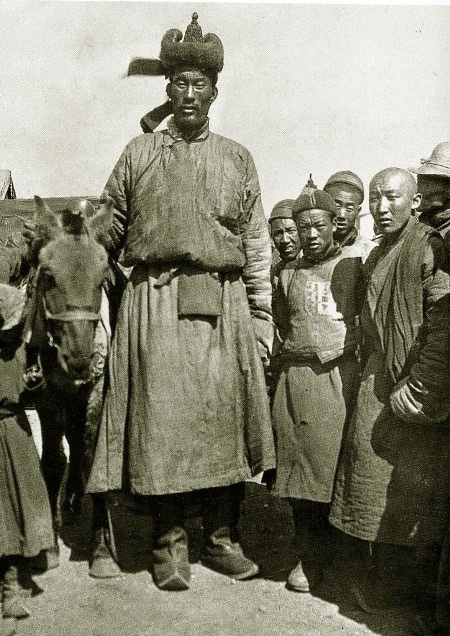
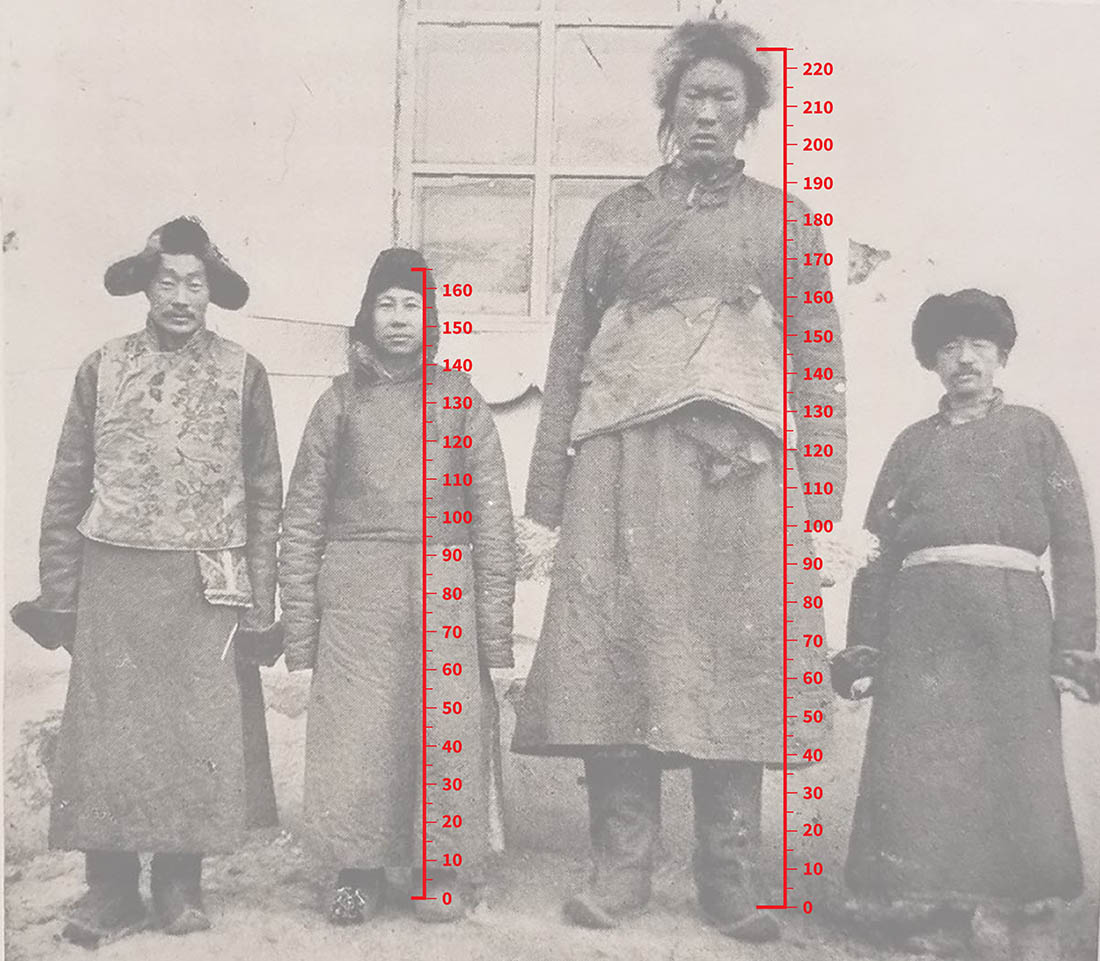
This picture provides a good point of comparison, as there is a man standing pretty much side-by-side with Gongor. He's a few centimetres in front, judging from the position of his feet, but not enough to skew things significantly. If we assume this man is of roughly average height – which seems reasonable as he doesn't appear to be either significantly taller or shorter than the men around him – then we can use him as a measuring stick.
Gongor looks gigantic, but the thing is, even today, the average Mongolian man is not particularly tall. A WHO study from 2013 recorded an average height of 167.8 cm (5 ft 6 in) among Mongolian males, and that's with modern nutrition and greatly improved healthcare provision. In the early 20th century, the average male height in Mongolia was closer to 159 cm (5 ft 2.5 in).
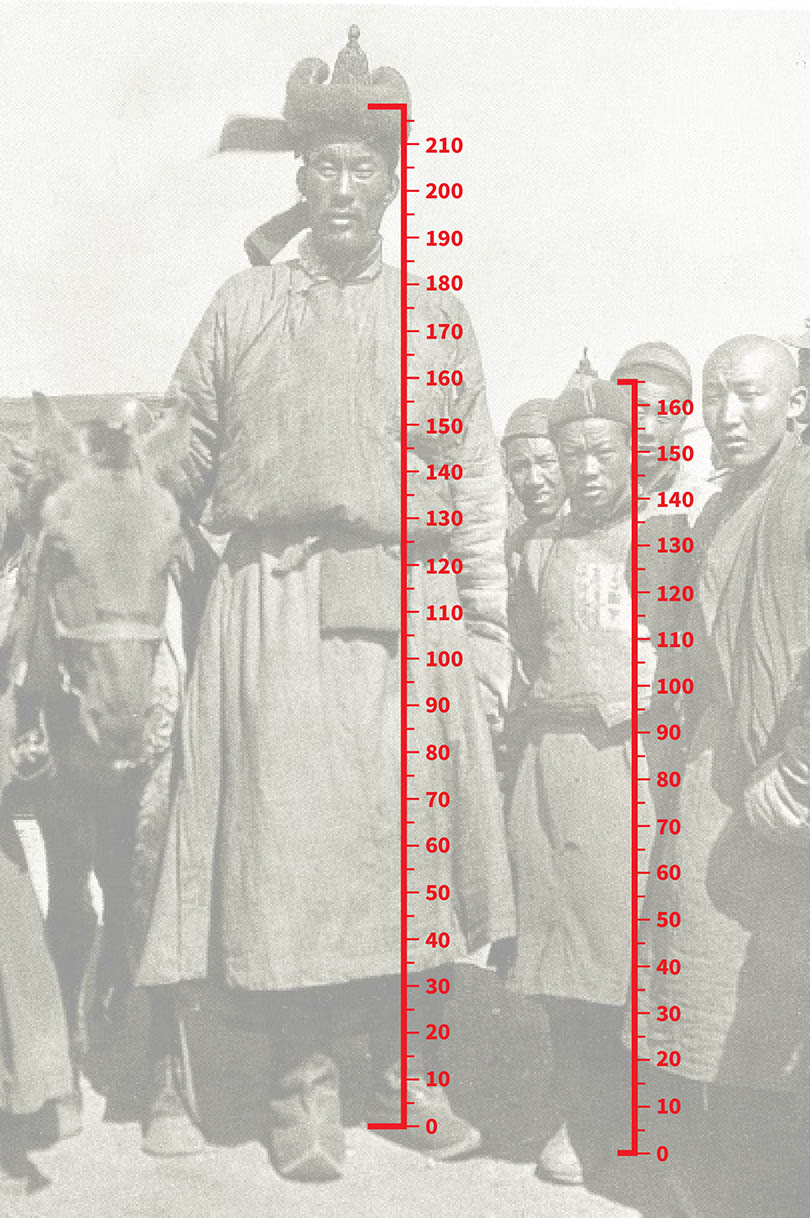
Here's a marked up version of the picture with an approximate scale based on the man to the right. I've erred on the side of caution and assumed this man is a little on the taller side of average for the time – about 165 cm (5 ft 5 in). Based on that scale, Öndör Gongor appears to be approximately 215 cm tall, or around 7 ft 0.5 in.
Obviously, this isn't a scientific measurement – if nothing else, we can't really see how straight Gongor is standing, nor exactly how much head he has inside that big hat – but it gets us in the right ball park. Here's another picture of Gongor that suggests he might have been a little taller, perhaps 220 cm (7 ft 2.6 in).
This picture is from Frans Larsen's The Duke of Mongolia (1930)
So was Öndör Gongor ever the tallest man in the world? On balance it seems like he probably wasn't, but we can't say that for sure. Measurements from pictures can be deceptive, and Roy Chapman Andrews, while not a medical doctor, was certainly a man of science, used to measuring and estimating. His "nearly eight feet tall" might be closer to the mark than yours or mine.
Giants in context
It's easy, when working on a research project like this, for your expectations to get thrown off. After looking through archive footage of men like Don Koehler, Gabriel Monjane and, of course, Robert Wadlow, you tend to start thinking of even people like Albert Kramer as "short" at a mere 228 cm (7 ft 9.5 in).
Luckily for me, it was around this point in my research that I had a reality check in the form of an impromptu office visit from the Harlem Globetrotters (you know, normal Guinness World Records stuff).
I am, for context, a smidge taller than average for a British man – about 180 cm (5 ft 11 in). Not tall enough that "he's tall" would be the first thing anyone would say about me, but tall enough that I'm not accustomed to having to look sharply upwards at people.
Chandler "Bulldog" Mack, by contrast, is 200 cm (6 ft 7 in) tall. Standing in our office, he looks out of scale, towering over everyone and ducking through doorways. He's head-and-shoulders taller than me.

Bulldog Mack in GWR's London office, standing with our to-scale portrait of Sultan Kösen.
Even if we go with the most conservative estimate of Öndör Gongor's height, he was still likely as much taller than Bulldog Mack as Bulldog Mack is taller than me. If you saw him walking down the street, especially a street where everyone was around 160 cm tall (5 ft 3 in), you would be absolutely stunned.
He wasn't the tallest man in the world, but he was certainly the tallest man in his own, and that counts for something, I think.
Header image courtesy of Wikimedia Commons.
For more about our human body records, click here.
For the history of the tallest man record, check out our feature series here.