

More stop-motion movie magic as Laika’s Wildwood takes title as longest film in genre
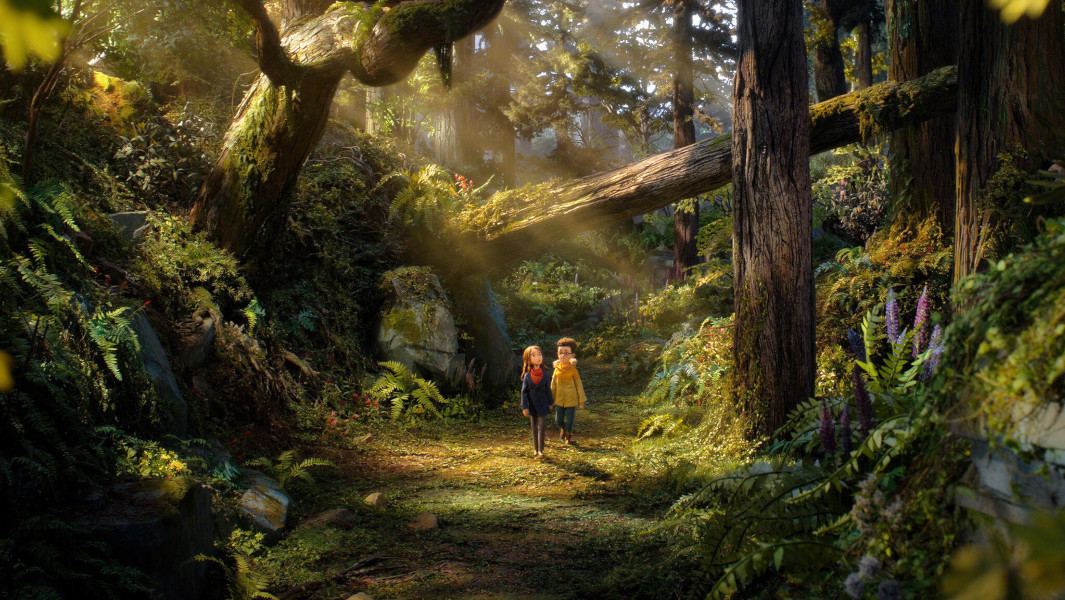
Frame by frame, a team of 1,000 people spent over seven years rearranging the puppets inside Laika Studios’ Wildwood (USA, 2026) set, gently nudging their inanimate shapes into a full-blown feature film’s worth of content.
Depicting a stop-motion animated wilderness outside of Portland, Oregon, USA – where the studio is based – the movie follows two teenagers as they attempt to rescue a baby abducted by a murder of crows and taken to the fantasy realm of Wildwood.
With a runtime of 130 minutes, watching the film may feel similar in length to watching a regular animated movie. Yet when considering the painstaking process of crafting over 100 sets and animating thousands of faces, it’s clear that Wildwood deserves applause for its handmade world – and last month, their efforts paid off as they officially received the Guinness World Records title for the longest stop-motion feature film of all time.
The production studio beat out Guillermo del Toro’s Pinocchio (USA/Mexico/France, 2022) with a runtime of 117 minutes, and the iconic 2000 film Chicken Run (UK) and its total of 82 minutes, to rule the animation nation.
Laika has been making animated movies since 2005, with their first release – Coraline (2009) – finding widespread critical acclaim. Wildwood is their sixth feature film, and is far-and-away their most audacious attempt yet, requiring over 2,800 individual shots, twice as many puppets and locations as their previous movies, and boasting a runtime nearly 30 minutes longer than any of their prior works.
They even surpassed the amount of faces generated in their previous film, Missing Link (2019), which set a record for the most 3D printed faces made for a stop-motion film with 106,000 – telling Entertainment Weekly that they had to build an additional facility across the street for extra storage.
“I honestly never thought that I would get to this point, because this was such an ambitious film,” said Wildwood art director Cassie Lopez to the publication. “It’s amazing that we’re at the finish line. I’m really proud we did it.
“I wish I could tell myself back then: ‘Just hold on. It’s going to be great. It’s all going to be worth it.’ And it was totally worth it.”
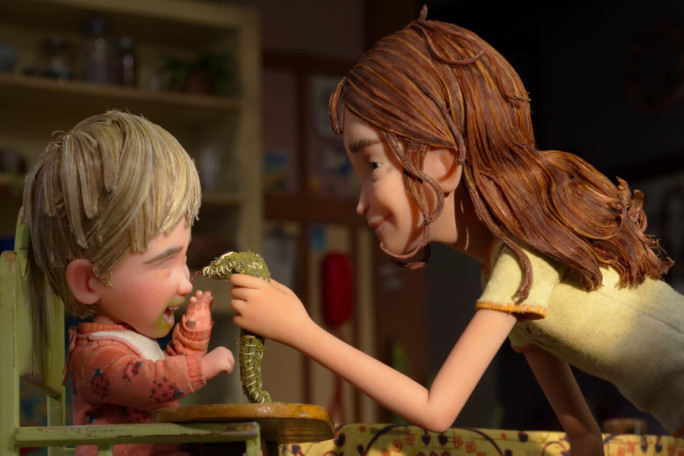
Photo credit: Laika / Fathom Entertainment
Nevertheless, despite the technological advances being made at Laika, stop-motion has notoriously been a painstaking medium for decades – if not centuries.
Though stop-motion has existed since the early days of cinema, albeit in different forms, our current understanding of the genre may come from the process whereby 3D models (or puppets) are adjusted frame-by-frame to create a moving picture onscreen.
Read more stories about record-breaking films in our dedicated Arts and Entertainment section!
As of 23 April 2025, the highest-grossing stop-motion film studio is Aardman Animations (UK), who have accumulated a worldwide gross of $756,529,838 (£494 million) for their six feature films released within this genre, according to The Numbers.
Early into the 21st century, Aardman helped work on Chicken Run (USA/UK/France, 2000), which is the highest-grossing stop-motion animated film of all time, as of 10 January 2025.
According to The Numbers, the movie – about a flock of chickens escaping their farmer before he turns them into pies – had grossed $227,793,915 (£185,172,711) in cinemas worldwide.
The film studio is also known for their characters Wallace and Gromit, as well as Shaun the Sheep and his barnyard friends, and they are such a big producer of claymation content that there were recently rumors spread about Aardman running out of clay (don’t worry, Gromit fans, they’ve since assured us that they have a stockpile).
That said, you don’t have to be a big-time animator to set a stop-motion world record – a fact that IBM Research Laboratories (USA) proved in 2013 by taking the title for the smallest stop-motion film ever made.
Comprising 242 frames, with a frame size of only 45 nanometres by 25 nanometres (45 x 25 billionths of a metre), scientists “placed” individual molecules of carbon monoxide as pixels on a copper sheet to create each frame of the film.
The molecules were positioned using a Scanning Tunnelling Microscope (STM), which uses an ultra-fine metal tip to move the molecules with electrical charge. Once the molecules of carbon monoxide were meticulously put in place, the STM took 4 min and 53 sec to scan the entire piece, and created the image recorded on film.
Entitled “A Boy and his Atom”, the final product tells a short story of a boy named Atom playing with a ball, and lasts only 60 seconds.
However, here at GWR we keep track of the record-breaking numbers… so if you’re discussing which stop-motion animated film is best, ultimately, that’s up to you to decide!
And who knows – one day in the future, there could be a new record holder crowned for their achievements in stop-motion, no doubt influenced by all the talented animators who came before them.
Header image: LAIKA / Fathom Entertainment