


How the salvaged cargo of world’s oldest shipwreck helped reveal its secrets
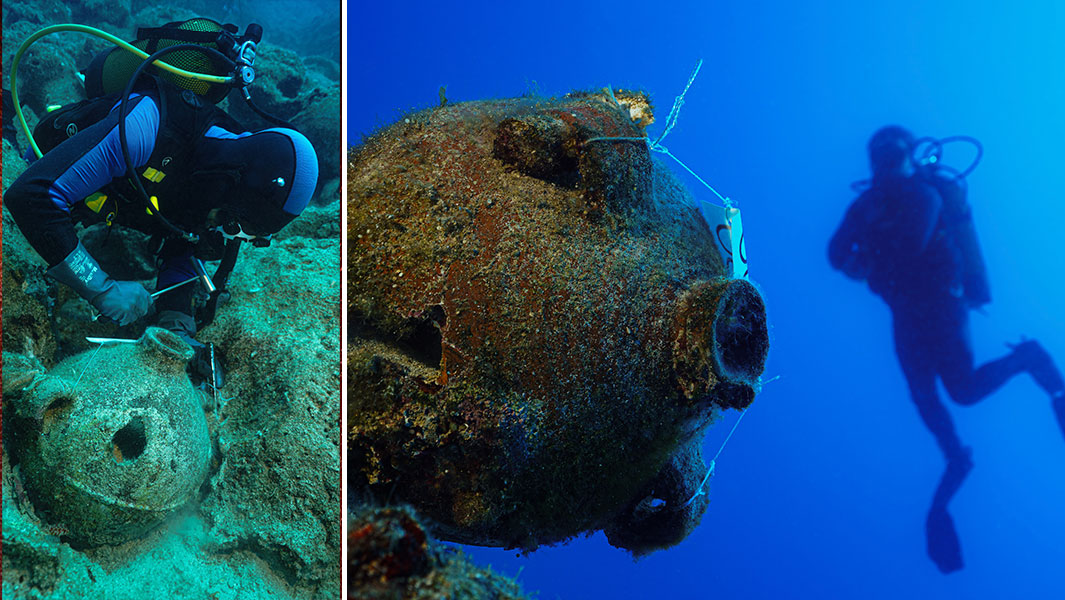
The remains of the world's oldest shipwreck, discovered off the coast of Antalya, Türkiye, have recently been dated to the Early Bronze Age.
Archaeologists have assessed that the vessel, located at a depth of just 30 m (97 ft) off Kekova Island, sank between 2700 and 2400 BCE.
To put this in context, this is around the same period that the Pyramids of Giza were being constructed in Egypt and when slabs of rock were being erected in the southern UK to form Stonehenge.
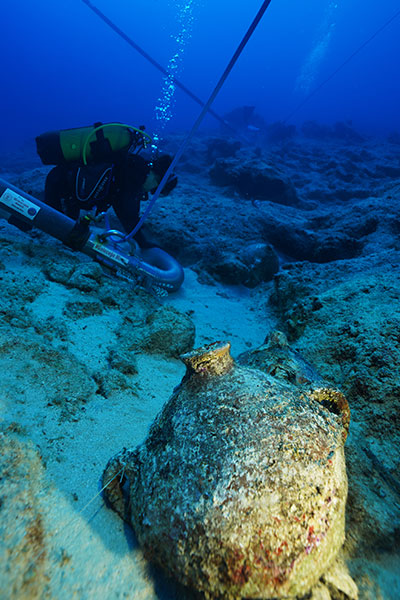
Admittedly very little is left of the shipwreck today. None of the original wooden structure exists any more, having rotten away over the millennia. What gave its presence away were the 30 or so surviving pottery jars (amphorae) it was transporting as well as three stone anchors contemporaneous to that era.
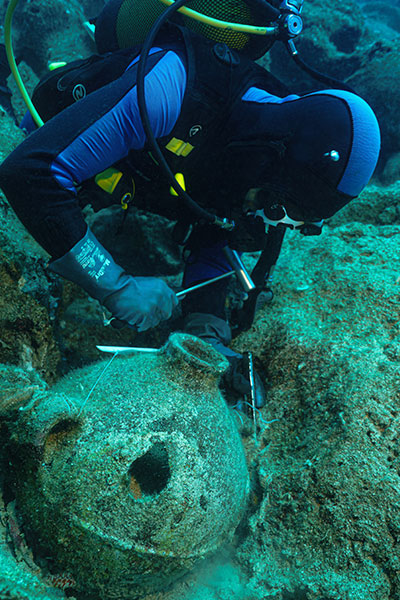
Based on the positioning of the artefacts recovered with painstaking care from the seabed, the researchers suggest that the vessel would have been roughly 10 m (33 ft) long.
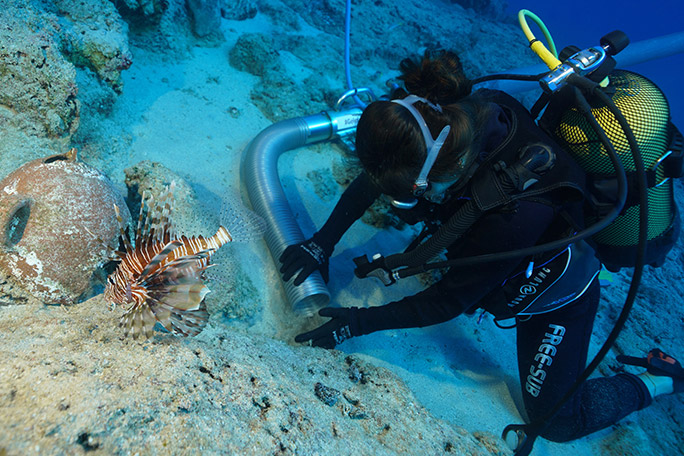
It is thought to have originated somewhere in the Eastern Mediterranean, from the region historically known as the Levant. Its position between two islands off southern Türkiye indicates it may have been sheltering from a storm and fell foul of some rocks in shallow water, though of course the events that led to its perishing can only be speculation.
It was the form and decoration of the amphorae – including features like a flat base, a pair of side handles and a strap of clay around the most bulbous section – that were fundamental to estimating the age of the ship that bore them.
Professor Hakan Öniz, of Akdeniz University, has spent decades examining shipwrecks from many different periods off the Antalya coast and was tasked with overseeing the expedition to document the Kekova wreck.
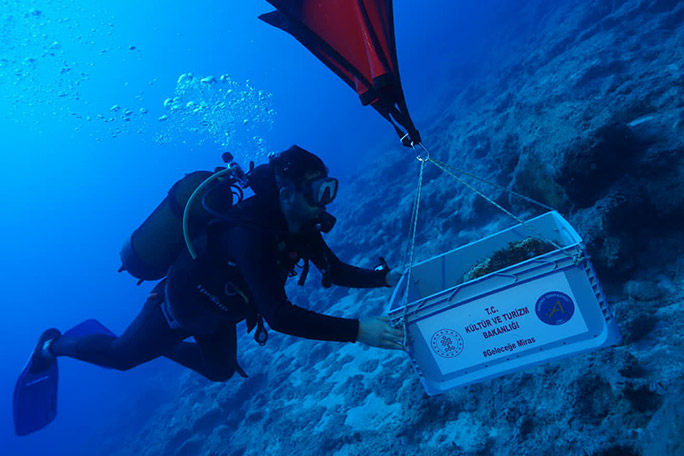
The experienced marine archaeologist outlined to GWR how its superlative age gradually came to light: “We first discovered this shipwreck in 2024. Because the amphorae found at the site had flat bases, we initially suspected they might date to the Ottoman period [which would make it only a few centuries old]; consequently, the site was catalogued alongside 434 other shipwrecks we had discovered, awaiting further detailed examination.
“In 2025, we encountered publications from Egypt noting the existence of similar artefacts near Cairo. We conducted follow-up dives to confirm this and subsequently published our findings in JMAR [the Journal of Maritime Archaeology].”
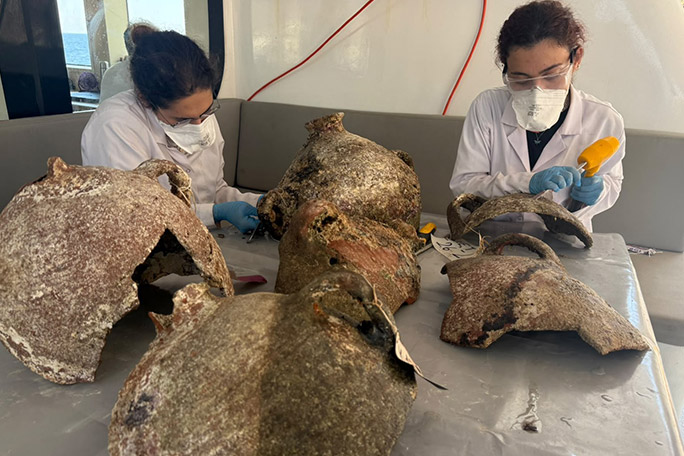
Dating a wreck that no longer exists is not an exact science, but Professor Öniz explained that it is the norm in this part of the world when dealing with wrecks of such extreme age: “In the Mediterranean, shipworm (Teredo navalis) – and similar wood-boring organisms – are the greatest enemies of ship timber.
“Shortly after a vessel sinks, these organisms attack both the wood and any other organic material; over the centuries, only non-organic artefacts remain – unless, of course, the wreckage is buried beneath a thick layer of sand. Consequently, discovering preserved wood at a shipwreck site is a rare occurrence for us. We did not find any wood at this particular site; the seabed was primarily rocky, with no layer of sand to provide a protective cover.”
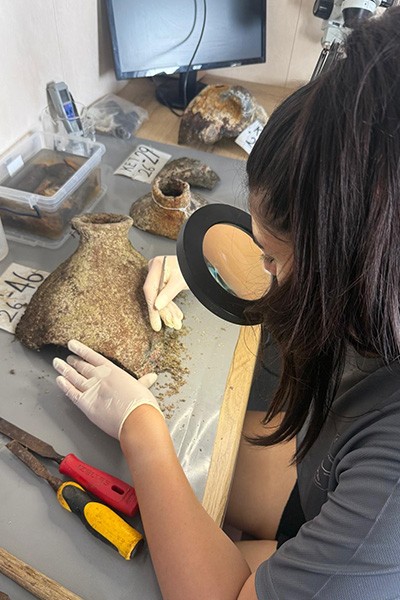
Once back in the lab, the archaeological team were able to investigate not just the ceramic jars themselves for clues of their origin, but even what they once contained.
Incredibly, despite having been in the sea for around 4,500 years, a surprising amount of black residue was found lining the interior of the pots. They didn’t even need a microscope as these deposits were clear to the naked eye.
Dr Karin Sowada, of Australia’s Macquarie University, spearheaded this part of the research. To say she was taken aback by what they found would be an understatement. “I nearly fainted… I could not believe how much [residue] was visible,” she told media.
Even after many years in this field, Professor Öniz said moments like this are always full of excitement for archaeologists: “We always await the results with great anticipation, eager to understand what was being transported inside these amphorae.”
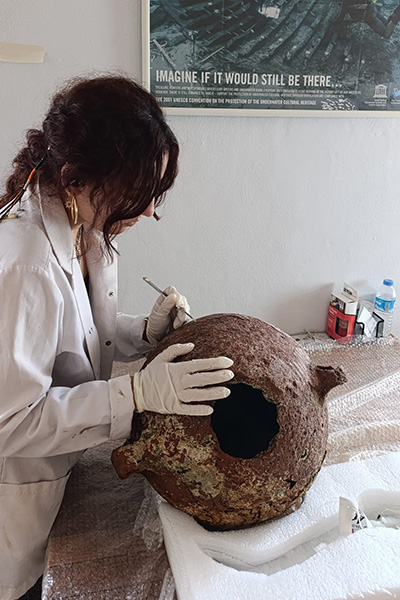
While full analysis is still to be conducted to determine the contents, the best guesses for now are olive oil, wine or tree resin (the latter of which was widely used as a form of incense at the time).
This region has become a hotspot for shipwrecks dating to early civilizations, and Professor Öniz suggested this is only logical: “The stretch of the Antalya coast where we work serves as a junction point for maritime routes connecting major Bronze Age centres – such as the Levant, Egypt and Cyprus – as they travelled to and from the north and west. It is, therefore, not surprising to find some of the oldest shipwrecks here.”
The previous oldest shipwreck was found in the Aegean Sea – off the Greek island of Dokos in 1975 – and likely would have been part of the same Mediterranean maritime trade network as the Kekova example.
The Dokos wreck was estimated by archaeologist George Papathanasopoulos to have been from around 2200 BCE. It too was aged based solely on its stone anchors and its cargo of Helladic pottery as none of the wooden ship itself survived.
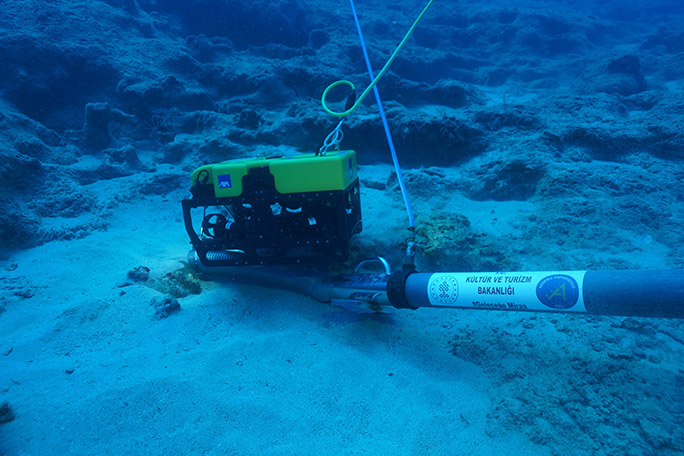
Given how many noteworthy wrecks have been found in the waters off Antalya (including a 2,100-year-old example brimming with ceramic tableware revealed just last month, about 30 km/18 mi away from the Kekova wreck), does Professor Öniz believe there is scope there could be an even older shipwreck site out there?
“We have documented 434 shipwrecks so far, but these are limited to coastal areas within the reach of human divers. Moreover, we haven’t even surveyed 10% of this coastline – and yet, these are among the most thoroughly surveyed shores in the world.
“We have only just begun to explore areas deeper than 50 m [165 ft] using robotic technology. In short, there are thousands of shipwrecks still waiting to be discovered.”