


Taking the world's biggest digger out for a joyride
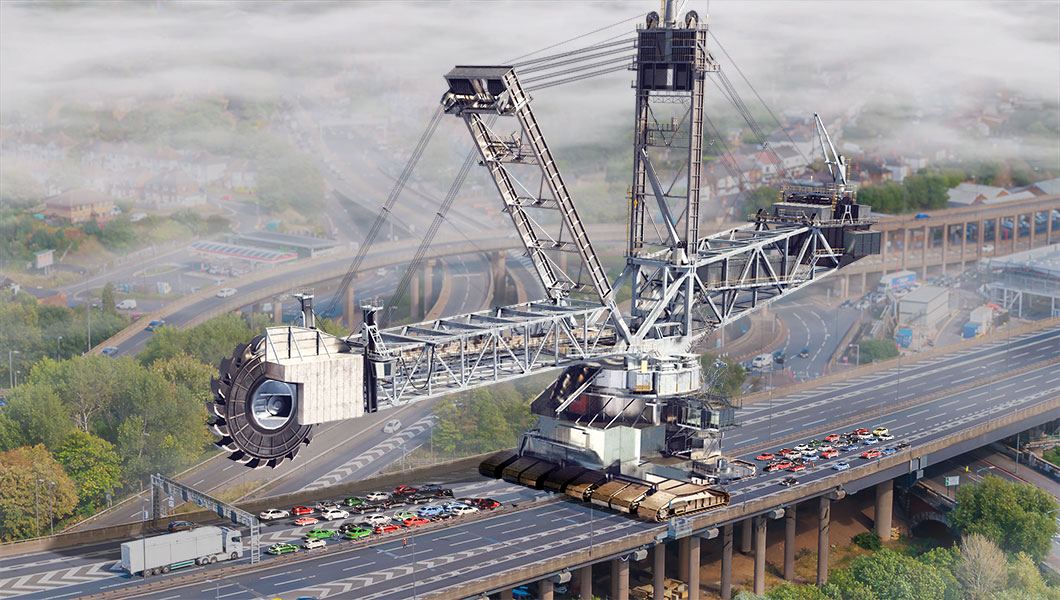
Imagine the chaos you’d cause if you took the 14,000-tonne (15,400-ton) Bagger 293 bucket-wheel excavator for a spin on the open road! The traffic report would sound very different if it ever joined the morning rush hour...
Pictured above is a digital recreation of this fully drivable earth-moving machine by the artist Joseph O'Neil, using an accurate 3D model. This is what it might look like if a digger longer than an entire city block took to the highway. And as you can see, it's one vehicle that you definitely don’t want to get stuck behind on your daily commute!
It isn’t just the largest mobile industrial machine – it’s the largest and heaviest land vehicle on Earth. And yes, it’s fully drivable. By just one operator!
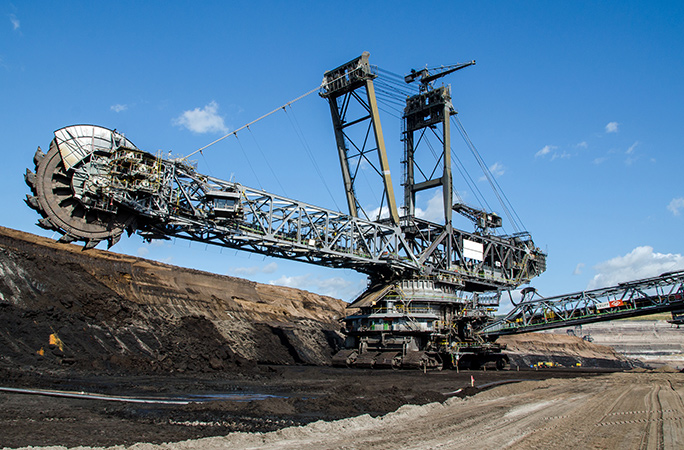
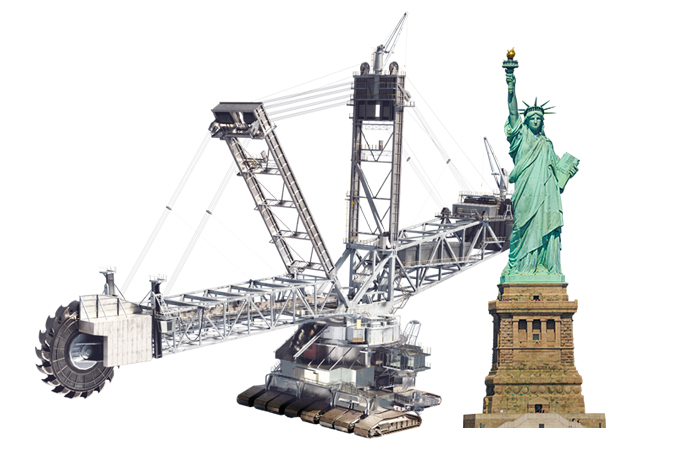
Constructed by the German company TAKRAF, the Bagger is a mine excavator that stands 94.5 m (310 ft) at its tallest, and extends to a length of 220 m (722 ft). This means it’s as tall as the Statue of Liberty (including pedestal) and longer than two soccer pitches.
And if you’ve got the keys, you could indeed take it for a joyride. But it would be less like driving a family car and more like steering an entire a gothic cathedral down the highway.
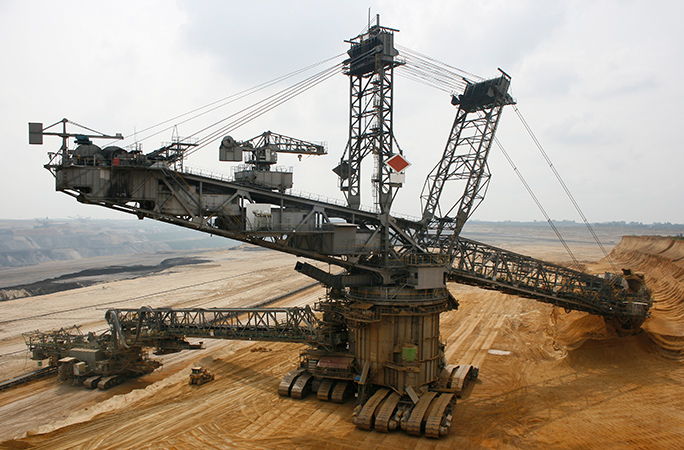
Crucially – especially when contemplating a shortcut across a concrete flyover – the behemoth Bagger weighs an incredible 14,196 tonnes (31.3 million lb). That’s heavier than 130 blue whales or more than 170 fully loaded Boeing 737s.
The largest among the Bagger fleet, the 293 was built to shift 240,000 m³ (8.4 million cu ft) of earth per day from an open-cast coal mine in northern Germany. That’s enough to fill 100 Olympic swimming pools, scooped up by 18 buckets attached to a 21.6-m-wide (71-ft) wheel and conveyed away on a belt that runs the length of its boom.
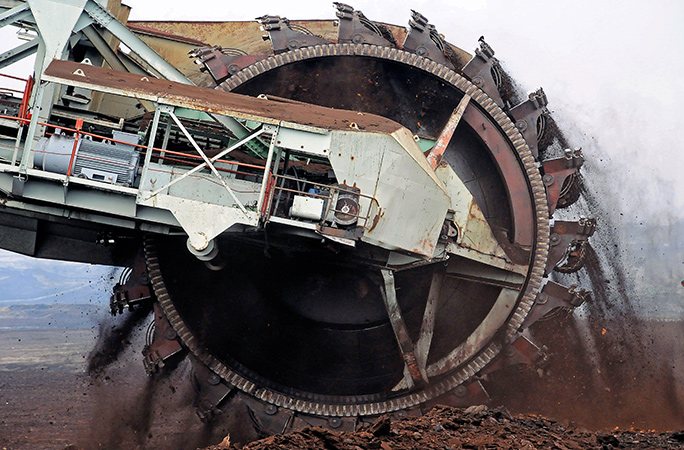
Despite its colossal size, the Bagger requires a crew of just five people to keep it operating. One driver controls the machine’s movements, while four other operators oversee its enormous rotating bucket wheel, conveyor belts and other mechanical systems. Working from control cabins high above the ground, the team monitors the excavation process, adjusts the machinery and ensures that the giant digger operates safely and efficiently. Together, these five people can oversee the excavation of as much earth in a single day as it would take 10,000 dump-truck loads to carry away!
View this post on Instagram
FACT: A bucket-wheel excavator modelled on the Bagger makes an unlikely Hollywood cameo in The Hunger Games: Catching Fire (USA, 2013). A computer-generated version of the giant vehicle appears in the background of District 12, the impoverished coal-mining region where heroine Katniss Everdeen lives.
If you did try to take the Bagger out for a spin on a public road, the first problem would be its speed. Flat out, it crawls along at 0.6 km/h (0.37 mph) – easily overtaken by even the slowest of pedestrians.
Another major hindrance would be the fact that the Bagger has to be plugged in to work. Its electrical cable – as thick as a man’s arm – draws on enough power to feed some 10,000 homes.
Then there’s the width. This titanic terraformer is about 46 m (151 ft) across, so it would take up every lane of the motorway. You certainly wouldn’t want to make a wrong turn. Given the enormous height – surpassing Lady Liberty herself – road signs, bridges and power lines wouldn’t stand a chance.
One thing that might surprise you is how smoothly it rides. Its 12 caterpillar tracks spread its weight across the ground like a massive snowshoe. Still, the highway would need serious repairs once it passed. It’s probably for the best that it remains in the mine…
For more epic engineering, visit our Science and Technology News pages.
Images: JSVideos/Shutterstock; 3d-molier International/Turbosquid/Joseph O'Neil. All other images via Adobe Stock: Markus Haack, Cveja, frankolor, rechnerkunst.de, Igor