


Mystery kitten grows up and reveals itself to be a whole new species of cat
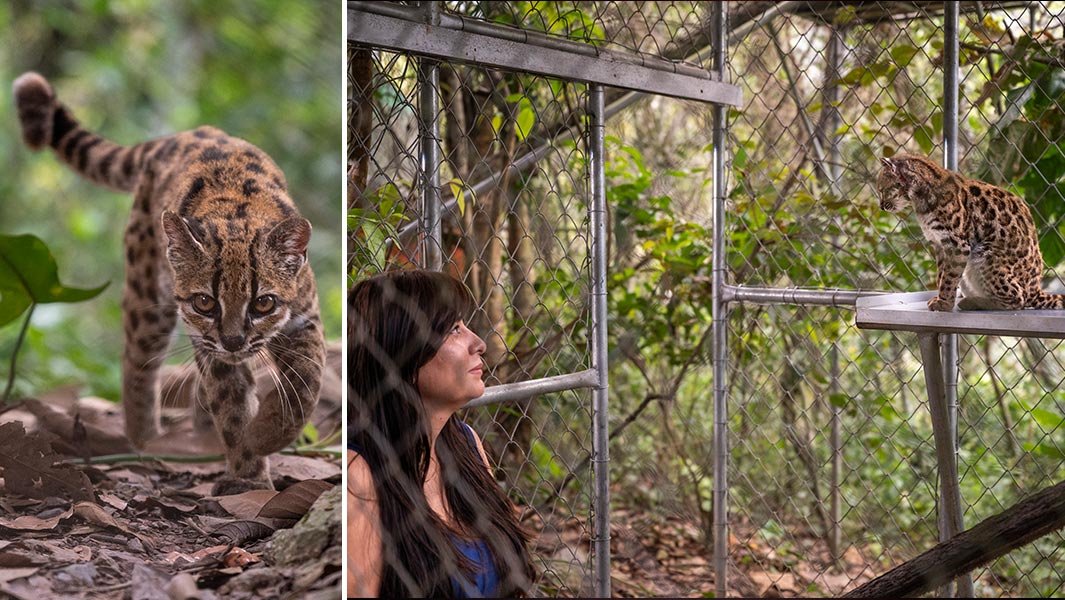
More new species are coming to light than ever before, according to research published in late 2025.
On average, 16,000 novel species are being documented per year (based on data from 2000 to 2020). Not surprisingly, the lion’s share of these are more discreet organisms such as plants, fungi and microbes that are trickier to spot than more visible fauna.
Among animals, it’s predominantly the smaller, skeleton-free lifeforms that are racing ahead (think insects such as beetles, arthropods such as spiders and marine invertebrates such as coral and sponges).
But even among vertebrates, the number of new species has been consistently trending upwards in recent decades, even if population sizes of some of the species we do know about have been on a similarly steep decline. For instance, 150 new amphibians and around 80 new reptiles were added to their respective databases in 2025 alone.
Credit: Fernando Faciole / National Geographic
Some of these creatures are being described for the very first time (either from observations of live specimens in the wild or being uncovered tucked away in museum collections). Others are so-called “species splits” when long-established species are determined to comprise distinct variants. or upgrades of hitherto subspecies. These latter examples have made increasingly possible thanks to advances in genomic research techniques and a burgeoning field of study examining nature's genetic building blocks.
Even among mammals, which one might think would be a more static group that must have been fully mapped out by now, around 65 new ones on average are described each year, as reported in a major overhaul of the Mammal Diversity Database in 2025.
As with other animal types, smaller mammals that prefer to stay out of sight or that lead a nocturnal lifestyle are the primary orders driving this proliferation, as you’d expect. Indeed, rodents and bats make up a whopping two-thirds of the 1,353 new mammals that emerged between 2005 and 2025.
Credit: Botánica Films / Emi Kondo
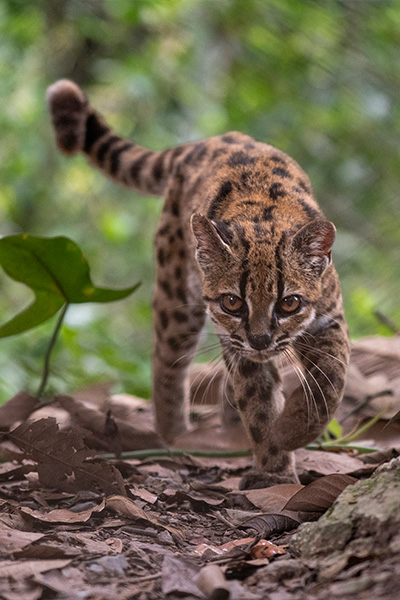
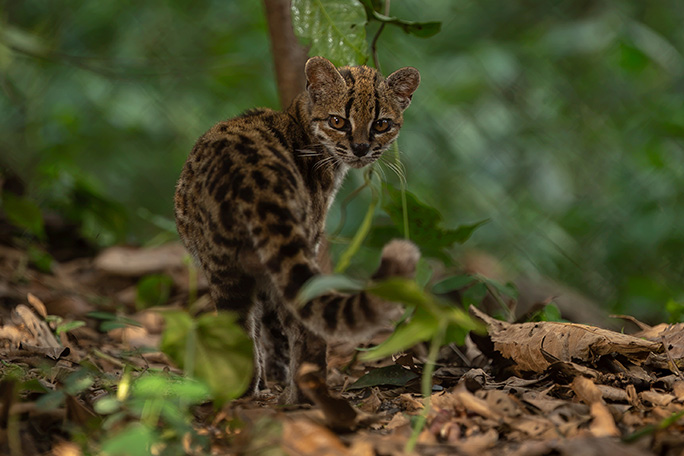
However, every now and then, even in the 21st century just when you might think there could be no surprises left, a discovery can come along that shakes up the zoological world. One of those, revealed in the journal Current Biology on 5 October, is the newest wild cat: Leopardus tilcayo.
According to the scientists behind the recently published study, the “tilcayo” – the name given to it by locals in its native forests of the Bolivian Andes – is the first novel felid (member of the cat family) described in more than 100 years.
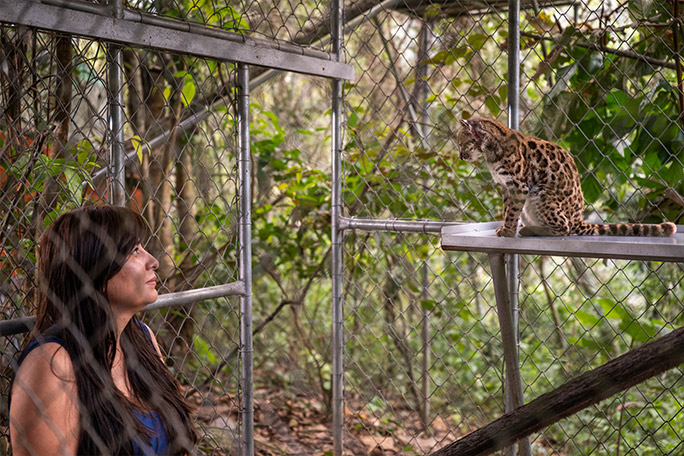
The breakthrough was only made possible after an orphan kitten (described at the time as a “weird cat”) was dropped off at the Senda Verde wildlife refuge in the Yungas region of Bolivia in 2017. A man had found the abandoned youngster near a forest and had been raising it for a year before rapidly coming to realize – as it matured – that it probably wasn’t a domesticated breed as he had first believed.

A bird's-eye view of Senda Verde wildlife sanctuary in the Bolivian Yungas region of the Andes: Credit: Fernando Faciole / National Geographic
It was enough to pique the interest of Dr Paola Nogales-Ascarrunz – a Bolivian biologist based a two-and-a-half-hour drive away in La Paz and founder of the Bolivian Felids Research Program.
For an expert like Nogales-Ascarrunz it was immediately obvious that this was no pet tabby. Hallmark features such as a rounded face, short ears, long whiskers and – more than anything else – its spotted fur were tell-tale signs this was without a doubt a wild felid.
Credit: Fernando Faciole / National Geographic
On first meeting the little cat, Nogales-Ascarrunz – who is also a National Geographic Explorer – concluded that it was a type of tiger cat (also known variously in different areas as tigrillos, oncillas and tigrinas) belonging to the species Leopardus tigrinus. And for a time that was pretty much the end of the matter.

Credit: Fernando Faciole / National Geographic
It was a couple of years later, however, when re-examining some photos she had taken of the orphaned cat now residing at the Senda Verde sanctuary that it struck Nogales-Ascarrunz that something wasn’t adding up – its markings did not match those of previously documented tiger cats in the scientific literature.
This was the spark that inspired Nogales-Ascarrunz, in collaboration with other experts, to start investigating. Some seven years later, and after a lot of detective work in the lab which yielded the comprehensive genetic data to back up their theory, they were in a position to reveal to the world that this cat was not just a variant but a whole new species in its own right.

Credit: Fernando Faciole / National Geographic
First described back in 1775 and with a range across much of South and Central America, the tiger cat family tree has been undergoing something of a Who Do You Think You Are? moment in recent times. In 2013, enlightening research into the cats' DNA resulted in the species being split into two: L. tigrinus and L. guttulus. This was followed in 2023/24 with a subdivision into two further species (L. narinensis and L. pardinoides). With the tilcayo, the tiger cat group now numbers five species – and there’s a growing expectation there could be even more out there.
“L. tilcayo was essentially hiding in plain sight,” Dr Nogales-Ascarrunz told GWR after the paper she co-authored was published. “Naturalists have been collecting and describing small cats in South America since the 18th and 19th centuries, but somehow this particular cat was never formally described. It remained scientifically unrecognized until 2026, when its DNA analysis allowed us to finally recognize it as a distinct species and give it a name.
“Being part of such a collaborative team has shown me how much further we can go when we bring together different expertise, perspectives and approaches.”
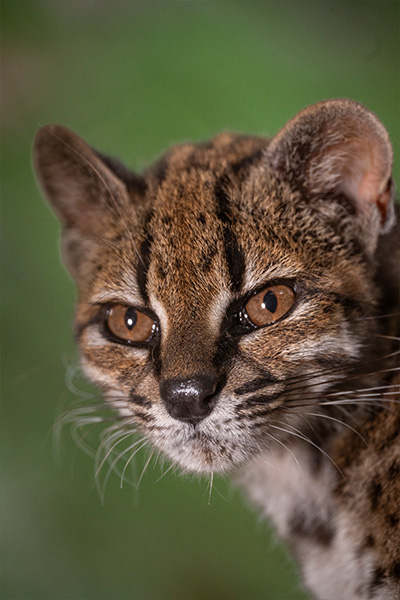
Credit: Fernando Faciole / National Geographic
When asked what sets the tilcayo apart from other tiger cats that have been recorded in other regions, Dr Nogales-Ascarrunz said: “L. tilcayo is genetically and evolutionarily distinct from other tiger cat species. Our whole-genome analyses show that it diverged from its closest relatives approximately 1.43 million years ago, and it forms a distinct lineage within the genus Leopardus.
“There are also morphological differences. Compared with L. pardinoides (the clouded tiger cat), L. tilcayo has shorter fur, a lower-contrast coat pattern, more expanded and irregular open rosettes, a less bushy tail and lacks broad, complete bands on the tail. It differs from L. tigrinus having larger and more heterogeneous markings, and a relatively longer tail. The distinction is especially clear at the genomic level. L. tilcayo can be reliably distinguished from other Leopardus taxa using numerous molecular characters.”
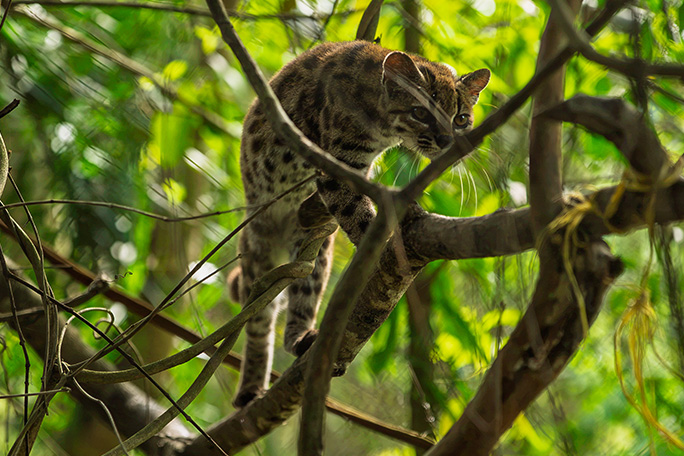
Credit: Botánica Films / Emi Kondo
The most exciting part is realizing that we can still make important scientific discoveries about animals we thought we already knew. It reminds us how much there is still to learn about the natural world – Dr Paola Nogales-Ascarrunz, co-author of the paper describing the tilcayo and founder of the Bolivian Felids Research Program
While uncovering new species like the tilcayo, of course, comes with a lot of excitement, it also brings many more questions and grave concerns over their current conservation status. This is particularly the case for this new species of elusive Bolivian wild cat that has slipped under the radar for so long.
Nogales-Ascarrunz explained: “We currently know of only one tilcayo individual in captivity, and we hope there will not be others. These cats belong in the wild, and our priority should be protecting their natural habitat and wild populations.
“While we know that the tilcayo occurs in the wild, we still do not know how many individuals there are. We need much more fieldwork to understand its full distribution, population density and habitat requirements. There are relatively few records of these cats in the wild compared with some other small felids, but we need systematic surveys before we can determine how rare the species actually is.”
The felid fanatic also advised caution in how we go about identifying the different types of small wild cat found across South America. “We have two specimens from Bolivia and Peru that had previously been identified by ‘experts’ as tiger cats.
“But when we analysed their DNA, we discovered that they are actually margays (L. wiedii), which is not even part of the tiger cat group! It shows just how difficult these cats can be to identify based on appearance alone, and it also reminds us that we should be cautious when interpreting records of tiger cats from camera traps alone.”
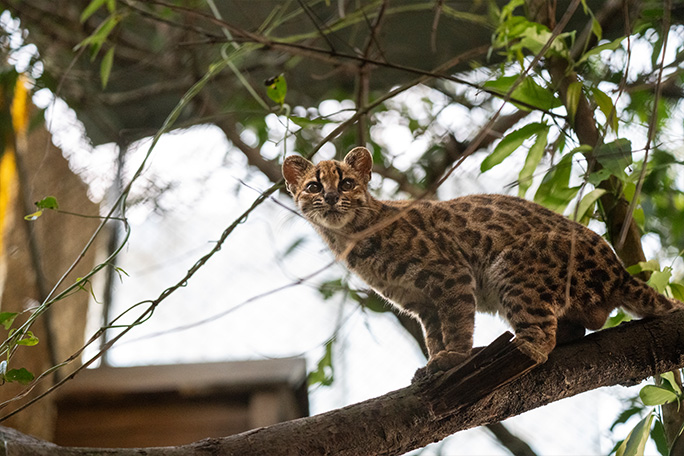
Credit: Fernando Faciole / National Geographic
This additional research to fill in a lot of the blanks about these cats is vital before any action plan can be drawn up on how best to preserve the tilcayo. Else we could risk the jubilation of discovering a new species in the not-too-distant future turning into despair at its demise.
And their loss wouldn’t just be limited to the tilcayo itself, as Nogales-Ascarrunz revealed: “Tiger cats are mesopredators. They eat small vertebrates within their ecosystem. They help to regulate populations of rodents and other small mammals, as well as birds and reptiles, and are themselves part of a larger food web where they can also serve as prey for larger predators.”
A big part of the data-gathering process is going to involve working closely with local communities in the Yungas region who live in the tilcayos’ natural forest territory. It might also require potentially challenging current views of these animals, which aren't all positive.
“Perceptions can vary between communities and individuals,” Nogales-Ascarrunz explained, “but there are cases where small felids, including tilcayo, are viewed negatively because people associate them with predation on domestic poultry. In areas where chickens are an important source of food, even occasional predation can create conflict.
For more record-breaking awesome animals, check out our dedicated Animals news page.