


Help – there’s a giant octopus in my paddling pool!
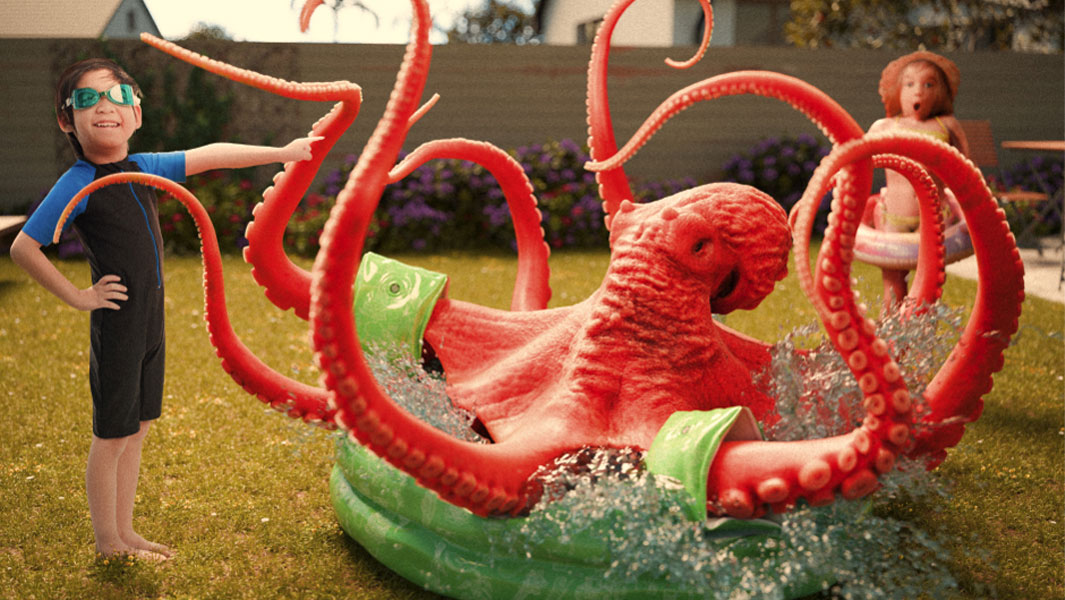
8 October is World Octopus Day (8 as in eight limbs and OCTober as in octopus, geddit?!) so to celebrate all things cephalopod, Craig Glenday goes on a deep dive with the world’s largest octopus.
Pictured above is what it might look like if a giant Pacific octopus suddenly found its way into your backyard paddling pool. This striking image, created by Joseph O'Neil – a digital 3D artist (and human... no AI here!) – shows the scale of these magnificent if enigmatic creatures compared with us bipedal homo sapiens.
It might weigh the same as a St Bernard dog, but this octopus is no substitute for a family pet. And even if you adopted one, you’d certainly need something bigger than a paddling pool to accommodate this .
Adobe Stock/Victor1153
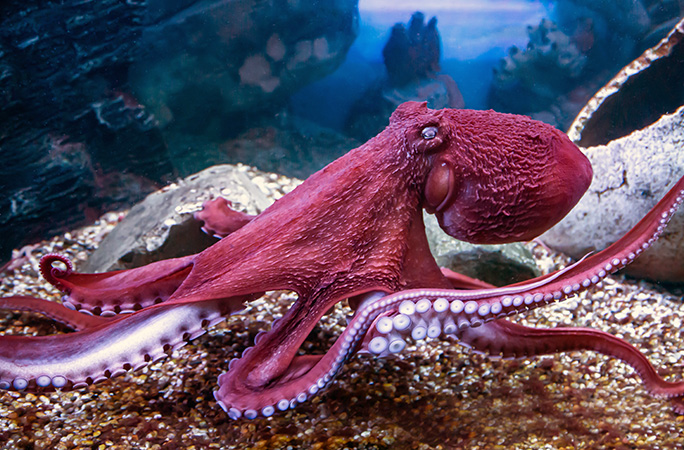
The giant Pacific octopus (Enteroctopus dofleini) has the look of a real-life sea monster, but it’s more curious than it is fearsome. Living in the chilly waters of the North Pacific, the “GPO” is the world’s largest octopus species. The biggest specimen to have been reliably measured sported an arm span of 4 m (13 ft 1 in) and weighed an impressive 71 kg (156 lb 8 oz).
For the record, they may grow even larger than this. A decomposing specimen – hauled in by fishermen off British Columbia, Canada, in 1956 – was estimated to span more than 9 m (30 ft) and weigh 272 kg (600 lb). That's as heavy as a full-size vending machine! Today, this case is regarded as an unreliable “legendary maximum”, however.
FACT: Octopuses (aka octopodes, but not octopi!) don’t have tentacles, only arms. Tentacles are long sucker-tipped limbs found on cuttlefish and squids.
Like all octopuses, the GPO is a world-class escape artist: it has no bones, so can squeeze through gaps with the diameter of a doughnut. Its skin can change colour and texture in the blink of an eye, and it’s smart – able to solve puzzles, open jars and even recognize human faces.
Adobe Stock/Leslie C Saber
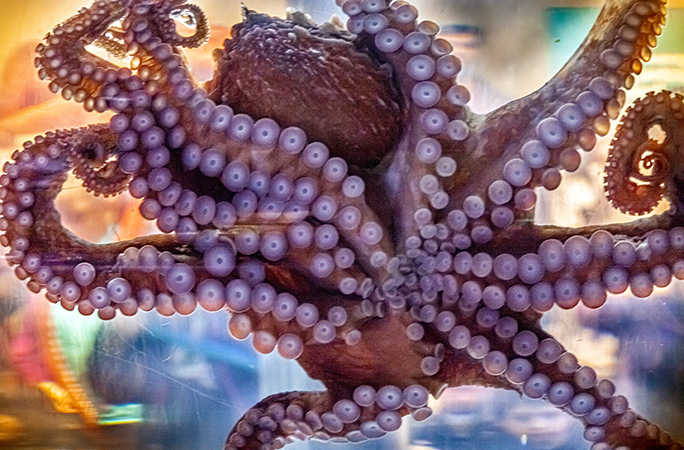
Indeed, the octopus is a masterpiece of ocean engineering. Those eight flexible limbs are lined with hundreds of suckers, each capable of gripping, tasting and exploring the world. Every arm can move independently, controlled by a mini “brain” of its own, while a central brain coordinates the whole package.
Add in three hearts – two pumping blood to the gills and one to the rest of the body – and blue, copper-rich blood that helps it survive in cold, low-oxygen waters, and you’ve got a creature perfectly adapted for deep-sea life. But not backyard paddling pools!
FACT: An octopus technically has eight arms, but it often uses the rear two rather like legs, leaving the other six free for exploring, handling food and tackling other tasks. Some species have even been witnessed "walking" along the seabed bipedally - i.e., on two of their limbs!
The giant Pacific octopus is one of the stars of our "Snapshot" feature in the new Guinness World Records 2027 book. These quirky comparisons reveal the true scale of some supersized record breakers, all brought to life by the 3D digital artist Joseph O'Neil. Get your suckers on a copy now!
For more ink-redible creatures, visit our Animal News page. And you can read about this record and many more in Guinness World Records 2027 - on sale now!
Header Image Credit: Joseph O'Neil/GWR, Anurak Pongpatimet/Shutterstock