


Garden of deathly delights: GWR recognizes nefarious living plant collection
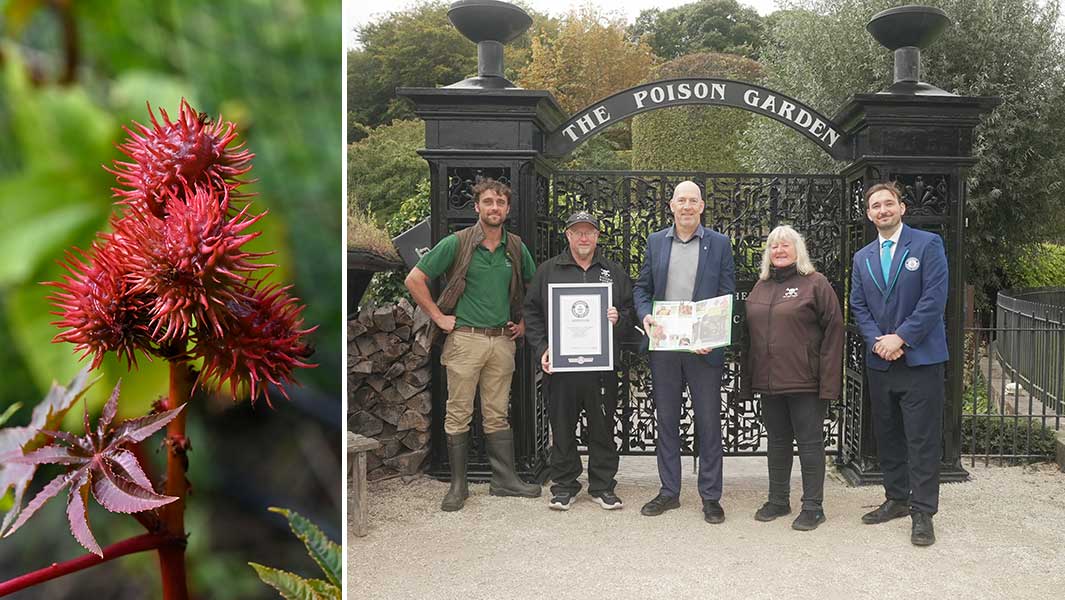
In an idyllic market town in Northumberland in the north-east corner of England lies a beautiful garden that conceals a dark secret: it’s the kind of place that would give Hercule Poirot nightmares…
At first glance, the enclosed green space which forms just a small part of The Alnwick Garden might be overlooked as just another pleasant array of trees, bushes and pretty flowers. It’s only when you start doing some (figurative) digging into the plants flourishing there that a macabre theme begins to emerge…
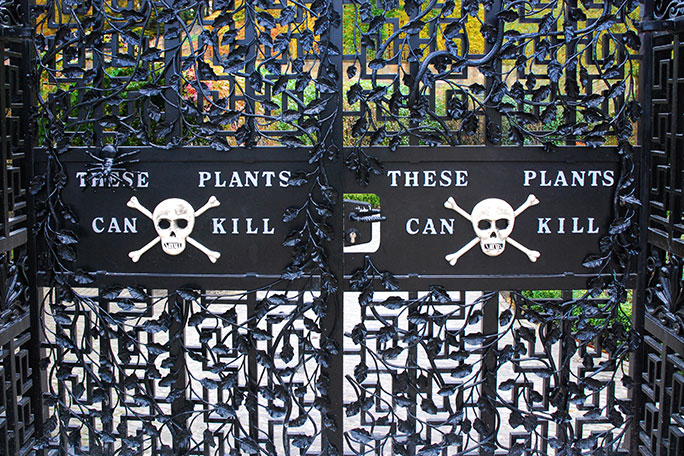
Credit: The Alnwick Garden / Margaret Whittaker
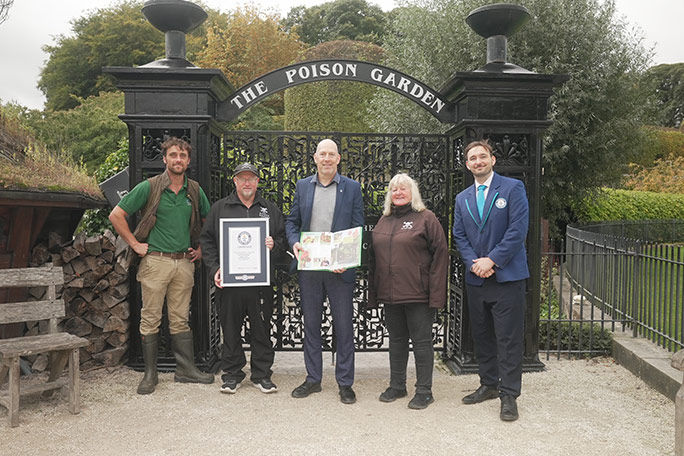
To be fair, your Spidey senses will likely already be on high alert way before you get close to any of the vegetation. That’s because to access this particular garden, you have to pass through a set of ominous black iron gates adorned with skulls-and-crossbones and the none-too-subtle warning “These plants can kill”!
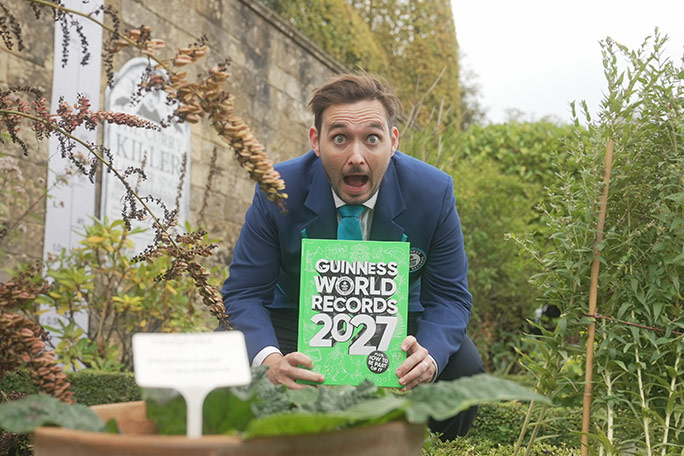
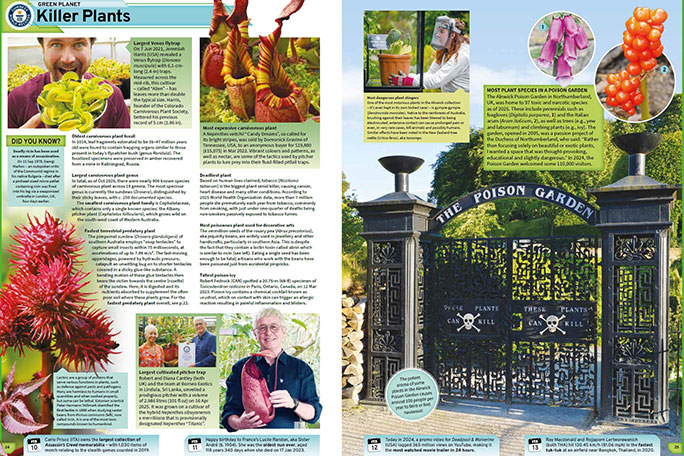
As celebrated in the GWR 2027 book, which is now on sale, The Alnwick Garden's Poison Garden contains the most species in a poison garden: 97 as of late 2025.
All of the plants in this botanical collection are either toxic or narcotic to varying degrees, and as such have the potential to injure us, make us sick or in the most extreme cases even kill us. (Hence why an Agatha Christie detective would have a field day if a mysterious murder ever took place here!)
The Poison Garden – along with the wider The Alnwick Garden, which is marking its 25th anniversary in 2026 – was the brainchild and passion project of the Duchess of Northumberland, Jane Percy.
“I wanted to create a poison garden having visited a derelict one in Padua, Italy,” the Duchess disclosed to GWR. “I later discovered it was built for the Medici family to find more effective ways of killing their enemies!
“I loved that idea and next I visited the derelict Soutra Aisle [part of a medieval church hospital] in Scotland, which was where you went in the 13th/14th centuries to have a limb amputated. In the 1980s, they found sponges here laced with mandrake, hemlock and opium seeds (the right quantities to anaesthetize a body for between 48 and 72 hours, which is exactly the time it takes to recover from a limb amputation). That knowledge of the power of plants is what fascinates me.”
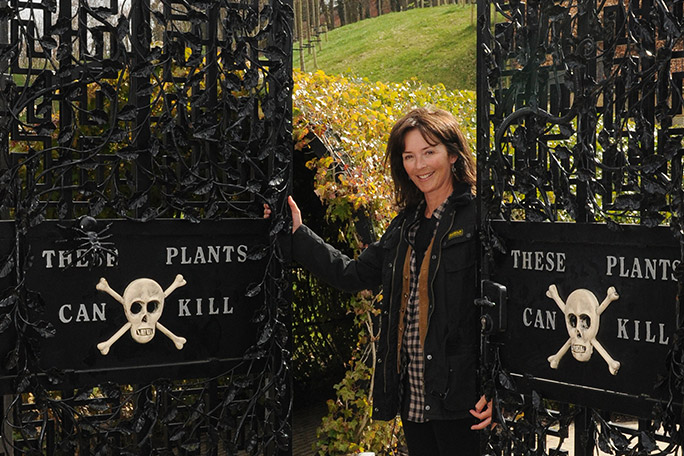
The Duchess of Northumberland, Jane Percy. Credit: The Alnwick Garden
From the very beginning, the Duchess was certain there would be demand for horticulture with a darker edge – “a space that was thought-provoking, educational and slightly dangerous.”
Apothecary gardens tend to focus on the curative properties of plants whereas I was focusing on how they could kill. I wanted to include plants which had great stories of death behind them. In truth, plants don’t generally kill without human intervention and how people have used them over the centuries is interesting – Duchess of Northumberland, Jane Percy, creator of the Alnwick Poison Garden
The majority of the redevelopment of the 71-acre (29-hectare) The Alnwick Garden was completed in 2001, but the Poison Garden was a later addition, first opened to the public in 2005. While a late bloomer, it has gone on to become one of the attraction’s most popular living exhibitions, receiving around 110,000 visitors each year.
One of the Poison Garden’s regular tour guides John Knox gave a run-down of what to expect: “Visitors interact with the Poison Garden as participants in a guided, carefully contained encounter rather than wandering freely among dangerous plants. The garden’s black gates, caged specimens and strict 'do not touch, taste or smell' rules make the risk tangible, while the guided tour turns plant toxicology into stories, questions, history and a memorable public-safety lesson.
“Visitors are not encouraged to test their nerve or handle anything; they are invited to look, listen, ask questions and understand why a garden can require the same careful management as a collection of venomous animals.”
The usual rules are simple: no touching, no picking, no tasting and no smelling. Tours are typically around 20 minutes and small enough for people to stay engaged, hear the guide and ask the questions that inevitably come – John Knox, a Poison Garden Tour Guide at Alnwick Garden
Working in this section certainly brings with it a unique sense of one’s own mortality, according to Alnwick’s Head Gardener, Lachlan Rae: “The techniques and practices used to care for the Poison Garden are much the same as those in the rest of the garden, however it comes with the overhanging possibility of various demises... We’re not quite as under threat working in the cherry orchard!”
Indeed, the plants in this area really are not to be trifled with. Rae continued: “Truthfully, all plants in the Poison Garden carry risk and we act accordingly. Some are more benign or carry less obvious immediate danger, but we do have some absolute shockers in the garden. Giant hogweed (Heracleum mantegazzianum) has a toxin which causes skin to blister in the most horrendous way. What’s scary is that we have much worse than that behind those big gates!”
Great care is taken to make sure visitors are always kept safe with a comprehensive briefing prior to the tour, but apparently around 100 people a year have to be treated after visiting the Poison Garden owing to feeling faint or nauseous.
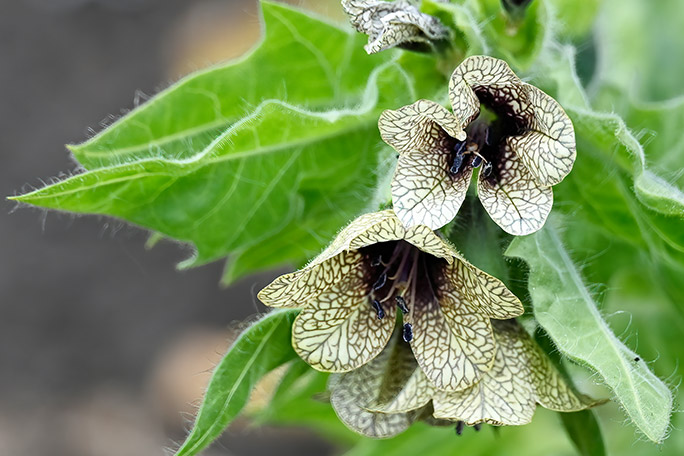
Henbane (Hyoscyamus niger). Credit: The Alnwick Garden / Margaret Whittaker
While occasionally this may be the result of overpowering odours – such as that of the henbane, aka stinking nightshade (Hyoscyamus niger) when in bloom – tour guide Knox explained that there is often something more complex that leads to visitors feeling unwell: “I’m always careful to explain one of the most common causes of fainting in the garden: it’s not a cloud of plant poison. It’s much more often a vasovagal response – the body’s sudden, reflexive drop in heart rate and blood pressure.
“Visitors hear about fatal doses, infamous poisonings, painful deaths and plant chemistry. They’re already standing behind black gates, beside caged plants, surrounded by an atmosphere of controlled danger. For some people, that triggers anxiety.”
So what exactly are some of the notorious species that you’ll find lurking in this horticultural rogues’ gallery? Many are surprisingly innocuous plants that you’ll likely be familiar with in parks and gardens, growing wild in the UK’s woods or meadows, or even being cultivated as crops.
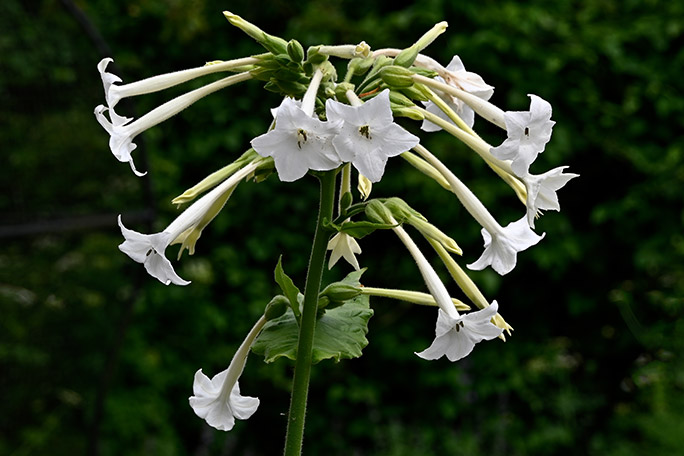
Tobacco plant (Nicotiana). Credit: The Alnwick Garden / Margaret Whittaker
They range from: the tobacco plant (Nicotiana), which as the essential ingredient of cigarettes and cigars is estimated to cause some 7 million deaths per annum via smoking, easily making it the world’s deadliest plant; opium poppies (Papaver somniferum) and cannabis (C. sativa) – both illegal-to-cultivate species for which the garden has special dispensation from the Home Office to grow for educational purposes; and foxgloves (Digitalis), which while toxic enough to kill are also the key ingredient in a life-saving medicine for those with heart conditions.
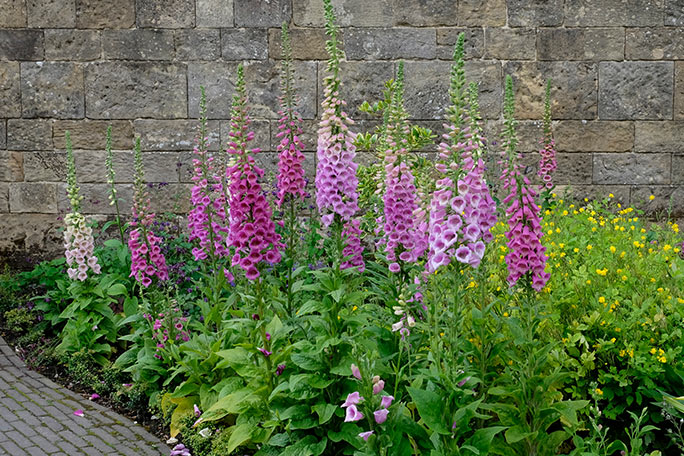
Foxgloves (Digitalis). Credit: The Alnwick Garden / Margaret Whittaker
Behind those locked iron gates, you’ll also find the original sources of many famous alkaloid-based poisons – species like deadly nightshade (Atropa belladonna) which gives atropine, hemlock (Conium maculatum) – coniine – and wolfsbane (Aconitum) – aconitine.
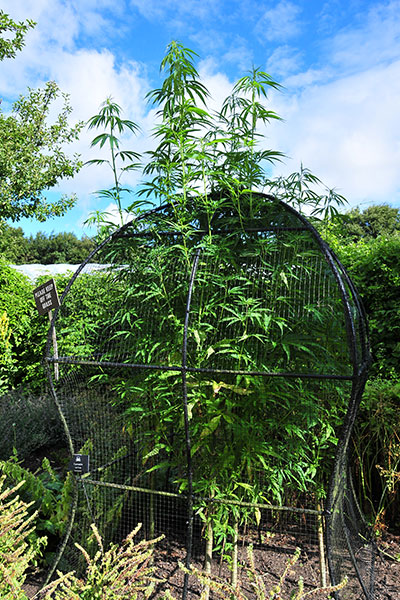
Cannabis sativa. Credit: The Alnwick Garden / Margaret Whittaker
While poisons may seem like the weapon of cosy-crime novels or at least of a distant era, the 2025 sentencing to life of the so-called “Mushroom Murderer” Erin Patterson in Australia proves otherwise.
Similarly, not so long ago in 2009, wolfsbane was used to deadly effect by the “Curry Killer” to despatch her former lover in the UK. The last time that this plant appeared in a British court as the method of murder was in the 1800s.
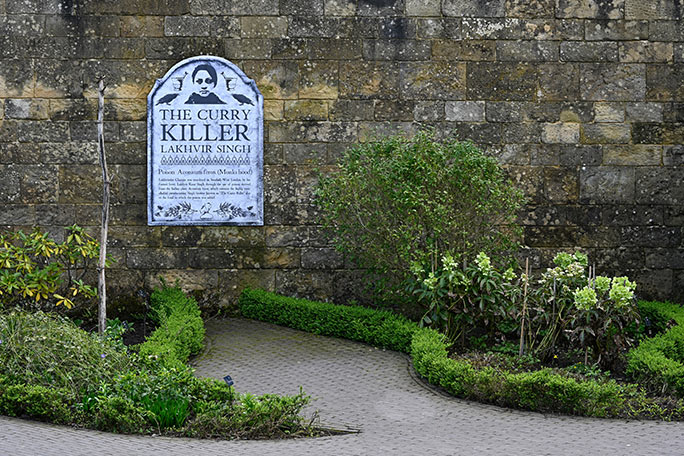
Credit: The Alnwick Garden / Margaret Whittaker
The castor-bean plant (Ricinus communis) – from which the lethal toxin ricin is derived – can also be found here. The first known ricin assassination took place in London, UK, on 11 September 1978, when anti-Communist dissident Georgi Ivanov Markov succumbed to its effects. Four days earlier, the Bulgarian had been shot (via a modified umbrella!) with a tiny pellet the size of a pinhead containing ricin. It was only because he survived long enough to describe the incident and feeling pain in his leg that pathologists were able to determine the highly unusual cause of death.
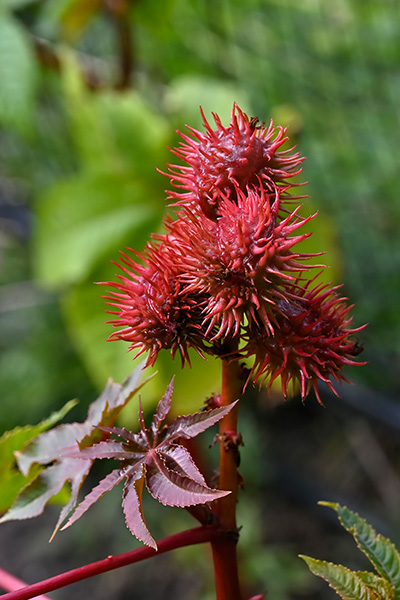
Ricinus communis. Credit: The Alnwick Garden / Margaret Whittaker
In a few cases, the plants here are so dangerous that Alnwick takes no chances by keeping them safely under lock and key, out of reach of curious hands.
One of these is gympie-gympie (Dendrocnide moroides), which was introduced to the garden in 2023. Its name might sound amusing, but it you were to brush past this Australian shrub the last thing you’d be doing is laughing.
Also known as the stinging tree, for good reason, its leaves bear the most dangerous stingers in the plant kingdom, alongside the similarly feared New Zealand tree nettle (Urtica ferox). Coming into contact with its neurotoxin-filled needle-like hairs causes immediate agony that has been likened to being electrocuted. Prolonged contact can cause long-term injury and potentially fatality-inducing conditions such as anaphylactic shock.
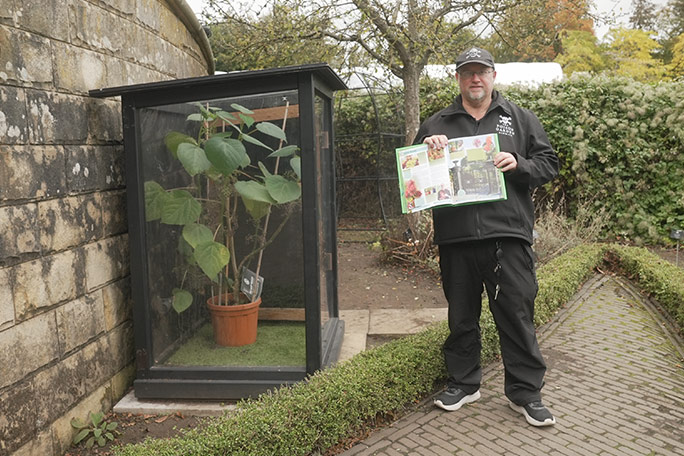
If all these terrifying plants haven’t scared you off, the good thing is that, according to Knox, the Poison Garden has something to offer visitors all year round: “It changes character with the seasons, and that seasonal rhythm is one of the best ways to show visitors that plant danger is not fixed or theatrical – it follows growth, dormancy, flowering, fruiting and storage. Spring brings fresh bulbs and early growth, summer brings the tender exotics out of protection, autumn brings ripening berries and seeds, and winter brings the practical work of removing vulnerable plants before the cold.
“Spring is the season when the garden feels most deceptive. After winter, the first green shoots and pale flowers look clean, hopeful and almost childlike, yet many of the earliest arrivals are among the plants visitors most need to respect.
"Snowdrops are a perfect example. They look delicate and harmless, but Galanthus contains alkaloid compounds, and the bulbs are particularly risky if eaten; poisoning is most associated with bulbs being mistaken for onions.”
Finally, for those who might have already visited, the Duchess of Northumberland has some exciting news, revealing that she’s got big plans for the future of the attraction: “I’m planning on doubling the size of the Poison Garden and I’d love to dedicate an area to deadly mushrooms – their power to kill is truly terrifying.”