


Cruel Britannia: does the UK have the most curses per capita?
Today I'm going to be talking about black magic. Like most of the topics I'll be writing about this month, it's not the easiest thing to find concrete evidence for. Much as it would be interesting to recognize the most-hexed person or the most powerful witch, our records team tell me those aren't measurable or verifiable.
There are some forms of ritual and magical practice, however, that leave behind physical evidence. And where there's some tangible artifacts left behind, there's a thing that can be counted, and measured – an opportunity for a record. Some of these practices are done with warm, friendly intentions (like the hidden shoes I'll write about next week), but others are very much not. Roman curse tablets, which are little fragments of fossilized spite, fall very much into the latter category.
Roman revenge
Curse tablets (also known as defixiones) were small sheets of metal, usually lead or a lead alloy, which people used to inscribe with a request to the gods. The requests on these tablets, however, were not benign prayers. They were instead pleas for vengeance, for thieves to be struck down with horrible illnesses, for the marriages of lost loves to end in misery, and various other malicious purposes.
These short requests were carefully folded and placed in a location of magical power. Common spots in which these tablets have been found include sacred springs and rivers, temples, wells and in the soil of graveyards. In some cases people would even open tombs to place curse tablets directly into the hands of the dead.
Belief in the efficacy of these curses was widespread in the ancient world, and not restricted to the uneducated lower classes. Even emperors and the Roman aristocracy worried about the power of these small pieces of lead. The death of the Emperor Tiberius's adopted son, Germanicus, for example, was attributed to "the implements of witchcraft by which it is believed that the living soul can be devoted to the powers of the underworld".
Not all tablets have inscriptions on them. Some are blank, but have been folded and deposited in the same way as the others. It has been suggested that it was common for illiterate Romans to speak their curse into the lead sheet as they folded it in the style of the other inscribed pieces. In some cases these blank tablets have been marked with scratches seemingly intended to resemble writing.
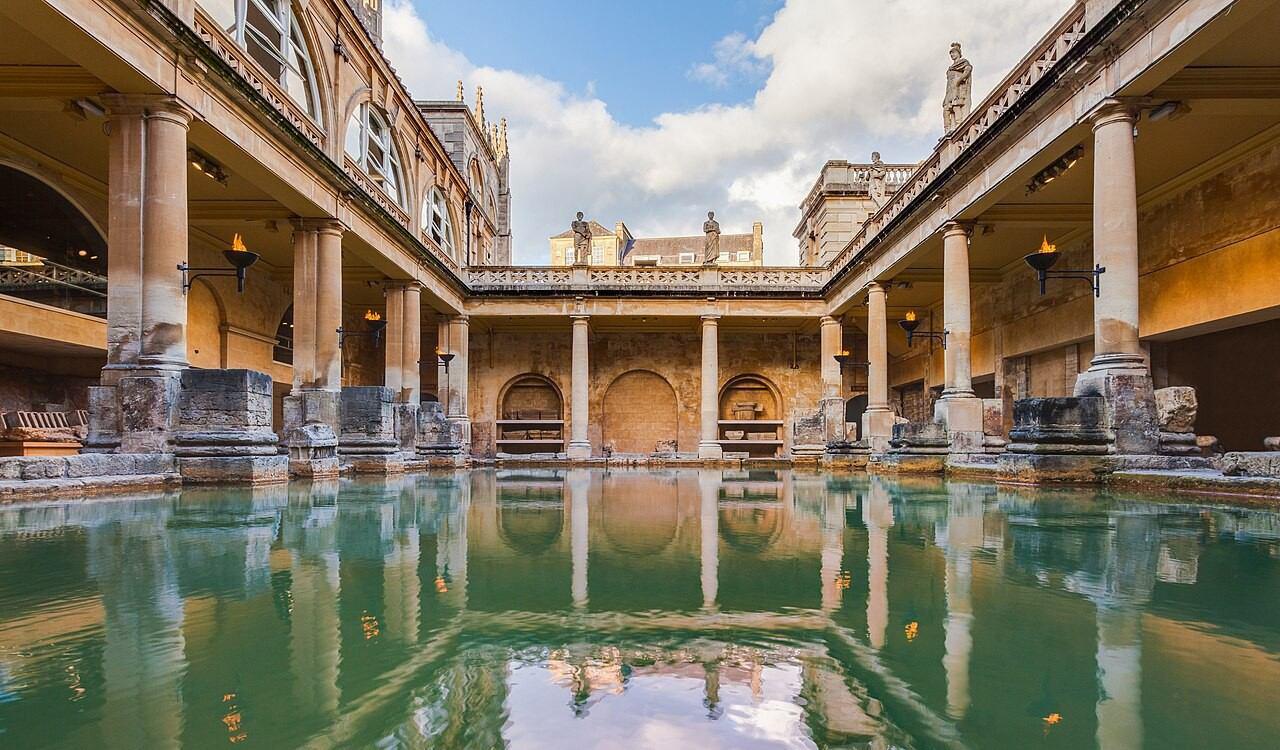
The Roman Baths at Bath. Most of what you can see here is a later reconstruction – the surviving Roman structure only extends to a little above ankle height. [Wikimedia Commons/CC BY-SA 4.0/User:Diego Delso]
The curse capital
The largest known cache of curse tablets is a collection of 131 lead missives found in the ruins of a temple to the god Mercury, located just outside the modern village of Uley in Gloucestershire, UK. They were recovered by the archaeologists Ann Woodward and Peter Leach between 1977 and 1979 and cataloged fully by historian Roger Tomlin in 2022.
The next-largest known cache of tablets comes from the nearby spa town of Bath, about 25 miles (40 km) to the south. Excavations of the Roman bath complex, the UNESCO World Heritage Site that gives the city its name, revealed 130 curse tablets and it is believed that many more remain undiscovered. By contrast, the largest known cache from outside the UK – in Mainz, Germany – contains a mere 32 curses.
To give you an idea of the content of the Uley tablets – here's an example:
The sheet [of lead] which is given to Mercury, that he exact vengeance for the gloves which have been lost; that he take blood and health from the person who has stolen them.
This is pretty typical of the general tone. Most are about stolen property, and many feel like a little bit of an over-reaction. I mean really, you left your gloves on the bus and now you want the gods to drain someone's blood?
The language of these tablets is sometimes strikingly gruesome and vicious, with one cursing "life and mind and memory and liver and lungs mixed up together", while others are just a single name, scratched deeply and angrily into the soft metal.
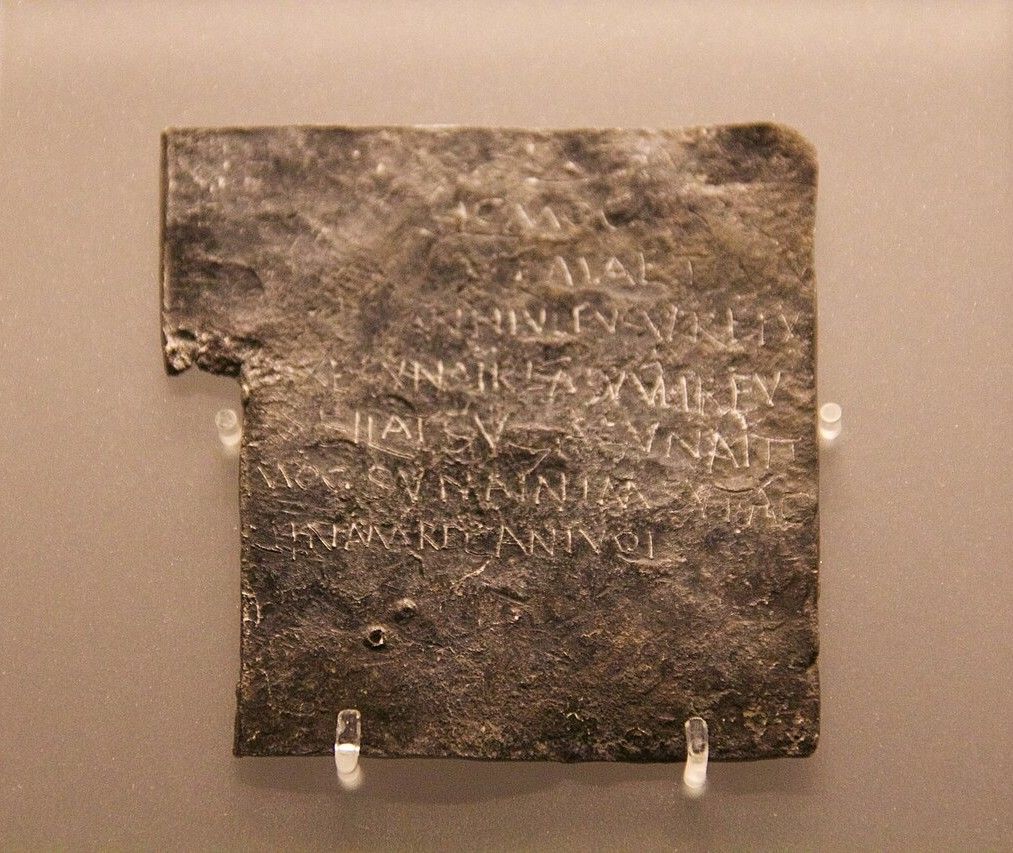
A curse tablet recovered during archaeological work at Bath, UK. The inscription says "May he who carried off Vilbia [someone's name] from me become liquid as the water. May she who so obscenely devoured her become dumb"... charming. [Wikimedia Commons/CC BY-SA 4.0/User:Mike Peel]
Ancient animosity
These peculiar artifacts are found all over the Roman Empire, but as the two examples I've already mentioned illustrate, they seem to have been particularly popular in the UK (or the Roman province of Britannia, as it once was). Curse tablets found in the UK, despite it being a fairly sparsely populated and remote northern outpost of the Empire, almost outnumber the entire rest of Europe.
A strange sort of national pride means that I'd like to imagine that this preponderance of curses is the result of Britannia being the most naturally vindictive and passive-aggressive of Rome's provinces. It's more likely, however, that it's simply the result of our long-standing fascination with the past – Britain is a nation of archaeology nerds and metal detectorists, so a high density of finds tends to be recovered from British soil. The county of Norfolk, for example, has the most reported finds for any region covered by the European Public Finds Reporting Network, and the River Thames is so rich with artifacts that one mudlark (a person who searches the foreshore) was able to amass a collection of 2,444 medieval and early modern buttons.
It's fair to assume that there are at least as many threats and ill-wishes lurking in the soil of France and Italy, but fewer have been dug up.
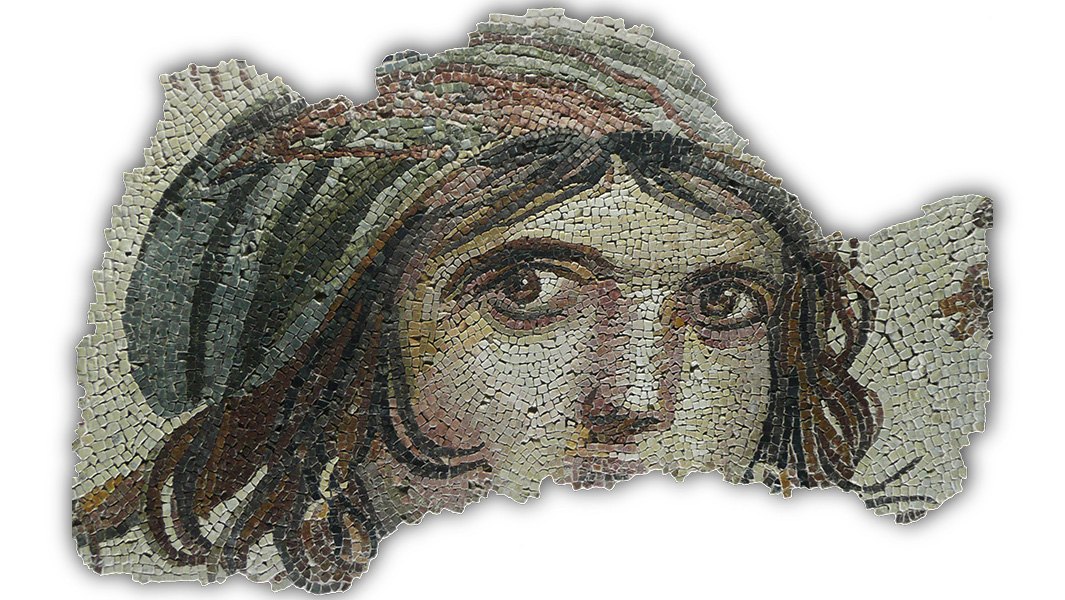
Header image: This is a fragment of a Roman mosaic uncovered in present-day Gaziantep, Türkiye. No particular relation to the subject if I'm honest, but I thought the staring eyes were striking and I needed a picture. [Wikimedia Commons/Public Domain]