

Are Bridgerton's costumes accurate? What regency fashion was really like
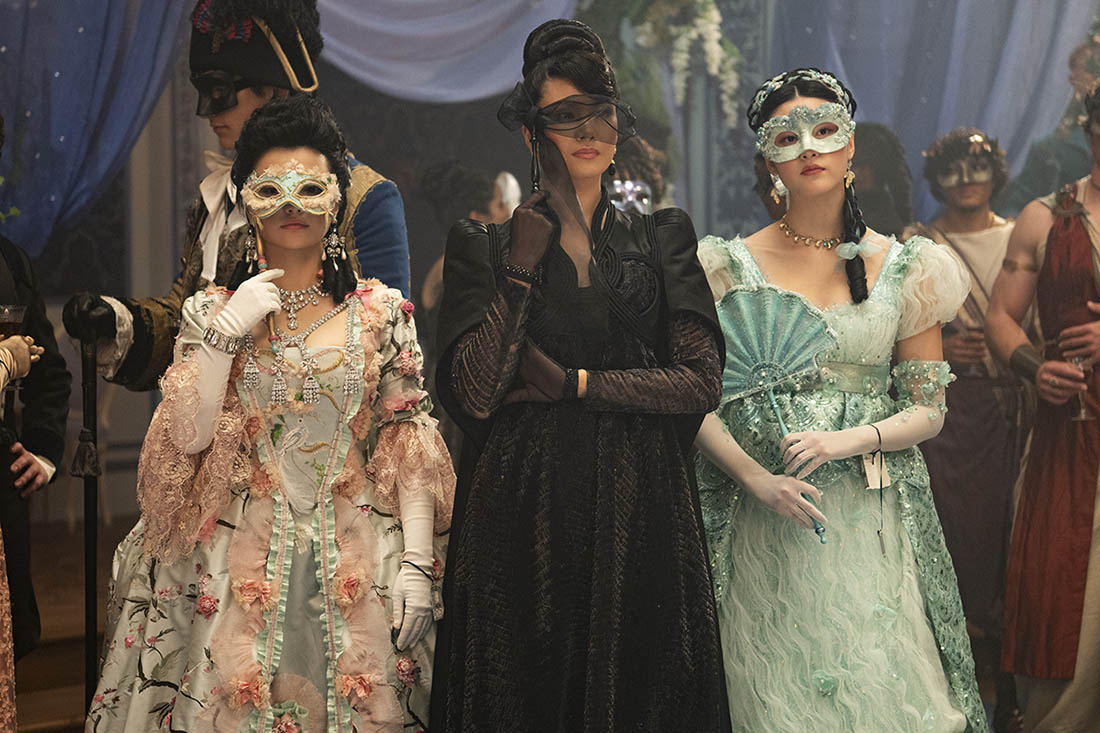
Shonda Rhimes's lively take on the Regency romance genre returns to Netflix tomorrow, looking to reclaim its GWR titles for most in-demand romance (which it recently lost to Heated Rivalry) and most viewed English-language Netflix show (which is currently Wednesday). Bridgerton has ruffled feathers in the fashion world for its loose and colourful interpretation of the fashions of the early 1800s, but are its costumes really that far off the mark?
The key thing to acknowledge here is that Bridgerton's creative team aren't aiming for scrupulous historical accuracy. That's not the point of the show. This shouldn't really be a surprise, given that the whole show takes place in an alternate-history version of Britain, soundtracked by modern music and with dialogue written for the present day.
That said, Bridgerton's vibrant, over-the-top interpretation of the Regency era (c.1795–1837) in some ways captures the spirit of the time better than other, more conservative and restrained takes.
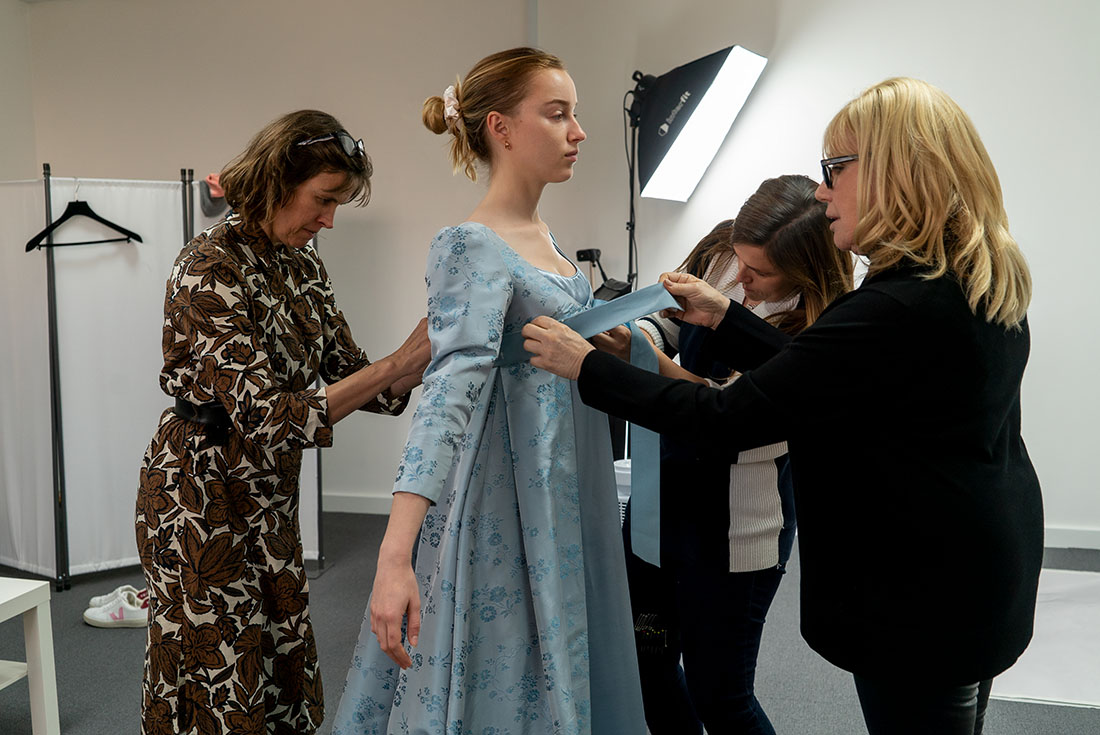
The Bridgerton wardrobe department made more than 7,000 costumes for the show's first season alone
The Regency was a time of revolutions, both political and sartorial. Fashions that had been relatively stable for generations underwent dramatic changes and the whole landscape of the British fashion industry changed. It was a time when the most fashionable and influential women in the country were not queens and princesses, but the Prince regent's glamorous and scandalous mistresses.
Here are a some things the show gets right, and a few it doesn't.
Empire-line dresses
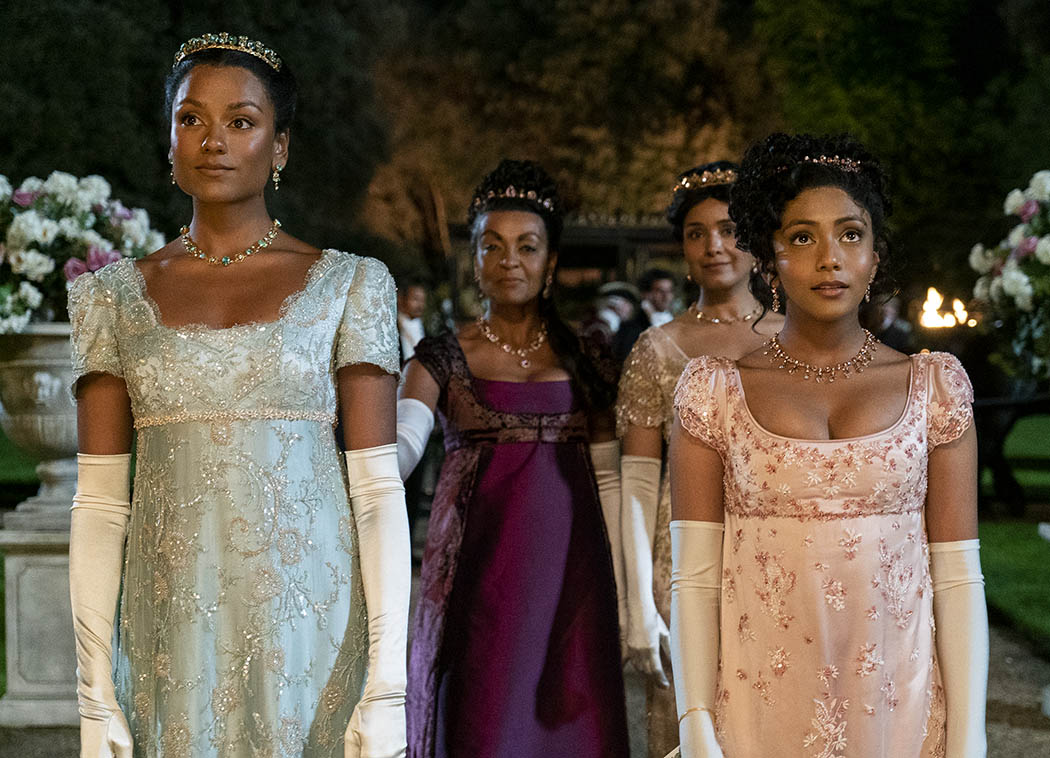
The Empire-line dress is one of those fantastic bits of period-drama visual shorthand. You see a simple frock with a column silhouette and a waist cinched along the underbust line, and you know it's going to be all Jane-Austen-y. There will be balls, military officers (both the "dashing" and "scandalous" types) and it will all end with a wedding or two.
The style became popular during the years after the French revolution, when the complexity and excess of traditional high-society fashions (more on that in a moment) started to look like bad PR. People looked to the simpler styles seen in Roman and Greek art, and the look was firmly established by around 1800.
One thing that's worth mentioning about empire-line dresses is that most of the time, they would have been worn with a cotton chemise and a sort of shawl called a "fichu". This was a usually white piece of cotton or linen, worn around the neck and tucked down into the front of the dress. These things combined to make the daringly low necklines of the empire style a little less daring in day-to-day use.
Obviously that's not the sort of detail that anyone wants in Bridgerton.
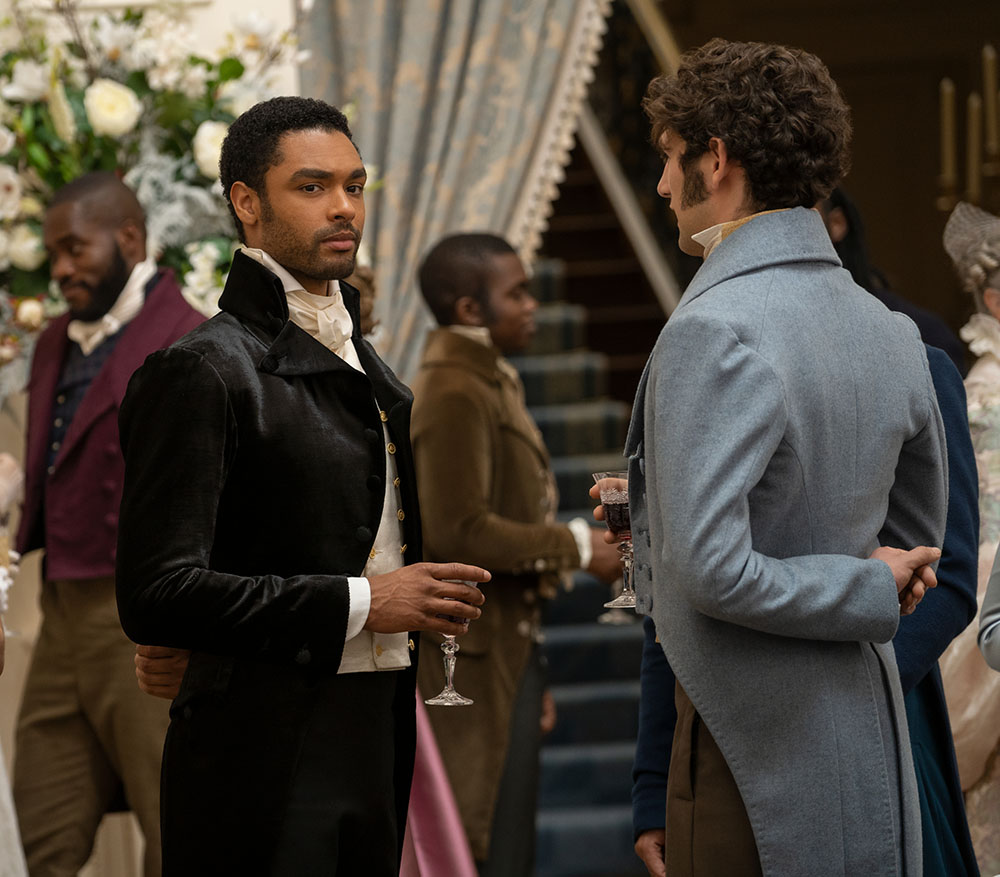
Tasteful tailcoats
Regency men's fashion was generally quite restrained and understated. At this time, the undisputed best-dressed man in London was George "Beau" Brummell, a shopkeeper's son who had sashayed his way into high society as a friend of the Prince Regent.
Brummell was at the forefront of a movement that saw men's fashions shift from eye-catching ensembles to a dress code of subtle details where the worst thing possible was to look like you were trying too hard. He famously declared "If people turn to look at you on the street, you are not well dressed, but either too stiff, too tight or too fashionable".
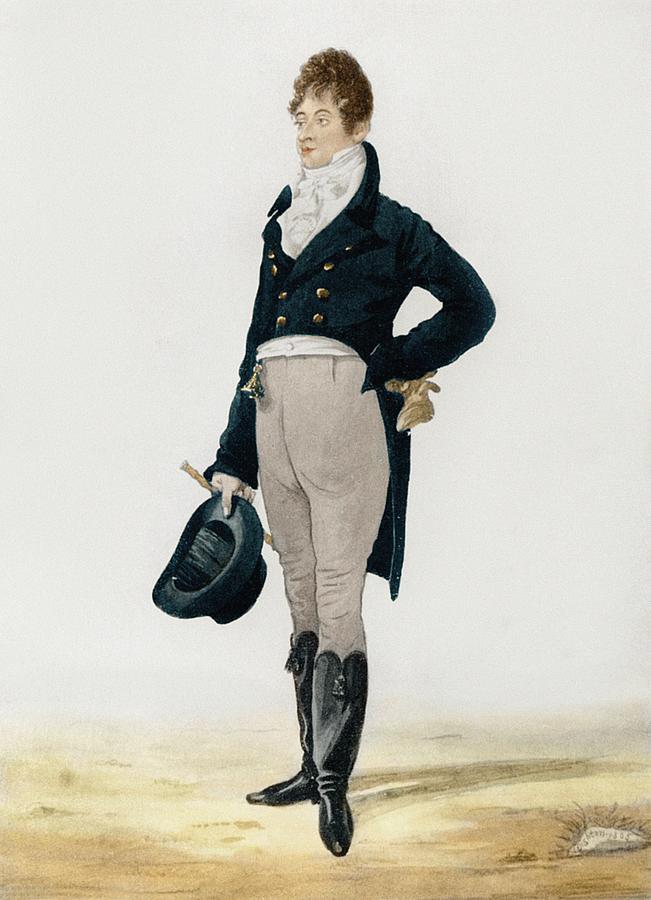
Beau Brummell at the height of his fame in 1805. Image credit: Wikimedia commons.
Of course, the apparent indifference was all an act. Brummell was obsessively fastidious about his clothes, reputedly taking as much as five hours to get dressed every morning. His look might have been simple, but every detail of his outfit had to be perfect – he might spend an hour just tying and retying his cravat.
People often make the mistake of laying the blame for the dullness of men's fashion at Beau's immaculately turned-out feet – an accusation he would have been outraged by. While he favoured simplicity, Beau loved the sort of colour and luxurious fabric on display here.
Read more stories like this in our Arts and Entertainment section.
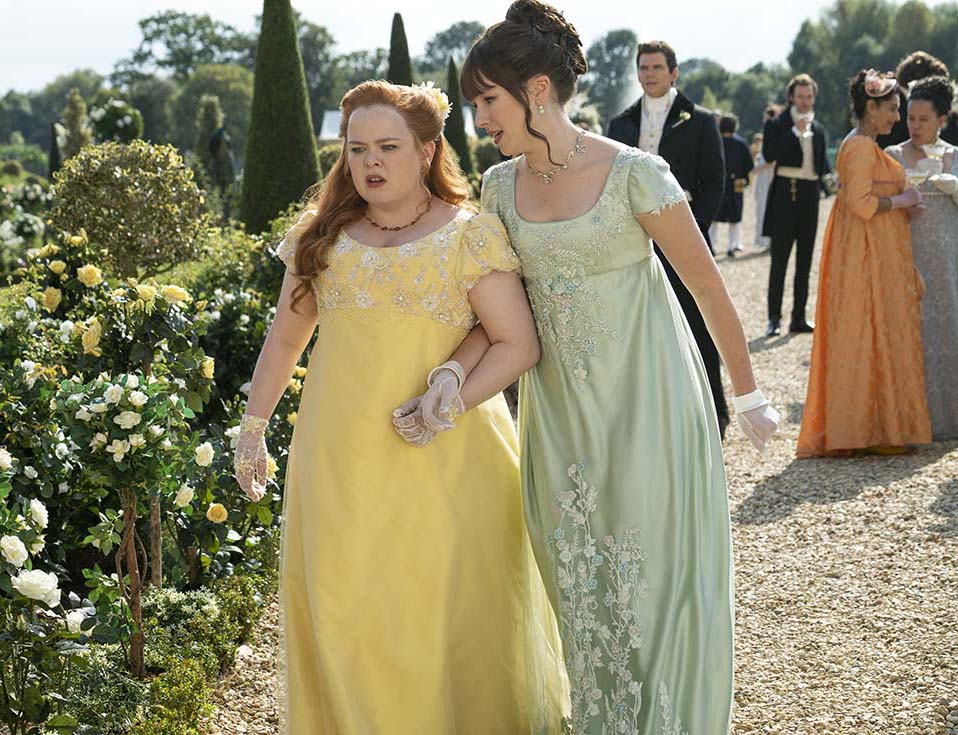
Bright Colours
The colours of Regency fashion were not quite as vibrant as those on display in Bridgerton, but they were brighter and more vivid than the muted greys and Earth tones often used in more serious period dramas.
The dress worn by Penelope Bridgerton (nee Featherington) above is a classic example of Regency colour. This shade (or something close to it) was known as "jonquil" or "daffodil yellow". It was often used for women's dresses as well as men's waistcoats.
Other popular colours included rich reds and blues, such as the dress shown above, and sometimes more complex colour effects were created by adding a tulle (open, mesh-like silk) over-skirt to a solid-colour dress.
Friday Treat Time and we’re celebrating the launch of #Bridgerton season 3 with a brilliant dark blue silk evening dress from 1815-1820. There’s no chance of being a wallflower with those romantic puffed sleeves and stunning border of chainstitched floral motifs above the hem! pic.twitter.com/9MeM7E0Qrm
— Fashion Museum Bath (@Fashion_Museum) May 17, 2024
It was a quest for more vibrant yellows and reds that led to the development of the first synthetic dye (picric acid) in 1841. This was followed by Mauveine and other chemical dyes in the 1850s, leading to an explosion of eye-poppingly bright colours in the mid-Victorian period.
The accidental discovery of aniline dyes in 1856 by Sir William Henry Perkin commenced a popular obsession with bright and intense colors in the mid-nineteenth century. Read more! https://t.co/Vm9S3vLW8i pic.twitter.com/U2PaAJ6DIL
— Fashion History Timeline (@FITfashionstory) February 17, 2024
"Explosion" is an apt word, because these dyes were incredibly toxic and dangerous to handle (jars of picric acid turned into bombs if you let them dry out). They held their colour really well though, and looked great.
So remember, realism in period dramas doesn't just mean putting everyone in shades of grey, brown and black.
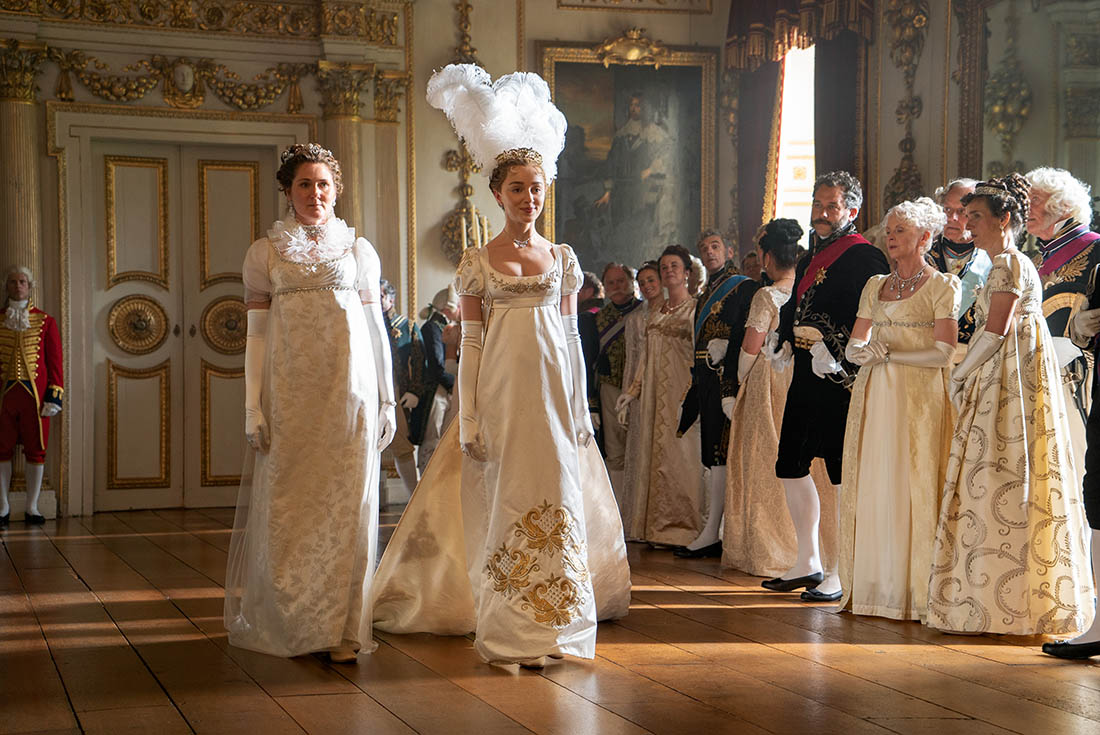
Big Feathers
Regency fashion designers loved ostrich feathers. Specifically they loved the long, puffy feathers of the flightless bird's vestigial wings.
Ostriches are enormous animals – the largest living bird species – and can stand as much as 2.75 m (9 ft) tall and weigh up to 156 kg (345 lb). Their plumage is also big, with wing feathers measuring as much as 1 m (3 ft 3 in) in length.
During the first decades of the 1800s, European fashionistas really would wear these feathers in vertical plumes attached to headbands or fascinators. What's more, their length would sometimes be extended with decorative turbans or head-pieces that added another 10-20 cm.
For the presentation at court of Daphne and the Featherington girls in season one, the Bridgerton costumes team actually toned things down by comparison to actual historical garments. Commentators on court fashion mention women having to duck to go through doorways, plumes getting caught on chandeliers, and shorter women with plumes as tall as them.
GWR researchers have made great efforts to identify the wearer of the tallest feather-plumed hat. They have been able to narrow it down to a few candidates – fashionable young ladies presented to court at the height (pardon the pun) of the ostrich-plume craze – but unfortunately none of the audience of guffawing gentlemen and disapproving matrons thought to get a tape measure out. "Towering" isn't a metric we can use, so GWR cannot definitively say who wore it best.
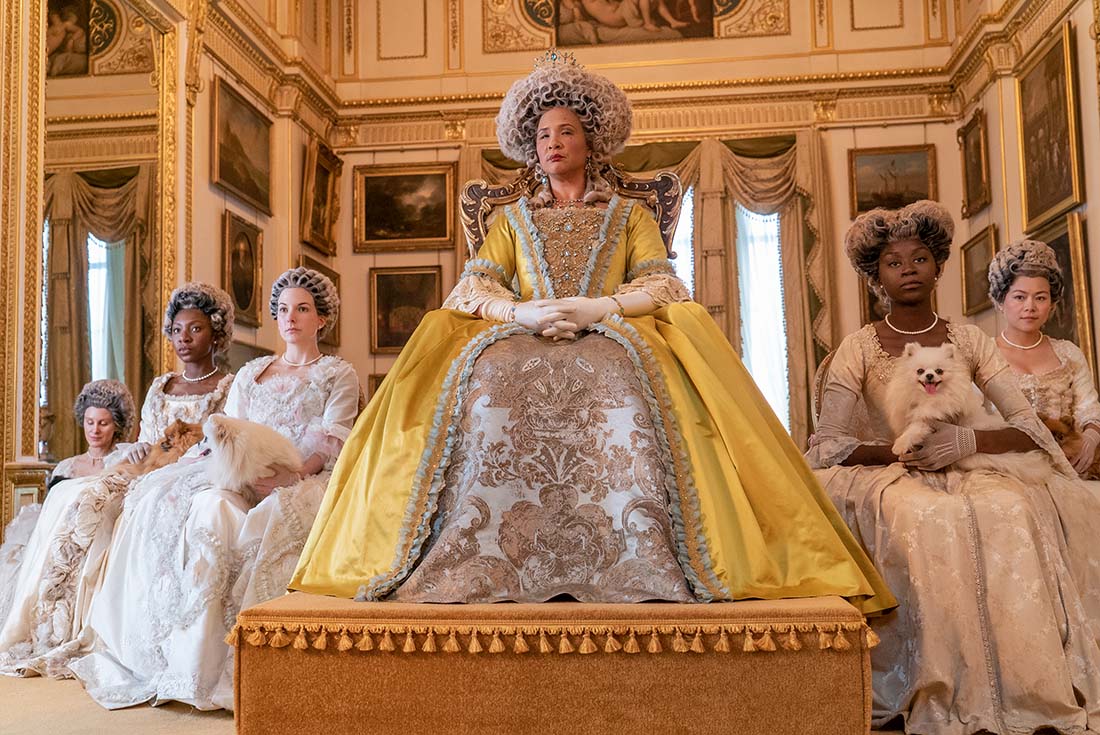
Queen Charlotte was a traditionalist
In the show, Queen Charlotte is always shown wearing an old-fashioned 18th-century look with a large, multi-layered skirt and stays (a flat-fronted corset).
This is actually broadly correct. Charlotte came of age at a time when clothes were rigidly structured, and skirts were big. And by big, I mean really big – the widest skirts ever regularly worn were those that graced the halls of European royal courts in the 18th century. The "Grand Habit", which was at its peak of popularity in the 1750s, included a skirt that measured more than 2.1 m (7 ft) across.
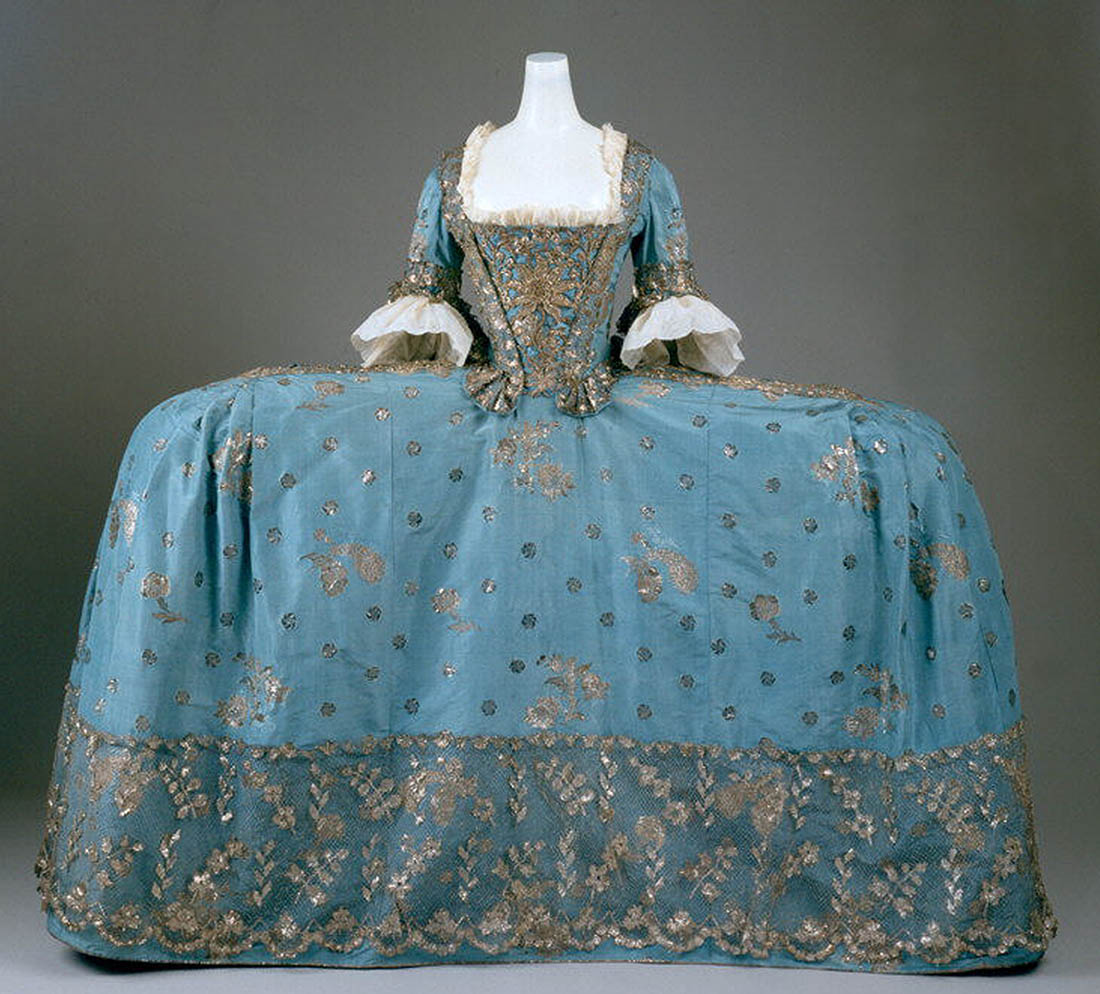
This is an example of a Grand Habit worn at the British royal court in the 1750s, courtesy of the Metropolitan Museum of Art collection
Bridgerton is right about Charlotte's fashion tastes, but it flinches from showing the unfortunate effects that her preferences had on the outfits worn at court.
Charlotte couldn't hold back the tide of fashion, but she did have some hard rules about what women could wear in her company. The main one was that she expected women to wear large skirts, supported by cane-and-canvas hooped petticoats and panniers.
When the empire style came into fashion, these skirts didn't go away, they just moved up to the underbust line. The result is things like this, where the unfortunate wearer looks like a decorative toilet-roll cover, or a Jane Austen character standing inside a carnival float.
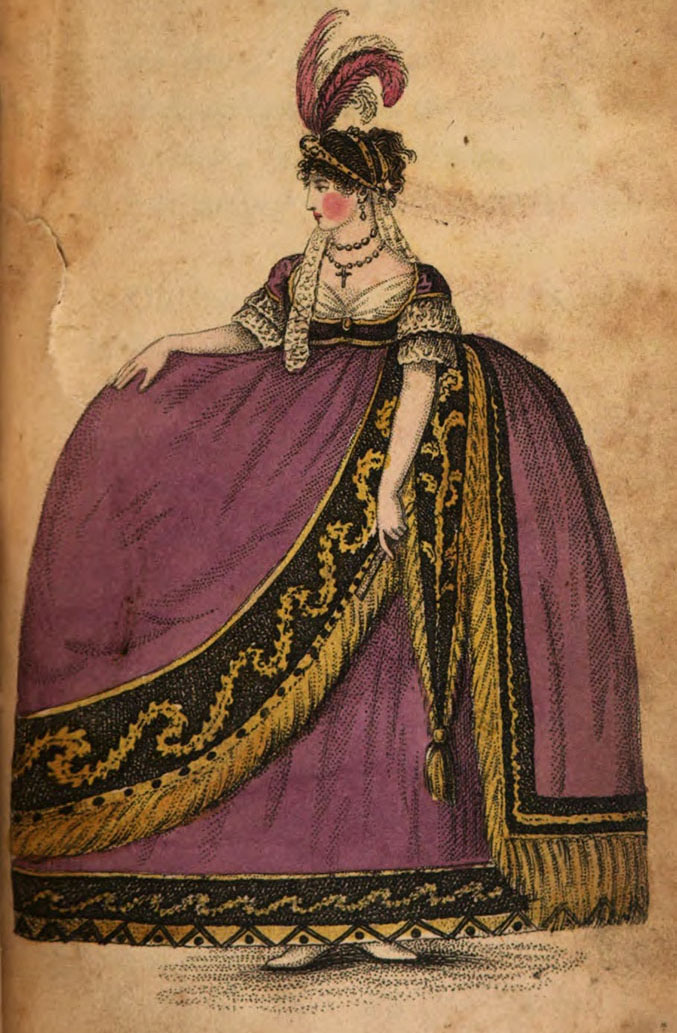
An example of British court dress circa 1805, as illustrated in Charles Lamb's A Book of the Ranks and Dignities of British Society
Funny as this would have been to see on screen, you can understand why the costumes team didn't want this to be everyone's introduction to Daphne Bridgerton and the Featherington sisters. Perhaps it will make a grand entrance in season four though, you never know!
Header image and all inline images (unless otherwise noted) copyright Netflix 2026