


Trainspotting: a 14-year-old girl’s journal kicked off one of the most popular pastimes
Over 150 years ago, 14-year-old Fanny Johnson (UK) poked her head out the window of her home in London and watched the trains chug past the Westbourne Park station.
The steam-powered locomotives that chewed up the tracks near her house were slow, noisy, and new – and they apparently enchanted the teenager, who would spend hours watching them carry their cargo down the Great Western Railway.
Next to her viewing-spot Fanny kept a bound journal – not to divulge secrets or muse about classmates – but rather, to methodically mark the names, numbers, dates, and times that specific trains crossed the tracks.
This 1861 diary, entitled “Names of the engines on the Great Western than I have seen”, kept a comprehensive list of all the Gooch broad-gauge locomotives active on the Great Western Railway at the time – and later became a portal for historians studying early trains and their impact on culture.
Although there is widespread evidence of public interest in this prominent new technology, historians at the National Railway Museum in York determined that there are no documented cases of individuals methodically noting down the names or numbers of the trains they saw until the teen’s journal.
Thus, Fanny’s dedication posthumously awarded her with a record title for the first trainspotter, as it was clear she was deliberately setting herself up near the line to keep watch, not simply noting names she happened to see while out and about.
Nevertheless, trains and railways have always attracted the attention of dedicated enthusiasts – which promised to be a faster and more well-connected means of transportation.
In Fanny’s time, the heavy steam locomotives that zippered up the tracks of the Great Western Railway were relatively new – the first steam locomotive to run on rails had just been invented by Richard Trevithick in 1804.
But the concept caught-on quickly, and by the mid-1800s engineers around the world were attempting to make the designs lighter, faster, and safer. Although the steam engines remained popular for over a century, soon scientists began working with electricity to power the rails, and by the early 1900s both models were commonly used.
While nowadays, taking an interest in trains is relatively common (have you ever met anyone who collects model trains, follows popular trainspotting TikTokers, or knows a lot about public transit?), when railways first became prevalent they were a fixture of public attention.
In the late 18th and early 19th centuries, curious members of the public were known to hitch rides on industrial wagonways, such as the Kitty's Drift underground railway in Newcastle, and the opening of the first public railways which attracted crowds of thousands.
This new obsession coincided with other technological inventions during the Industrial Revolution, such as early filming technology – in fact, the first commercial exhibition of a projected motion picture (film) was made by the Lumiere Brothers (Louis and Auguste, both France) who exhibited short films for the public in 1895. One of these early films was named L'Arrivée d'un Train (the arrival of a train) which thrilled viewers as they saw a black-and-white silent-film scene of a train pulling into a station.
By the mid-1900s, trains were all the rage, and there even were publications dedicated to the lengthy locomotives.
One of these publications was called the Great Western Railway Magazine, which published an article in 1935 titled “A Fascinating Souvenir of Broad Gauge Days”. The piece discussed “the hobby of observing and recording the names of engines is one that is widely practiced… many of our readers have engaged in this fascinating pastime in their boyhood days.”
The subject? 14-year-old Fanny Johnson, whose meticulous recording of her sightings noted that she saw every unit from the Gooch-model 8-foot trains.
And further writings proved she wasn’t the only girl out on the tracks taking note of trains – in a 1951 book by Canon Roger Lloyd’s called The Fascination of Railways, the author described meeting four young women watching the rail traffic and recording notes in their pocket books.
“When I came to ask them how they came to be so interested as to keep such careful records, they seemed almost at a loss for a reply,” he said. “As if they were doing the most natural thing in the world.”
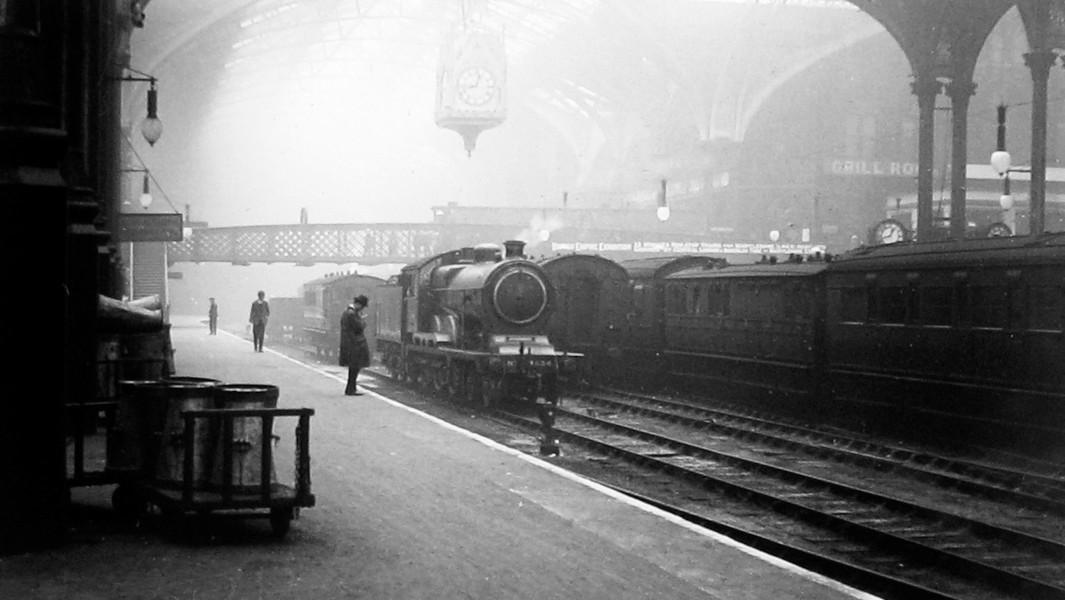
Header image: Liverpool Street Railway Station in London, UK, circa 1910. Credit: Alamy