


Nepali sherpa Kami Rita makes history with 31st summit of Mt Everest, most of all time
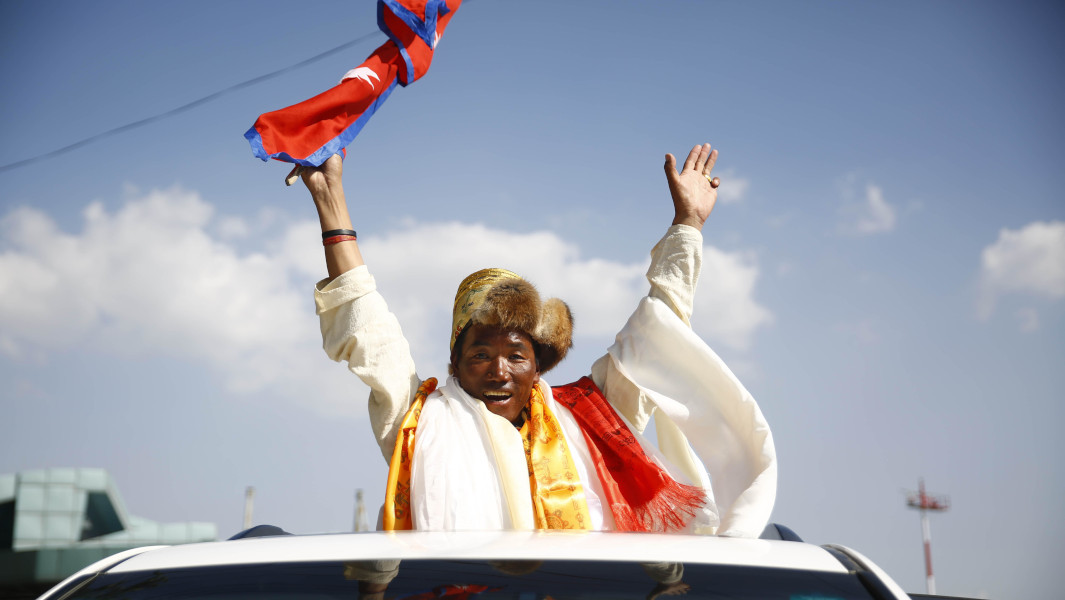
Last month, the famed Nepali mountaineer Kami Rita Sherpa broke his own record for most ascents of Everest (male), after finishing his 31st trip up and down the highest mountain on Earth.
He completed his first trek aged 24 on 13 May 1994, and has scaled it nearly every year since – some years (like 2023 and 2024) even twice. For his most recent ascent, he reached the summit via the traditional south-east ridge route while guiding members of the Indian army for Seven Summit Treks.
Now 55 years old, the sherpa also known as “Everest Man” is one of the most celebrated sherpas of all time, following in the footsteps of his forefathers to brave the risky terrain and reach new heights.
Since the first expedition to Everest in 1921, the climb to the top of the world has been renowned as one of the most desirable yet dangerous treks for aspiring adventurers. After the first successful ascent by Sir Edmund Hillary (New Zealand) and Tenzing Norgay (Nepal) in 1953, in the 40 years that followed an average of 12 people per year would take on the challenge – and that number has since jumped dramatically. In 2023 1,200 people attempted to summit the mountain, with 655 completing the task.
The Sherpa people – an ethnic group based in the mountains of Nepal, China, and Tibet – are as synonymous with Everest as snow and ice. For nearly one hundred years, they have braved incomprehensive conditions on the mountain while shepherding supplies and clients (or “members” in mountain terminology) to the summit, often at the peril of their own lives.
At the same time, the Sherpa people are known for their incredible mountaineering skills, particularly due to inherited genetic adaptations that allow them to respire oxygen more efficiently and acclimate quicker to the high altitude. Despite having a strong connection with the land, many sherpas are also financially tied to Everest and the tourism industry, and have mixed opinions on the autonomy of a culture that is dependent on foreign investments and experiences.
“I am glad for the record, but records are eventually broken,” Kami Rita told the Associated Foreign Press last year. “I am more happy that my climbs help Nepal be recognized in the world.”
Despite the increase in Everest climbing permits granted by the government in recent years, these expeditions are arguably becoming more and more dangerous.
In 2014, an avalanche claimed the lives of 16 Nepali sherpas in one of the deadliest days in Everest history, as they attempted to cross the ‘popcorn fields’ with refrigerator-sized ice chunks located next to the Khumbu Icefall.
Just one year later, that death toll was sadly surpassed due to another avalanche, which ended the lives of 22 people and closed the route for the season. The avalanche was caused by a 7.8 magnitude earthquake, which killed over 9,000 people and injured an additional 23,000 in Nepal.
Sherpas are disproportionately at risk for these accidents, as they often accompany climbers in a 1:1 ratio but carry the brunt of the supply weight. And for every sherpa helping a climber, there are many others whose jobs are to carry equipment, taking care of the sick or injured, providing logistical advice, or completing the path first to lay out ropes or guides for members.
The cultural and geographic environment on Everest is also changing in recent years, as reports of overcrowding on the summit come amidst changes in the economic background of climbers. After sherpas rightly demanded more pay and protections following the avalanches (previously, the Nepali government paid families just $400 per death) and guide companies increased their prices to accommodate the desire for speedier ascents and more leisurely conditions – it’s become more and more expensive to climb Everest.
This comes at a time when climate change is impacting the security of the environment on mountains, and limiting the range of dates safe to climb. As more and more snow melts, there’s a greater risk of avalanches and unstable terrain, and more sherpas are beginning to question the system that ties them to such a dangerous job.
In an interview with the New York Times, Kami Rita said: “We should understand the value of life. Taking clients to the summit is not the ultimate success; bringing them safely back to the base of the mountain is more important. Reuniting clients with their families is the greatest achievement.”
And despite Kami Rita’s success on the mountain, he said he risks the dangers to give his family a better life – and he does not encourage his sons to follow in his path.
“I don’t see a future in climbing. For example, I’m not asking my son to work as a mountain guide. Sons or grandsons of other Sherpa families are also not joining the profession,” he said. “We have faced greater risks over time, and we don’t want to bring our children into this career. Younger generations are no longer interested in working as climbing guides.”
Nevertheless, new laws are being enacted by the Nepali government that hope to curb some of these risks. In 2019, the Nepalese army began a clean-up of the mountain, which is sometimes described as the world’s highest garbage dump. Fees are being increased to encourage climbers to ascend at safer date ranges, and improved technology monitors weather more accurately. But it’s still ultimately up to the climbers if the risk is worth the reward.
Header image: Alamy