


From hunting and Ancient Egypt to neon shoes and waitlists: the evolution of run clubs

The ‘endurance running hypothesis’ explains that back in prehistoric times, humans would run for hours in pursuit of big game for dinner, literally chasing down prey until they collapsed from exhaustion. Last year a study in Nature Human Behavior claimed that this tactic caused humans to physically evolve over 2 million years ago to have springy arched feet, heat-shedding bare skin, and the ability to sweat, literally hardwiring our species to be “born to run.”
That might explain why for years, one of humanity’s favourite forms of exercise – and social activities – is running.

Photo credit: James Lewis / Unsplash
If you’ve ventured outside on a bright weekend morning in a major city within the last five years, odds are you’ve seen packs of neon-clad runners sprinting through the park in their OnClouds, shouting to each other over the smacks of their stamping feet. These run clubs have exponentially grown in popularity recently, and although they’ve now diversified to include womens-only groups, puppy run-events, and even “drinking clubs with a running problem”, the concept of a ‘run club’ goes back centuries.
“People are aching for positive community, and run clubs can offer that. This is a ‘problem’ easily solved by going offline and connecting with people in real life,” quotes Ellë Bolland in “Run Clubs: Cult or Community?”
And while nowadays we might consider running to be a solitary sport, where you plug in your headphones and stare at the blinking lights on the treadmill until you can’t bear it anymore, many people are starting to take a page out of our ancestors’ book and are bringing the social element back.
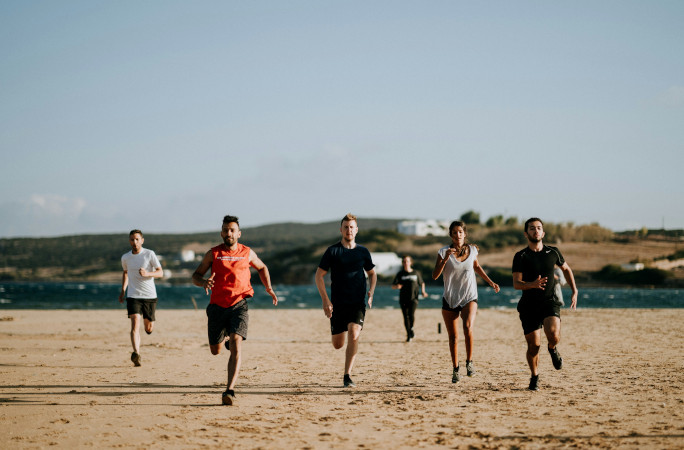
Photo credit: Annie Spratt / Unsplash
“Religion gives you a group of people who are willing to take action and help you at any time, be there in your corner and support you and celebrate you,” said Erin Shields, from the Venice Run Club, to the New York Times. “The run club gives you that, too.”
The benefits of this type of organized physical activity are numerous, and this is something our ancestors knew too: group sports can increase camaraderie, self-esteem, and help us actualize our goals in a healthy way.
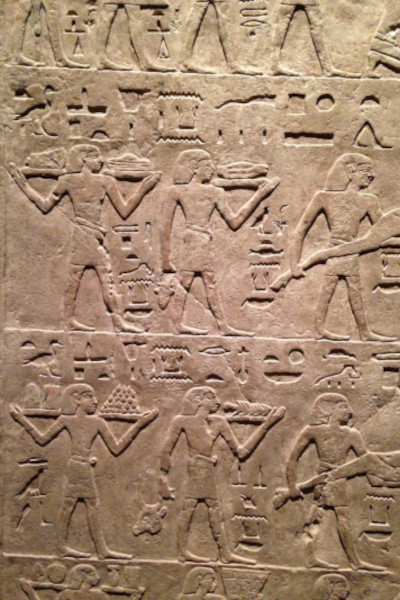
Photo credit: nachoboza / Pixabay
Humans have been lacing up their sneakers (or tying their sandals) together for thousands of years. The first evidence of organized running dates as far back as 3800 BC in Memphis in Ancient Egypt, which references athletes running races between two pillars approximately 800 m (0.5 miles) apart. Later, in 2650 BC, the earliest representation of a runner was depicted on a stone relief in the pyramid temple at Saqqara in Egypt.
Apparently in Egyptian times running was prized as a military skill, and the pharaoh Taharqa instituted a long distance 100 km (62 mile) race specifically to keep his army up to scratch. Endurance was also a prized determinant for leadership and physical prowess, and one of the earliest known formal races took place during the heb sed festival, a ceremonial race that occurred every 30 years during a pharaoh’s reign.
And later on, in the period of the Ancient Greeks, running became even more of an organized activity at the “gymnasion,” a place to train and exercise in the pursuit of physical fitness. The Greeks were no strangers to ultimate athletic competitions – we know they invented wrestling, founded the first Olympics, and started the first marathon in the path of Pheidippides who ran 26.2 miles to his death from Marathon to Athens in 490 B.C.E. However, the first recorded Ancient Greek race was actually the ‘stadion’ at the first Olympics in 776 B.C.E., which took place on the same circular track that we now know as a stadium.
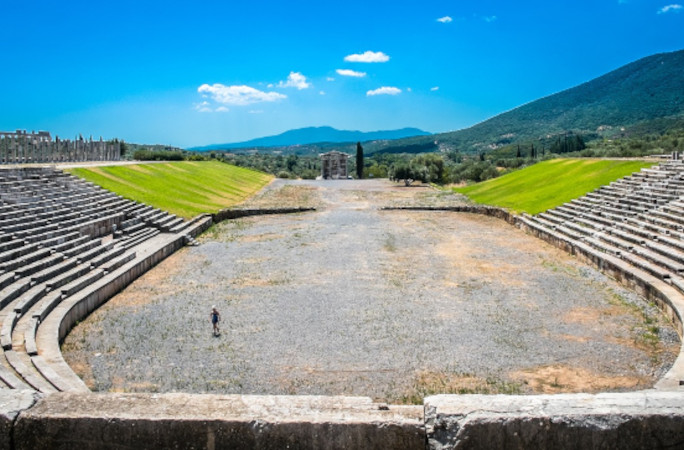
Photo credit: Atlantios / Pixabay
But run clubs as we know it didn’t start up until the turn of the 20th century, during the first modern Olympics in 1896, where more structured running events like sprints, middle-distance, and long-distance races were reintroduced. This marked the beginning of running as an organized sport, which paved the way for the establishment of running clubs.
Since then, the running landscape has changed remarkably, and no, we’re not just talking about the outfits.
As the human anatomy adapted to modern fitness, sports gear technology evolved, access to training improved, and the media and globalization brought people closer together, running clubs began to regain popularity.
Mileage and time tracking apps like Strava began to be used as a form of social media (and even a dating app!), and members of run clubs became a popular social status among GEN-Z, millennials, and city-goers. At their worst, they’re criticized as forming athletic cliques of wealthy conformists. At their best, they’re a fun way to meet new people and work out.
What role organized exercise plays in your life? Well, that’s up to you – but if it makes you feel better, that’s a question our ancestors have been pondering for thousands of years.
Header image: Unsplash