


Daddy issues, drama, and the history of the most prolific Shakespeare forger
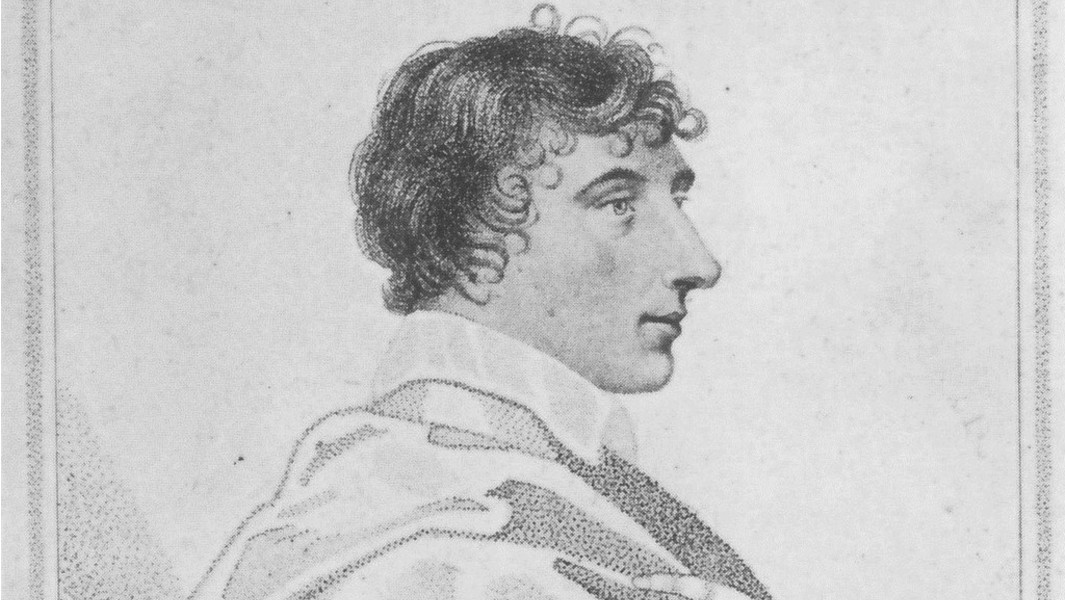
William-Henry Ireland was only 19 years old when his house filled with notable London scholars, who took turns holding his “discoveries” to the light and declaring him the finder of Shakespeare’s long-lost works.
A few months earlier, around Christmastime in 1794, the boy marched into his house and thrust a faded document into the hands of his father, Samuel, saying “There, Sir! What do you think of that?”
The yellowed parchment was a deed dated almost 100 years prior, and was filled with loopy handwriting that scrawled out the terms of a contract signed by legendary writer William Shakespeare.
At the time of his death, in 1616, Shakespeare left no literary works in his own handwriting, making the famous poet’s signature worth more than gold. For many, this discovery was an incredible find, and over the course of the year as more new works by the author were uncovered, William-Henry Ireland became known as the bard’s true literary heir.
The only problem? The documents were a forgery.
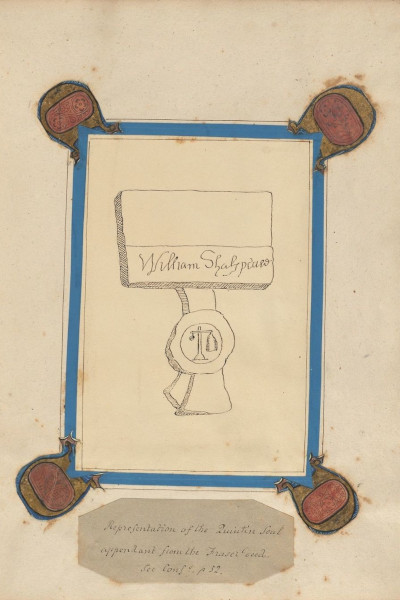
Image: Houghton Library / Wikimedia Commons
In 1794 England, William Shakespeare already had a reputation as a literary God. The pre-eminent dramatist already published and performed over 30 plays by the time of his death, and in 1623 the First Folio compilation of his works was created, which started spreading his word across the world.
Samuel Ireland was a writer, engraver, and antiquities collector who was an avid fan of Shakespeare’s, and “frequently” William-Henry recalled in 1832, “my father would declare, that to possess a single vestige of the poet’s hand-writing would be esteemed a gem beyond all price.”
If it weren’t for the contentious relationship between Ireland father and son, perhaps late 18th century London society wouldn’t have been duped into believing the most prolific Shakespeare forger.
But Samuel and William-Henry got along poorly, and the latter would do anything to prove his worth to his father.
Only, William-Henry was bad at pretty much everything: he was a terrible student, whose headmaster told his father “I was so stupid as to be a disgrace to his school”, his father would hint William-Henry was not his son, and even his mother would deny he came from her, posing as a live-in cleaner instead of Samuel’s mistress while raising the Ireland children.
Understandably, William-Henry had daddy issues, and in a bid to win his father’s attention, he put his plan to work. He had noticed a recreation of Shakespeare’s signature on an old deed in one of his father’s books, and brought it to work with him at a law office to begin the forgery process.
He practised the signature until he was confident he could do it with his eyes closed, then used an old piece of parchment and diluted quill ink to make the document look properly aged. He then darkened the paper under the fire, and attached an old seal on top he found at the office. Unbeknownst to him at the time, he attached a seal with the symbol of medieval jousting technique where the rider “shakes” a “spear” – which obviously ended up strengthening the validity of his claim.
Proud of his work, he gave it to his father at dinner a few days later, to which Samuel just said “I certainly believe it to be a genuine deed of the time” much more calmly than his son had hoped. William-Henry said he found the paper in a chest of his rich friend Mr. H, who wanted to remain anonymous and would let him keep whatever documents he wanted, and Samuel left it at that.
This all changed the next day, when Samuel presented it to his collector-friend, who emphatically believed the paper was real.
If William-Henry just produced the one document, perhaps his ruse would’ve gone undiscovered. But by inventing the box, his father kept pressuring William-Henry to find more works, or to let him look. Not to mention the lines of people who would buy admission into their house, just to get a glimpse of the papers.
Out of desperation, William-Henry manically made an array of fakes in a year: contracts between actors, a letter between Queen Elizabeth and the Bard, love letters with his wife Anne Hathaway complete with a lock of hair, original manuscripts for King Lear and a fragment of Hamlet. He added e’s to replicated Elizabethan spelling, added his own sentences and scenes, and tweaked phrasing.
While people certainly were casting doubt on the validity of the manuscripts at the time, it wasn’t until William-Henry got cocky enough to write Vortigern that the ruse was up. Perhaps all the compliments about the Bard’s work got to his head, but William-Henry thought he could write an original play to pass off as Shakespeare’s.
Vortigern was based on the same history book that Shakespeare learned his histories – and while parts of it did sound like the Bard, many saw through the clunky rhyming and its convenient discovery. Why would Shakespeare not publish what the Ireland family was calling his greatest work? And why would all of these papers all be in the same box?
William-Henry’s world came crashing down in spring 1795, after Vortigern premiered at Drury Lane to an incredulous crowd. Seated in plain sight in the centre of the audience, William-Henry had to listen as some of the finest actors of his age mockingly delivered his lines, and the audience flipped between outrage and laughter. William-Henry was now at the centre of the drama – only this drama he didn’t write.
The reviews were scorching, and the show was removed from the theatre, never to be performed again. William-Henry had to slink home in shame, writing that night that “I retired to bed, more easy in my mind than I had been for a great length of time, as the load was removed which had oppressed me.”
He eventually told his family about his deceit, and published a confession to repent. His father was devastated, and maintained until his death that the documents were real, supposedly not believing his son was smart enough to fake them. An upset William-Henry left the home soon after, writing to his father that if anyone deserved credit for being the Bard, “I Sir YOUR SON am that person.”
Header image: Silvester Harding / Wikimedia Commons