


See microscopic artist at work as he creates pieces barely visible to the naked eye
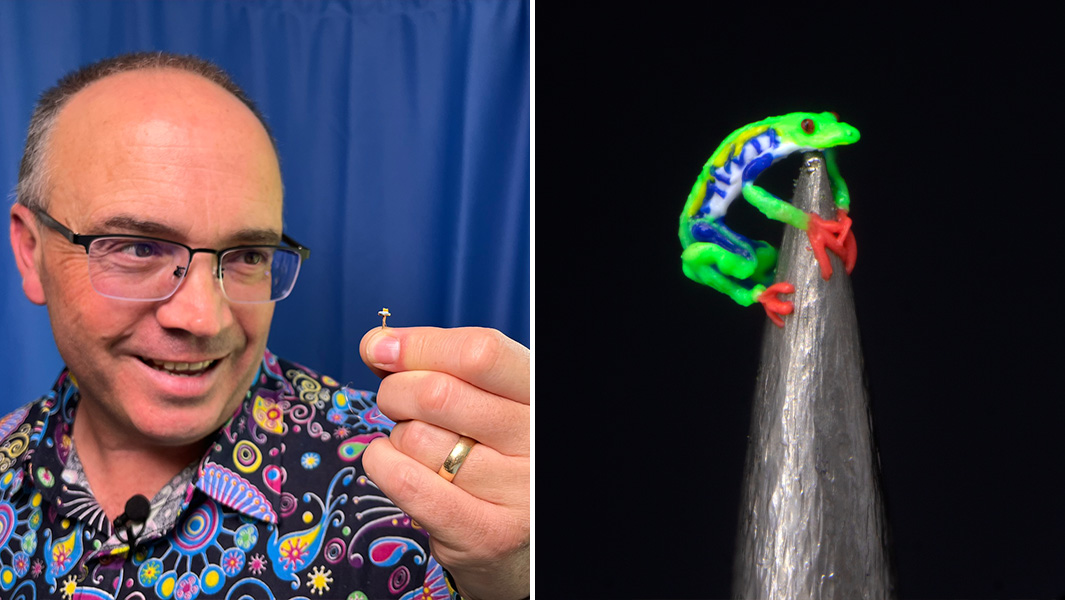
UK artist David A Lindon’s creations are so incredibly tiny that you can’t even see them with the naked eye.
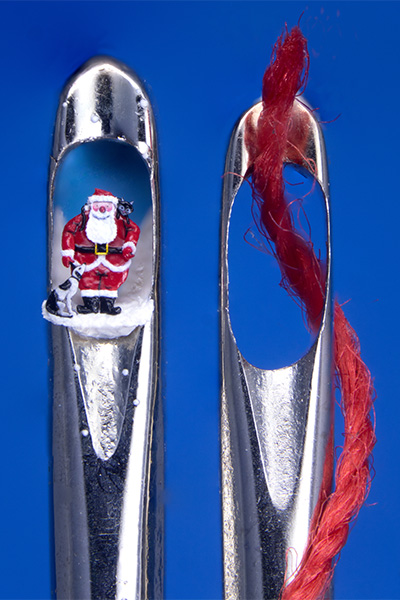
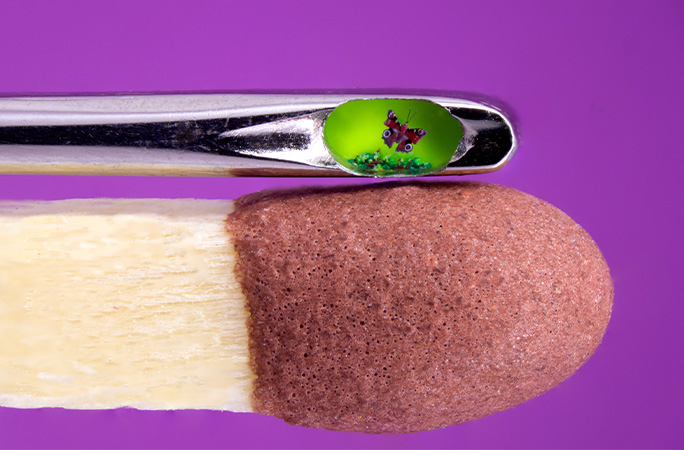
They fit inside the eyes of needles or sit on top of pins and pencils, and they’re way smaller than the head of a match.
David was once asked by scientists at Bournemouth University – who measured his works - to compare a piece of his artwork to a solitary grain of sand from the local beach, and he said the sand “looked like a mountain” compared to his intricate creation.
Using a super powerful microscope and an incredible amount of patience, he’s created a series of amazing record-breaking artworks.
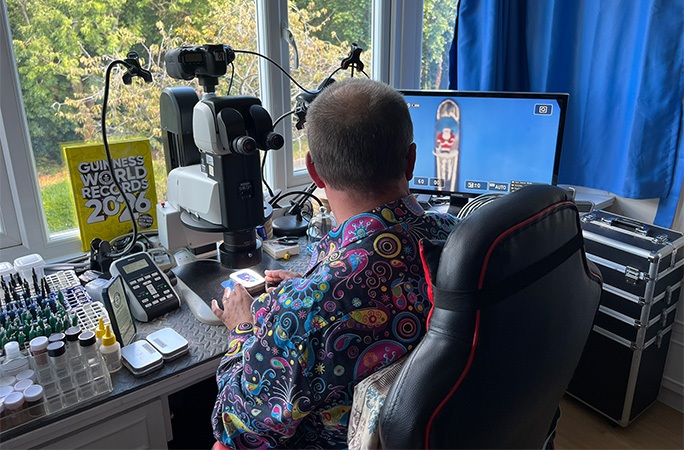
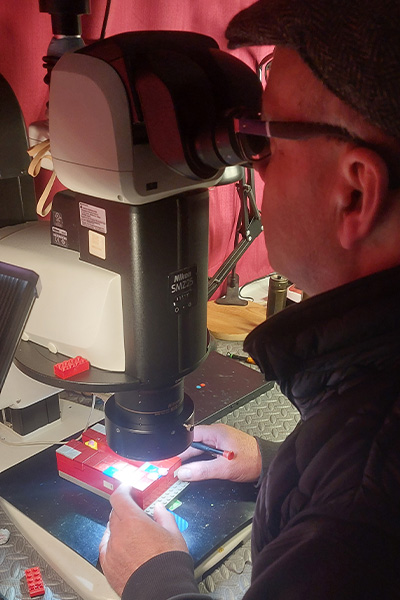
He showed us how he creates his intricate sculptures when he invited us to his home studio.
"The challenge to create tiny objects that can’t be seen without a microscope is demanding both physically and mentally,” he said.
“I have trained myself to slow my breathing and work between the beats of my heart. Even the pulse of my heart beating through my fingers creates too much movement."
Read more stories like this on our dedicated Hobbies and Skills News page.
On 1 August 2024, David created the world’s smallest handmade sculpture – a red LEGO brick that was about the same size as a human white blood cell.
It measures 0.02517 x 0.02184 mm and you’ll only be able to look at it with the use of specialist magnifying equipment.
David has since created something even smaller and is awaiting confirmation that he’s broken his own record.
On 12 March this year, David unveiled 11 more miniscule record-breaking pieces:
- The smallest handmade sculpture of an invertebrate - a peacock butterfly with dimensions of 0.6 x 0.6 mm
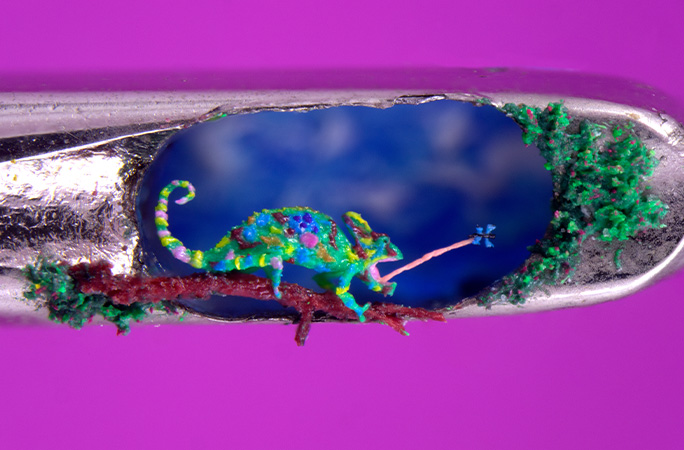
- The smallest handmade sculpture of a reptile - a panther chameleon measuring 1.7 x 0.5 mm (tongue included)
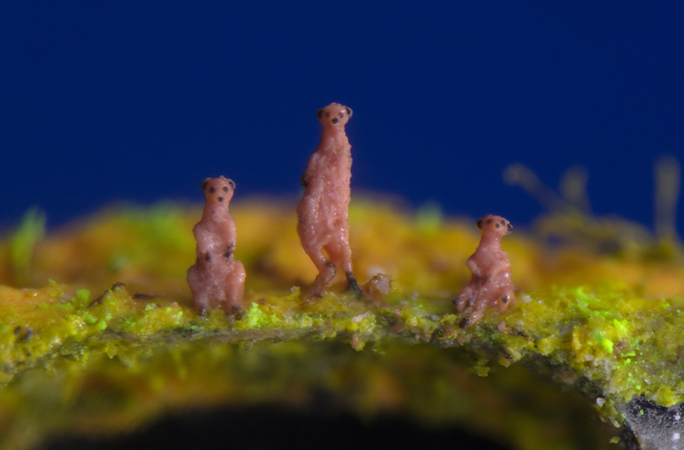
- The smallest handmade sculpture of a mammal - a meerkat which has dimensions of 0.35 x 0.15 mm
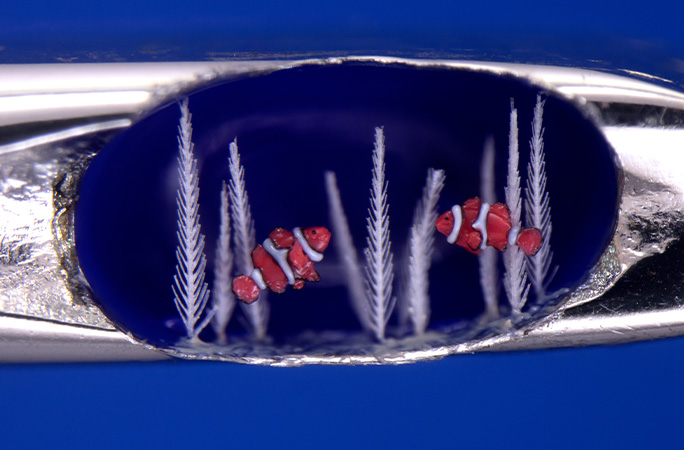
- The smallest handmade sculpture of a fish - a clownfish which is 0.4 x 0.3 mm
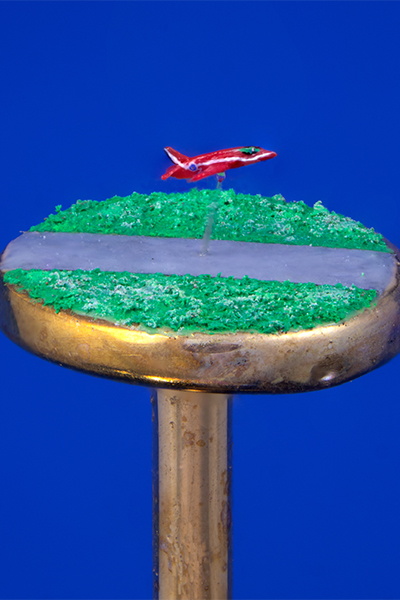
- The smallest handmade sculpture of an aircraft - a recreation of a Hawk T1 used by the UK’s Royal Air Force Aerobatic Team (the Red Arrows), which has dimensions of 1.2 x 0.8 mm
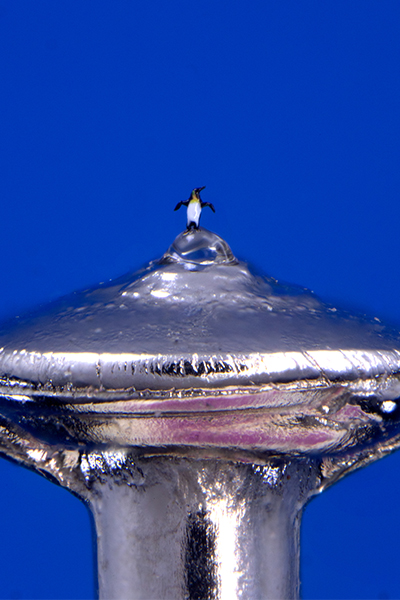
- The smallest handmade sculpture of a bird - an emperor penguin measuring 0.25 x 0.3 mm
- The smallest handmade sculpture of a book character - the titular character from the Father Christmas series of children’s books by British author Raymond Briggs, which has dimensions of 1.4 x 0.9 mm
- The smallest handmade illuminated sculpture - a recreation of the Golden Temple of Amritsar in Punjab, India, with dimensions of 1.5 x 0.75 mm
- The smallest recreation of a painting within a recreation of a painting - a 2,332 x 1,731-micrometre version of The Night Watch (originally painted in 1642 by the Dutch Master Rembrandt van Rijn). It is set into a pixelated version of the same artwork, with dimensions of 122 x 102 cm, by geometric artist Chris Long (UK).
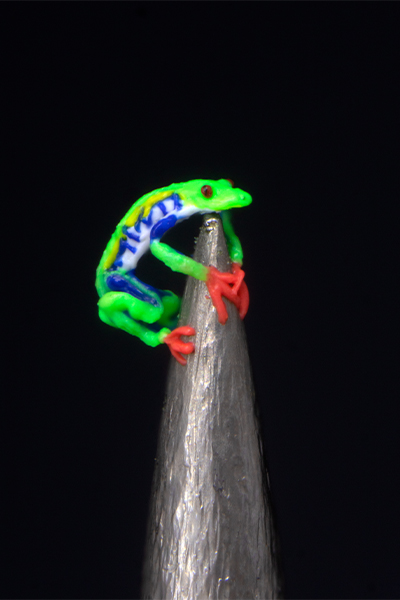
- The smallest handmade sculpture of an amphibian - a red-eyed tree frog which has dimensions of 0.4 x 0.5 mm
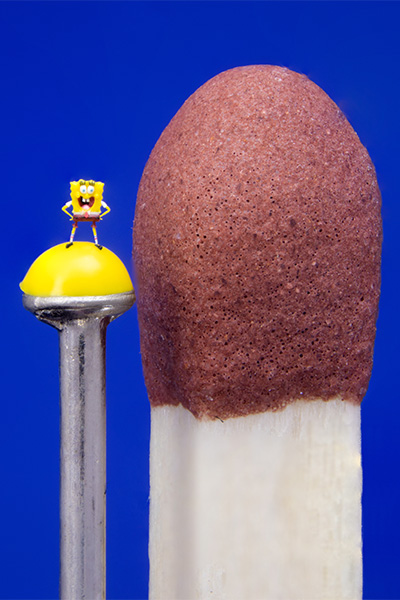
- The smallest handmade sculpture of an animated character - a recreation of SpongeBob SquarePants (of the Nickelodeon cartoon of the same name) which has dimensions of 1.0 x 0.74 mm
In order to make his tiny creations, David, who trained in the military as a precision instrument engineer, has developed a carefully calibrated process.
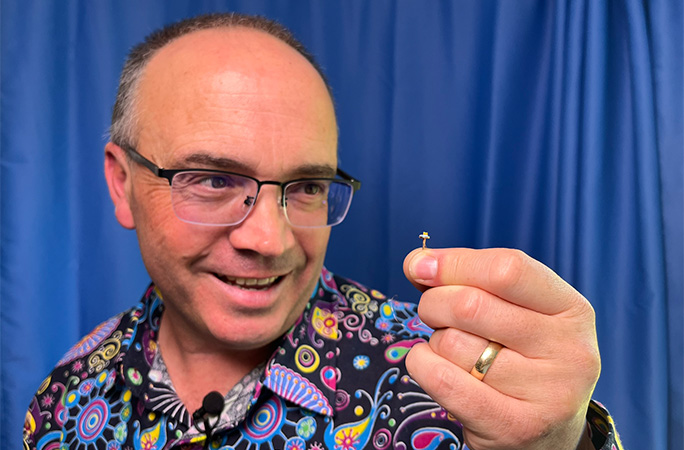
He uses bespoke tools, regulates his breathing and heartbeat to keep his hands steady, and only works at night.
His tools are so tiny and delicate that they regularly break and he has to make new ones.
He told us: “So when I’m painting, I’m literally creating art within the eye of a needle, and I’m painting perhaps the smile on Mona Lisa’s face, so I tend to work at night because during the day, if a bus passes by it shakes the needle.
“I also have to work between heartbeats because if a lorry, a car, a bus, anything like that, a gust of wind, this thing is so sensitive.”
“Some passing traffic could wreck months of work,” he added.
One of the ways David has trained his hands to be so steady is by practising holding the points of two needles together.
He said: “It allows me to improve my dexterity and my endurance. I do this sometimes for hours at a time.”
David is so besotted with microscopic art that even his watch has a tiny gallery of Van Gough’s famous works printed on it.